News
Struggle for survival: How Nigerians endure years of economic hardship

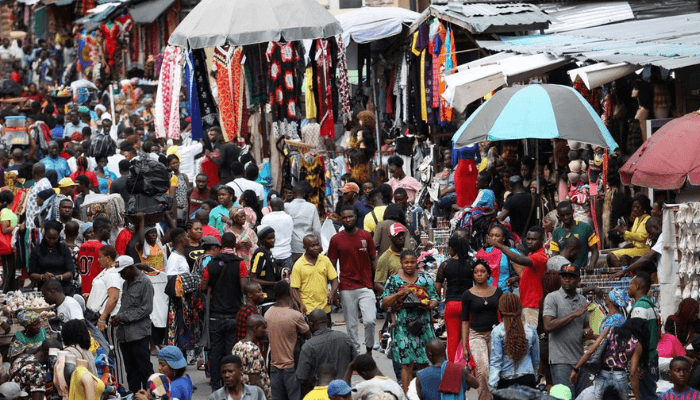
On a sunny afternoon in Lagos, the hum of generators competes with the noise of traffic and commerce. It is a familiar soundtrack, one that captures, in many ways, the Nigerian condition: a people powering their lives, quite literally, in the absence of reliable state support.
Across the country, from urban sprawls to rural settlements, Nigerians continue to navigate one of the toughest economic climates in recent history. Inflation bites hard, incomes stretch thin, and basic services remain inconsistent. Yet, amid these pressures, a defining trait persists, resilience, hardened over decades of systemic neglect.
For many Nigerians, survival is not an occasional challenge; it is a permanent state of adaptation.
In Ikotun, a Lagos suburb, 42-year-old trader, Ajoke Bello, has watched her cost of doing business triple in less than two years. Fuel prices have soared, transport fares have doubled, and suppliers now demand upfront payments.

“You just adjust,” she says. “If you wait for things to get better before you act, you will go hungry. We’ve learnt not to depend on anybody.”
That sentiment echoes widely. From artisans to civil servants, there is a shared understanding that personal initiative, not government intervention, is the primary driver of survival.
A long history of self-reliance
Nigeria’s resilience did not emerge overnight. It is the product of decades of governance gaps that forced citizens to create parallel systems for everyday living.
Electricity remains unreliable, pushing households and businesses to rely heavily on generators and now solar for those who can afford it. Access to quality healthcare and education often depends on private alternatives, even for low-income families. Water supply, in many urban areas, is self-provided through boreholes, while rural dwellers depend on rivers or travel miles for potable water.
Over time, this pattern has shaped a national psyche: expect little, improvise everything.
The economics of endurance
The economic realities facing Nigerians today are severe. Rising inflation has eroded purchasing power, while policy reforms, though aimed at long-term stability, have intensified short-term hardship.
For small business owners like John Chinedu in Ikeja, the impact is immediate and personal.
“Every day is calculation,” he explains. “Transport cost goes up, goods price goes up, but customers don’t have more money. You have to survive inside the problem.”
Yet, even within these constraints, Nigerians find ways to adapt, cutting costs, diversifying income streams, and relying on informal networks.
Family and community support systems play a critical role. Remittances from relatives, cooperative savings schemes, and religious organisations often step in where formal social safety nets are absent.
“I rely heavily on my cooperatives to run my business,” Bello, earlier quoted, said. “I got a loan with a lower interest rate from the cooperatives.”
The psychology of resilience
Beyond economics, there is a psychological dimension to Nigeria’s resilience, one rooted in lowered expectations.
Many citizens no longer look to the government as a primary provider. Instead, they operate with a mindset that shields them from disappointment.
“If you expect anything from the government, you will be frustrated,” Bello said. “So, we don’t expect it. We just do our own things.”
This recalibration of expectations has profound implications. It reduces the emotional toll of governance failures but also risks normalising them.
Thriving in adversity or merely surviving?
While resilience is often celebrated, it comes at a cost. Constant adaptation can blur the line between coping and thriving.
For a 29-year-old graduate who turned mobile money operator (POS agent), Aminat Azeez, resilience has meant years of underemployment and side hustles.
“People say Nigerians are strong, but sometimes it feels like we don’t have a choice,” she said. “We are surviving, yes but are we moving forward?”
Her question underscores a growing concern: resilience, while admirable, should not become a substitute for development.
Is change on the horizon?
There are signs of reform. Government policies aimed at stabilising the economy and attracting investment suggest an awareness of structural challenges. Experts say these reforms have started to bear fruits. However, for many Nigerians, the impact of these policies remains distant.
“Tinubu has done so much for Nigeria, not that much for Nigerians,” an economics expert said.
Trust in public institutions is fragile, shaped by years of unmet promises and inconsistent implementation.
Nigeria’s resilience is both its greatest strength and its most troubling paradox. It reflects a people who refuse to be defeated by circumstance, who innovate and endure against all odds.
But it also reveals a system that has asked too much of its citizens for far too long.
Government of elections
Government’s presence is only felt during election cycles when politicians with ambitions begin to push freebies to the long-suffering masses, targeting votes.
As the 2027 general election approaches, there has been a preponderance of emergency “empowerment programmes” mounted by the government. Observers say that no nation amounts to anything through this deceptive shenanigan.
As long as Nigerians continue to build their own roads to survival, provide their own power, water, security, and opportunities, the urgency for structural change may remain muted. Yet beneath the surface of endurance lies a quiet demand, not just to survive, but to live in a system that works.
Until that demand is met, resilience will remain less a badge of honour and more a necessity, worn daily by millions who have mastered the art of carrying on.(BusinessDay)
-

 Metro11 hours ago
Motorist ‘abducts’ traffic officer in Ondo, takes him to ‘unknown destination’
-
Politics11 hours ago
APC moots N100m presidential, N50m governorship forms
-
Politics11 hours ago
We’ve Taken Over PDP Headquarters – Pro-Wike Faction
-
 News11 hours ago
AfDB Approves $200m Loan For Nigeria’s Digital Infrastructure
-
 Metro11 hours ago
I Had Throat Surgery After Al Jazeera Interview – Bwala
-
News11 hours ago
‘Kenyans Earn N170,000 Equivalent As Minimum Wage’ – Atiku Lambasts Tinubu For Comparing Fuel Prices In Nigeria With African Countries
-
News24 hours ago
FULL LIST: Simon Ekpa, Tukur Mamu, IPOB… FG names 48 individuals, groups ‘linked’ to terrorism financing
-
News11 hours ago
Malami Accused Me Of Theft, Nigerians Can Now See ‘Who Owns What’ – Lamido