News
Petrol subsidy would have consumed 76% of 2026 budget, says Zacch Adedeji

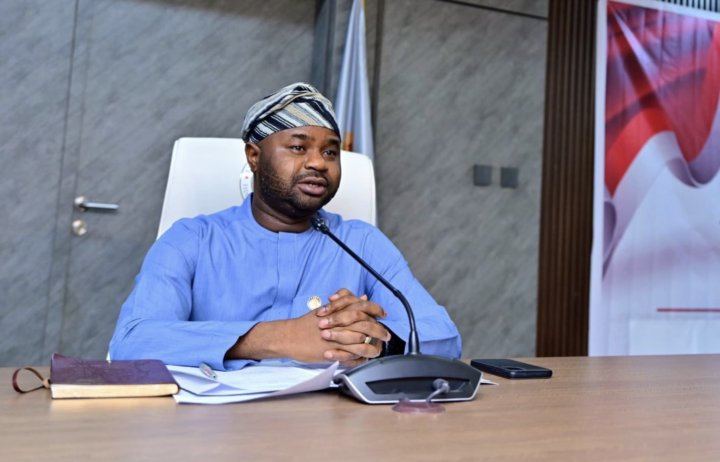
Zacch Adedeji, chairman of the Nigeria Revenue Service (NRS), says reforms to strengthen remittance systems and tighten controls on public financial flows are yielding significant gains in government revenue.
Adedeji spoke on Tuesday during the inauguration of the NRS headquarters in Abuja, where he also defended the removal of petrol subsidy as a fiscal necessity rather than a policy choice.
He said at an oil price benchmark of $120 per barrel, Nigeria’s annual subsidy bill could have risen to between N38 trillion and N52 trillion — consuming as much as 56 to 76 percent of the country’s N68 trillion 2026 budget.
He said eliminating the subsidy has freed up fiscal space, improved external reserves, and helped stabilise the country’s debt service outlook.

The NRS chairman added that alongside subsidy removal, improved remittance systems have boosted government revenues significantly, with collections rising from N711 billion in May 2023 to N3.63 trillion in September 2025 — a 411 percent increase.
According to Adedeji, the new NRS framework will consolidate the gains through tighter oversight, digital enforcement, and enhanced coordination of non-tax revenues across government agencies.
‘NRS HQ REPRESENTS SHIFT TOWARDS FISCAL DISCIPLINE’
Speaking about the newly commissioned headquarters of the agency, Adedeji said it represents Nigeria’s shift towards fiscal discipline and institutional reform.
He said the facility reflects “a nation choosing order over drift, discipline over fragmentation, and execution over intent”.
The NRS chairman said the project marks the culmination of years of reforms aimed at strengthening revenue administration and improving fiscal governance.
Adedeji attributed the progress to the leadership of President Bola Tinubu, adding that the administration undertook a “comprehensive reset” of Nigeria’s economic architecture.
He said more than 60 fragmented tax laws have been streamlined into a coherent framework, improving compliance and efficiency, while enhanced fiscal controls and transparency mechanisms have boosted revenue performance.
“Crucially, this reform was not driven by higher tax burdens, but by better systems, broader coverage, and stronger governance,” Adedeji said.
“The outcome speaks for itself, with Nigeria recording a historic domestic revenue performance, demonstrating that disciplined reform yields sustainable results.
“Beyond taxation, fiscal governance has been strengthened through improved remittance systems, enhanced transparency mechanisms, and tighter controls on public financial flows.
“Trade has been modernised through the recently launched National Single Window, reducing inefficiencies and strengthening revenue assurance. In energy reforms, the revolutionary sales of crude in Naira initiative has repositioned the sector from a fiscal burden to a stabilising anchor for the economy.”
On his part, Tajudeen Abbas, speaker of the house of representatives, said the headquarters represents a new phase in Nigeria’s fiscal transformation.
Abbas said the national assembly will continue to support reforms aimed at strengthening revenue generation and improving public financial management.
He noted that a modern and efficient revenue system is critical to reducing reliance on borrowing and ensuring sustainable economic growth.
Also speaking, Taiwo Oyedele, the minister of state for finance, said the facility reflects broader reforms that have repositioned Nigeria’s revenue system.
Oyedele said revenue collections have grown significantly in recent years, driven by improved systems, stronger institutions, and better coordination across agencies.
The minister added that the transition to the NRS signals a shift towards a more integrated and technology-driven revenue administration.
Oyedele said the agency is expected to deepen efficiency, strengthen compliance, and sustain growth in collections.(TheCable)
-

 Opinion14 hours ago
Obafemi Hamzat: Voice of the street, made for Lagos
-
Sports14 hours ago
To make money for ‘generations of my family’— Reijnders explains Saudi move
-
Politics14 hours ago
2027: New strategy in place to checkmate Atiku, Obi – Wike
-
News14 hours ago
Why Nigeria, Ghana-trained teachers were removed from UK qualification list
-
World News14 hours ago
US imposes new visa restrictions on birth tourism operators
-
Business13 hours ago
TotalEnergies, AMNI approve $800m Ima Gas project
-
News14 hours ago
Detention: El-Rufai Speaks On Silence Of Friends He Stood By In The Past
-
Sports14 hours ago
Ex-Super Eagles Captain William Troost-Ekong Converts To Islam