Opinion
Sack Of Wale Edun, Better Late Than Never

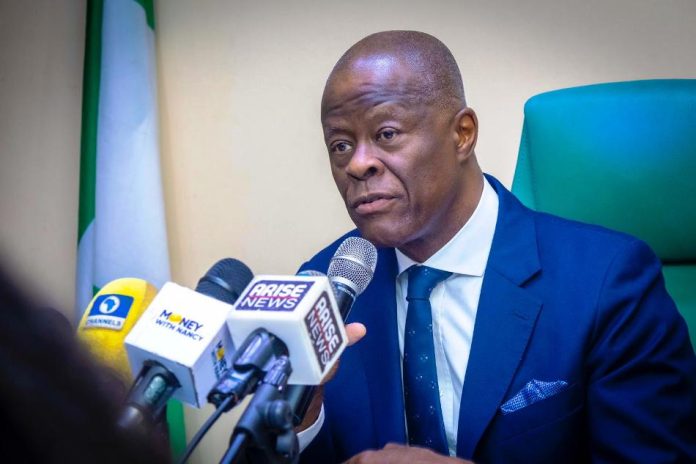
With Edun’s sack, speculations have been trending over why, along with the implications. Some accounts cite the mystery surrounding the non-release of a yet untraced, whopping sum of N1.15 trillion earmarked as capital votes in the 2025 budget and which is yet to be accounted for, as well as the attendant dislocations in the country’s fiscal terrain.
While these and other narratives on their spilt may enjoy merit, a more fundamental reason for the tiff between them apparently derives from a latter-day mutual disappointment and recrimination which degenerated into a blame game, over their jointly orchestrated, but avoidable blunders in managing the economy. Meanwhile, apparently beyond their gaze, this was courtesy of their fundamentally flawed approach to reviving the economy, at the inception of the administration.

Evidence of the misreading of the economy by the Tinubu team which included Edun as a critical factor was ostensibly spawned by their fixation on securing a second term for the President from day one of the tenure, instead of addressing the economy with the attention and commitment it deserved. Economists recognize that every economy has five discernible sections.
Hence at the last count, the administration has been tottering and stumbling from one blunder to another as far as the economy is concerned, largely due to the questionable remediation measures deployed by Edun, and ostensibly under the direct oversight by Tinubu. Meanwhile, every lament and sign of dissent by Nigerians over the crushing hardship across the country, has been met with characteristic obduracy, repression and aloofness to the suffering of the masses by the President and his team with, Edun as the boiler room facilitator.
In specific terms, among the missteps by President Bola Tinubu was the sudden withdrawal of fuel subsidy at the inception of the administration without providing Nigerians any tangible fallback relief in the harrowing course of whatever reforms were intended by the measure. It is easily recalled that several Nigerians who protested over the strangulating hardship, suffered significant harassment with some even dying from Tinubu’s draconian, repressive responses to civil dissent. Also was the free fall of the Naira’s exchange rate in an import dependent Nigerian economy, and the consequent fall in productivity.
The foregoing situation was not helped by the failure of the administration to address itself to stimulants to the economy such as improving electricity supply, and giving the nation the grace of boosting domestic productivity, as well as ameliorating the shortfall in imports. In fact, in the face of the current state of acute nationwide electricity supply shortages, Nigerians are citing Tinubu’s presidential campaign challenge in respect of which he stated that if he fails to fix the country’s electricity challenge within the first two years of his administration, he should be denied a second term in office. It is interesting that the foregoing now runs in conflict with the present frenzy of securing a mandatory second term in office for the president, into which the country has been driven, as literally every aspect of public life in Nigeria is being corralled into ensuring a second term for him, come 2027.
With Oyedele now in the saddle as Minister of Finance and Coordinating Minister of the Nigerian Economy, not a few Nigerians are waiting to see how much will change in the trajectory of the nation’s economy. However, an informed guess holds that not much will change with the current fixation of the entire machinery of governance on just one goal – securing a second term in office as President of the Federal Republic of Nigeria for Bola Tinubu.
-

 Politics22 hours ago
2027: ADC campaign accuses Kwankwaso of working for Tinubu
-
News22 hours ago
DSS arrests fleeing Maina’s son in Abuja
-
Politics21 hours ago
2027: Tinubu afraid to face Nigerians – ADC
-
Politics21 hours ago
Buhari considered it distasteful for Osinbajo to contest against Tinubu – Babachir Lawal
-
Politics18 hours ago
‘Tinubu Must Go’ Vs ‘Tinubu Must Stay’: Forces Behind Campaigns
-
Metro22 hours ago
Two Nigerians nabbed with cocaine in Thailand
-
 News21 hours ago
Tinubu approves lifetime pay for ex-immigration chiefs
-
News22 hours ago
Obi of Onitsha urges end to hunger, insecurity