Opinion
The hoax of President Tinubu’s 2025 budget extension

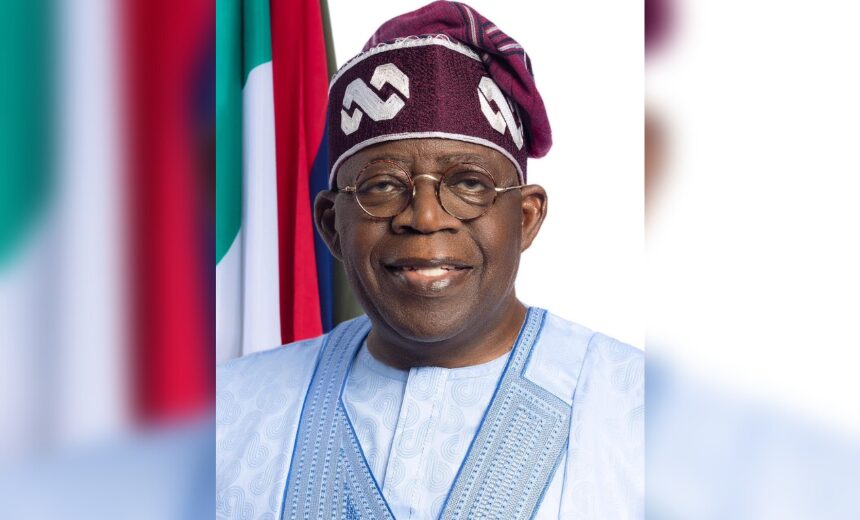
When President Bola Tinubu announced that Nigeria would extend the 2025 budget implementation deadline to June 30, 2026, three months beyond the original March 31 closure, the decision barely registered as a scandal.
Instead, it was packaged as practical governance: a mere extension to “allow for full utilisation of funds for ongoing infrastructure projects.”
But within 48 hours, three events revealed the ruse: Tinubu fired Finance Minister Wale Edun. Just hours later, on April 23, he requested Senate approval for another $516.3 million external loan.
Read together, these moves tell a story of institutional collapse so profound it should terrify every Nigerian who believes governance matters.

Edun’s removal was not sudden. According to Premium Times’ exclusive reporting, tension between Tinubu and Edun stemmed from “widespread complaints about low capital budget releases and slow budget planning,” which had “serially disrupted the country’s January-to-December budget cycle.”
In February, lawmakers accused Edun of recording “zero implementation” of the 2025 capital budget despite approving N1.15 trillion for capital components.
By December 2025, tensions erupted. At a Federal Executive Council meeting, Edun and Tinubu allegedly clashed so severely over capital releases that a presidential aide had to advise the Minister against raising his voice at the president.
One official present said, “From that point, it seemed that his goose was cooked.”
We know better now: Edun was not fired for releasing money recklessly. He was fired for not releasing it. He had resisted the “unsustainable” practice of “printing money” to pay contractors and instead prioritised debt servicing.
In a government committed to borrowing without limit, Edun represented a constraint. Now, that constraint is gone.
On April 23, Tinubu requested Senate approval for a $516.3 million external loan for the Sokoto-Badagry Superhighway.
This loan, like many before it, was swiftly approved by a Senate that has abandoned any pretence of fiscal scrutiny.
This follows a pattern that alarmed even opposition figures.
In early April, former Vice-President Atiku Abubakar issued a searing critique after the Senate approved $6 billion in external loans in less than four hours.
The loans comprised $5 billion from Abu Dhabi Bank (for budget deficit coverage and debt financing) and $1 billion from London Citi Bank (for port rehabilitation).
Four hours. For $6 billion. Not even the most elementary debate.
Atiku condemned the Senate for reducing itself to “a conveyor belt, processing requests of grave national consequence without due diligence. Borrowing decisions that will bind generations yet unborn cannot, and must not, be treated with this level of casual urgency.”
What emerges is not disorganisation but a deliberate strategy: approve massive budgets, execute them poorly, extend deadlines to hide execution failure, and request external loans continuously, not to finance new infrastructure, but to service existing debt and plug gaps created by poor spending.
According to theWorld Bank data cited by Atiku, Nigeria’s exposure to the International Development Association had risen to $18.7 billion by February 2026, placing the country among the largest recipients of concessional loans globally.
In March, while Edun was still nominally Finance Minister, the government requested an additional $6 billion in external borrowing, even as the Debt Management Office pursued aggressive domestic borrowing through high-volume bond auctions.
The math is inescapable: Nigeria is now borrowing not to invest in growth, but to service prior borrowing.
Few writers can claim to have criticised Atiku more than myself in the past two decades, but he is certainly correct on this one: “Resorting to fresh borrowing to service existing debts, plug budget gaps, and meet routine obligations…reflects a troubling absence of fiscal discipline, clear prioritisation, and sustainable economic planning.”
Atiku posed the critical question: “What does a government that appears to be preparing for electoral rejection in 2027 intend to do with an additional $6 billion in borrowed funds, on top of the mounting obligations it has already accumulated in just the first quarter of 2026?”
This is why Edun’s removal makes perfect sense: He was an obstacle to a borrowing drive on steroids.
His insistence on debt servicing, his resistance to “printing money,” his refusal to release capital budgets when execution capacity was nil, all these made him expendable.
His firing signals that the path is now clear: borrow continuously, execute sporadically, extend budgets infinitely, and rotate out any official who asks uncomfortable questions.
If budget execution failure was the genuine problem, two evidence-based policies could have addressed it without the fiction of extension deadlines.
Policy One: Use-It-or-Lose-It Reversion with Mandatory Public Inquiry:
Under this mechanism, any funds unspent by March 31 would revert to a centralised contingency account, jointly overseen by the Budget Office and National Assembly. Before reallocation, these reverted funds would trigger mandatory public inquiry: Which ministries failed? Were procurement processes broken? Was deliberate underspending occurring to preserve cash for debt service?
This creates real consequences for non-performance and makes execution discipline a matter of institutional reputation. Several nations use variants of this approach. The result is visible accountability, and that visibility itself creates incentive for improvement.
Policy Two: Quarterly Budget Reviews with Automatic Reallocation:
Every 90 days, the Budget Office would assess spending velocity. Ministries on track continue spending; underperforming ministries have allocations immediately reallocated to performers. The underperforming ministry must justify failure publicly, in writing.
This makes execution visible in real-time. It rewards actual performance rather than optimistic projections. Ministries and contractors would have every incentive to execute, because underperformance is immediately visible and immediately punished through reallocation.
Budgetary discipline is foundational to democracy. When a government can spend money on undefined timelines under invisible oversight with no consequences for failure, it has exempted itself from accountability.
The National Assembly becomes ceremonial, as exemplified by the current one under Godswill Akpabio. Citizens lose the baseline to measure whether tax revenue was wasted or stolen.
In an election year, this matters intensely. A government seeking re-election should demonstrate efficiency and disciplined execution. Instead, the pattern—budget extension, Finance Minister removal, serial loan requests, Senate approval in hours, signals an administration so insulated from consequences that it need not demonstrate competence at all.
Atiku stated it plainly, “Nigeria is not a private enterprise to be leveraged at will. The future of our nation cannot be signed away in a matter of hours.”
He was right. That future is being mortgaged systematically, with institutional blessing. And the real scandal is that the one official who stood between the presidency and unlimited borrowing authority has been removed.
Between Tinubu, Akpabio and the man for whom the president holds out the federal hat, …Chagoury, it is party time at Aso Rock.
Now, Nigerians learn the truth, not because Edun is gone, but because of that “Anybody else?” glance around the room.
This moment is another reminder that, unlike every successful nation or endeavour, Nigeria is not run by rules or regulations, patriotism or principle.
•Written By Sonala Olumhense
-

 News23 hours ago
UK universities withdraw admission offers to Nigerians over visa crackdown
-
Politics23 hours ago
2027: Protest, relief as INEC releases final candidates’ list
-
News23 hours ago
Benue: Suspected herdsmen kill nine in fresh Ukum attacks
-
News23 hours ago
Why kidnappers target NYSC members — Security experts
-
Politics23 hours ago
2027: Opposition, APC clash over campaign funding
-
World News23 hours ago
US gunman shoots dead 7 relatives, family friend
-
Opinion23 hours ago
Did Obi actually win in 2023?
-
Business23 hours ago
Fitch revises Nigeria’s outlook to positive, affirms ‘B’ rating