World News
Fix Your Broken Country – Trump Lambasts German Chancellor For Claiming US Is “Humiliated” In Iran Conflict

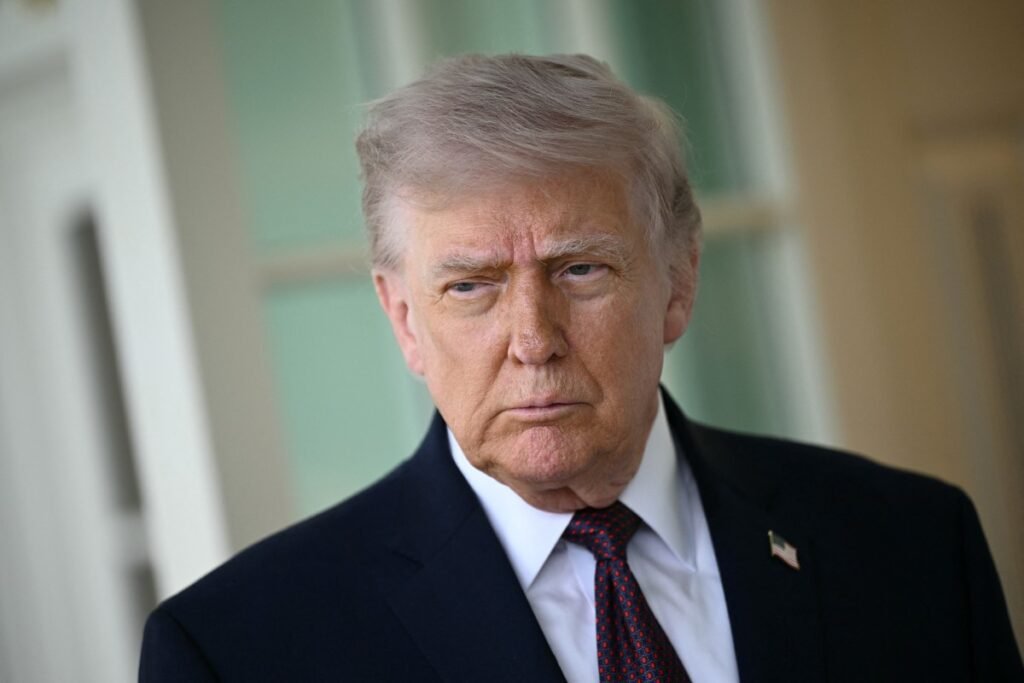
The United States President, Donald Trump, has sharply rebuked German Chancellor Friedrich Merz following remarks in which the German leader suggested that Washington was being “humiliated” in its ongoing war with Iran.
In a post shared via his official Truth Social handle on Thursday, April 30, 2026, Trump dismissed Merz’s assessment as misguided and accused the German government of focusing on the wrong priorities.
“The Chancellor of Germany should spend more time on ending the war with Russia/ Ukraine (Where he has been totally ineffective!), and fixing his broken Country, especially Immigration and Energy, and less time on interfering with those that are getting rid of the Iran Nuclear threat, thereby making the World, including Germany, a safer place!.”
Trump’s response came after Merz, speaking to students in the German town of Marsberg on Monday, warned that the United States lacked a clear strategy in its confrontation with Iran and risked repeating past military failures.


The German leader said the situation reflected a broader strategic weakness, drawing parallels with previous U.S. engagements abroad.
“The problem with conflicts like this is always you don’t just have to get in – you have to get out again. We saw that very painfully in Afghanistan for 20 years. We saw it in Iraq,” Merz stated.
He further argued that Iran appeared to be gaining the upper hand diplomatically and strategically. According to him, Iranian officials were “obviously negotiating very skilfully” and seemed “clearly stronger than one thought.” Merz added that “an entire nation is being humiliated by the Iranian leadership,” singling out the Islamic Revolutionary Guard Corps as a key actor in the perceived shift in power.
The German Chancellor also called for a swift end to the conflict, cautioning that its economic consequences were already being felt in Germany, particularly in the areas of energy supply and broader economic stability.
Trump, however, rejected any suggestion of U.S. weakness, instead framing ongoing efforts against Iran as necessary to counter what he described as a nuclear threat. His remarks underscored a broader divergence between Washington and some European leaders over both the handling of Iran and the wider geopolitical landscape.
The exchange highlights growing transatlantic tensions as global powers grapple with overlapping crises, including the war in Ukraine, instability in the Middle East, and economic pressures at home. While Merz emphasized caution and strategic exit planning, Trump’s response signaled a more confrontational posture, defending U.S. actions and criticizing European allies for what he perceives as misplaced criticism.
As the situation evolves, the public disagreement between the two leaders is likely to deepen debate among Western allies over military strategy, diplomatic engagement, and the long-term implications of the conflict.
-

 News15 hours ago
N267bn in education funds lie idle as 70% of Nigerian children can’t read
-
News15 hours ago
Obasanjo urges increase in 13% derivation for oil-producing states
-
Sports13 hours ago
Celebrity boxing: Boom for entertainers, bane of professional boxers?
-
Metro15 hours ago
Hardship: Jigawa almajiri pupils lament decline in free food
-
Politics24 hours ago
Tinubu asked me to claim Adelabu as my ministerial choice, I refused — Makinde
-
News15 hours ago
Child soldier: US threatens to cut military aid to Nigeria
-
Politics24 hours ago
Ebonyi indigenes threaten to sue Umahi over zoning, anti-Obi remarks
-
Business13 hours ago
Power plants record zero output amid grid instability