Business
FEC resolves 20-year MM2 dispute, approves aircraft leasing contract, $2.9bn rail projects for Lagos, others

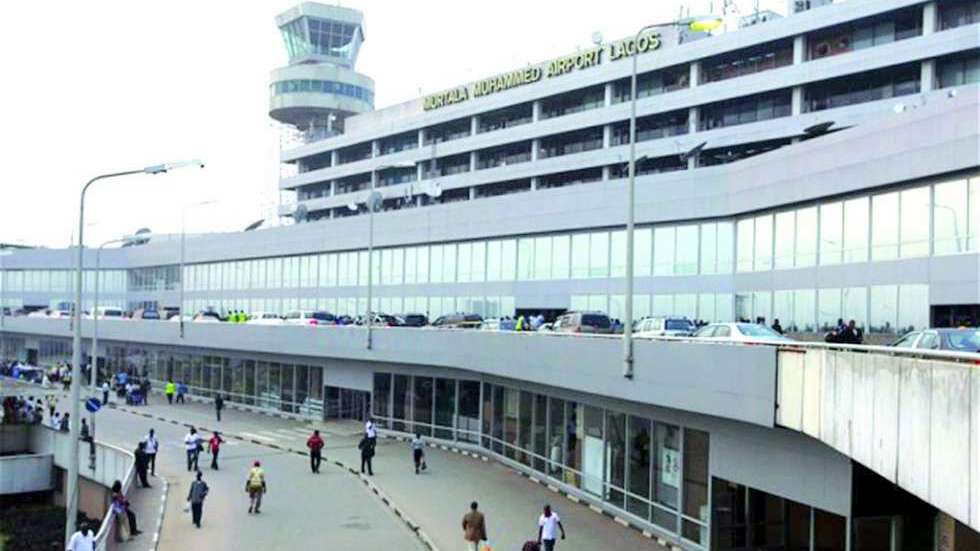
- The Federal Executive Council (FEC), on Thursday, approved the resolution of the long-standing concession dispute surrounding the Murtala Muhammed Airport Terminal Two (MM2) in Lagos, alongside the establishment of a Nigerian aircraft leasing company to support local airlines. It also approved $2.9 billion for rail projects in Lagos, Kano and Kaduna.
Festus Keyamo, Minister of Aviation and Aerospace Development, announced the resolution on Thursday while briefing State House journalists after the FEC meeting presided over by President Bola Tinubu.
The council approved two major memos presented by the aviation ministry, which the minister described as “significant milestones” for the sector.
He revealed that the government had finally settled the over 20-year dispute with Bi-Courtney Aviation Services Limited, owned by Wale Babalakin, a private businessman.
According to him, the dispute, which spanned multiple administrations, involved several contentious issues, including the control of the domestic terminal (MM1), financial claims against the government and exclusivity rights.
“As you all know, there has been a long-standing dispute between the concessionaire and the Federal Government over MM2. Today, I can happily tell you that this government has resolved that issue once and for all,” he said.
Keyamo explained that one of the major sticking points was a Supreme Court judgment which awarded Bi-Courtney ₦132 billion in damages, with interest accruing from 2009.
He, however, revealed that the concessionaire agreed to waive the claim as part of the negotiated settlement.
“The first thing we told him was to write off the ₦132 billion plus interest. Nobody is going to pay that, and he agreed and wrote it off,” the minister said.
He added that Bi-Courtney also relinquished its claim to the Murtala Muhammed Airport Terminal One (MM1), which it had argued was included in the original concession agreement.
“We told him to hand back the local airport (MM1) to the Federal Government. We cannot leave the entire domestic aviation operations in Lagos in private hands. He agreed,” Keyamo said.
On exclusivity, Keyamo said the clause granting Bi-Courtney sole rights to operate a private airport within Lagos was also removed.
“That clause was not right, even for security reasons. He agreed, and we removed it,” he added.
In return, the Federal Government agreed to restore ownership of the long-abandoned hotel and conference centre opposite MM2 to the concessionaire.
Keyamo said the facility, whose construction had stalled for years, must now be completed within 24 months.
“We gave it back to him to complete and run on a shared basis with the Federal Government. He has 24 months to deliver it. We will not tolerate further delays,” he said.
He also disclosed that the government will permit regional flight operations from MM2 and expand the terminal’s apron to accommodate more aircraft.
The new agreement will also ensure that the Federal Government begins to earn revenue from MM2 operations, which had not been the case during the dispute period.
“At the end of the day, it was give and take. He made concessions, and we also made concessions. Both sides benefited,” Keyamo said.
The agreement, involving all stakeholders, will be signed in Lagos, where full details will be made public.
On the second memo, the minister announced that FEC approved the establishment of a Nigerian aircraft leasing company, structured as a Special Purpose Vehicle (SPV), to be driven by private sector investment.
He described the initiative as a “game changer” aimed at addressing the persistent challenge of access to aircraft by Nigerian airlines.
“The major problem of private operators in Nigeria has been access to aircraft and equipment. Nigeria is unique because our aviation industry is almost entirely run by the private sector,” he said.
He explained that the new leasing company will aggregate aircraft for local airlines, reducing their dependence on foreign lessors and improving operational stability.
“Instead of airlines going all over the world looking for aircraft, there will now be a local platform to lease aircraft on both a short-term and long-term basis,” he said.
“Some aircraft come into the country and within three months they are gone because operators cannot meet lease obligations. That is why you see disruptions,” he added.
He noted that the Federal Government will not directly fund the leasing company but will provide guarantees to support lease financing and aircraft repossession.
“This is a major step towards empowering our local airlines to take back their market share. In the next few months, Nigerians will begin to see the impact,” he said.
Taiwo Oyedele, Minister of Finance and Coordinating Minister of the Economy, also disclosed that FEC approved the award of contracts for three major rail projects aimed at boosting infrastructure, productivity and economic growth across key urban centres.
He described the contracts as important for economic development.
“We need infrastructure that works, one that enhances productivity and growth, and also improves the quality of life of the people,” he said.
The approved projects include Phase 1A of the Lagos Green Line rail, the Kano State Metro City rail project and the Kaduna State light rail system.
Oyedele described the three cities as critical economic hubs where targeted investments can yield outsized impact.
“You would agree that these three cities are very important and strategic. All cities are important, but these are places where 10 per cent effort can yield up to 90 per cent results,” he said.
The projects will be financed through the Ministry of Finance Incorporated (MOFI), acting on behalf of the Federal Government, with provisions for counterpart funding arrangements.
In total, Oyedele said the three rail projects are valued at approximately $2.99 billion.
“These projects will be sponsored by MOFI on behalf of the Federal Government of Nigeria, with some counterpart funding. Altogether, they will cost about $2.99 billion,” he said.
He added that the initiative reflects the government’s commitment to prioritising infrastructure as a catalyst for inclusive economic growth and urban mobility. (BusinessDay)
-

 Metro16 hours ago
Nigerian Woman Declared Missing Found Alive In Qatar
-
Politics16 hours ago
2027: If Elected, I’ll Crash Petrol Price To N200 Per Litre – Adebayo
-
News16 hours ago
15 Katsina villages deserted as bandits step up attacks
-
News15 hours ago
Falana, SERAP demand probe into N33.75bn cash transfer
-
News15 hours ago
Military pay review: Generals’ pensionable salary rises to N2.5m monthly
-
Metro16 hours ago
Don’t Pray For Your Wife To Feed You – Pete Edochie Tells Men
-
African News15 hours ago
Ex-Sierra Leone president Koroma leaves Nigeria after treason charges dropped
-
Opinion15 hours ago
Atiku, Tinubu, subsidy removal and Azu Ishiekwene’s devilnomics