Business
THE NUMBERS: How Billions Pumped Into Refineries Since Abacha Era Went Down The Drain

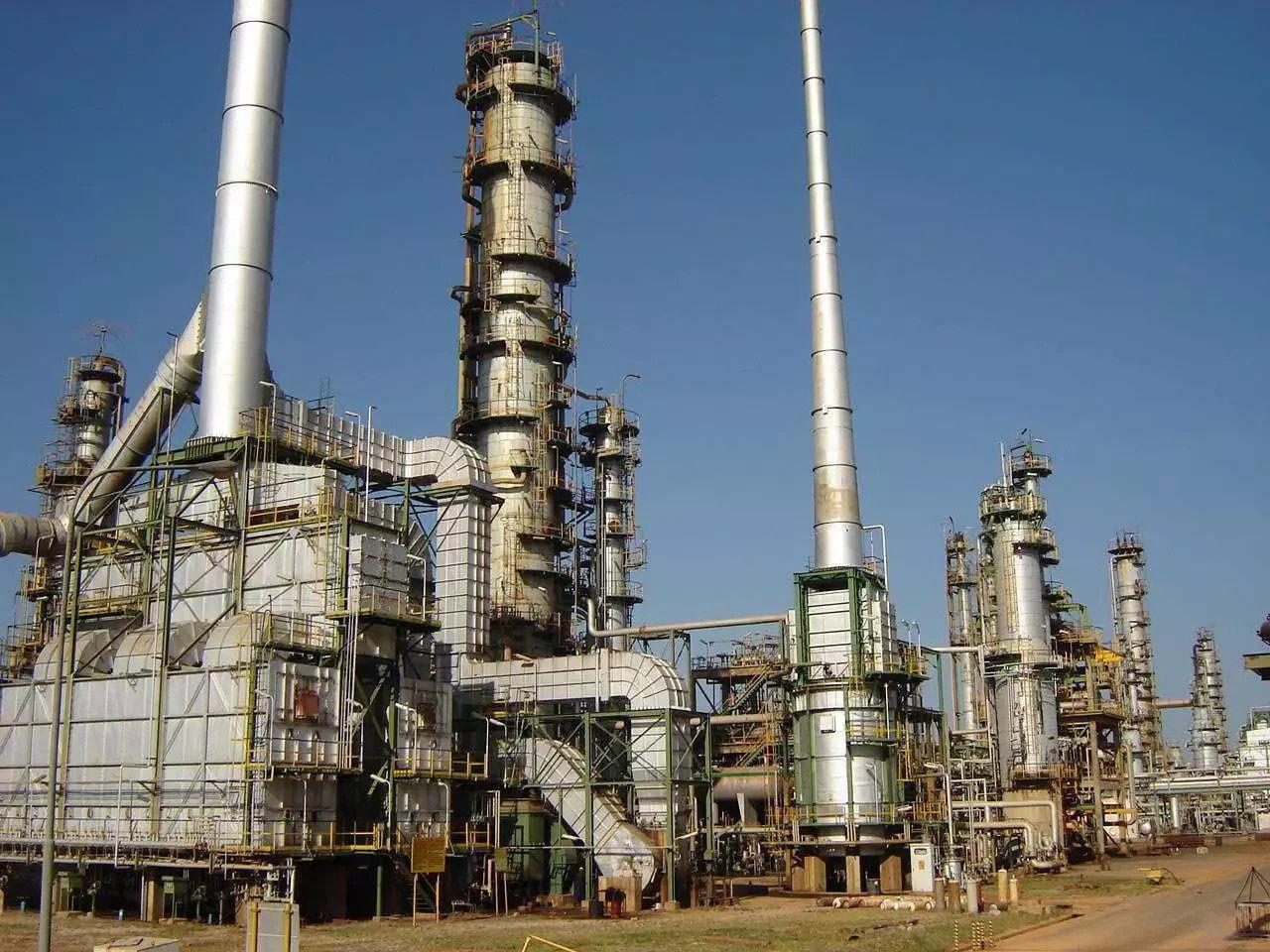
Available but fragmented public data indicates that Nigeria has spent billions of dollars on the rehabilitation of state-owned refineries since the early 1990s, yet output from the facilities has remained persistently weak, reinforcing the country’s dependence on imported refined petroleum products.
A data aggregation of disclosed spending across successive administrations shows a long-running cycle of intervention without commensurate operational recovery. Under General Sani Abacha (1993–1998), about $520 million was recorded for rehabilitation of the refineries in Kaduna, Port Harcourt and Warri, followed by $92m during the brief tenure of Abdulsalami Abubakar (1998–1999).
During the administration of President Olusegun Obasanjo (1999–2007), spending rose to about $800m, while the late President Umaru Musa Yar’Adua oversaw $57m in 2007 and a further $200m in 2009. Under President Goodluck Jonathan, $396m was committed between 2013 and 2015 for the Port Harcourt, Warri and Kaduna refineries, alongside a separate $99m reported by the Nigerian National Petroleum Company (NNPC) in 2015.

The data curated from across multiple reports show that between 2015 and 2019, the Muhammadu Buhari administration spent approximately $2.39bn on refinery rehabilitation. Since 2023, the current administration of President Bola Tinubu has committed about $2.8bn to similar efforts, pushing cumulative spending—based on available data to $7.35bn.
Despite these investments, Nigeria’s state-owned refineries have largely remained non-operational for extended periods, with negligible refining output. This has sustained the country’s reliance on fuel imports, historically managed by the NNPC, and contributed to significant fiscal pressures, including subsidy payments in recent years.
Further disclosures from the NNPC show continued funding commitments. The national oil company was reported to have spent N100bn on refinery rehabilitation in 2021 alone, averaging N8.33bn monthly throughout the year. The spending covered ongoing efforts to revamp facilities, particularly the Port Harcourt Refining Company, alongside Warri and Kaduna plants.
In spite of these interventions, progress has remained inconsistent. The NNPC has repeatedly restarted rehabilitation processes, including recent moves to partner with Chinese firms—Sanjiang Chemical Company Limited and Xingcheng Industrial Park Operation and Management Co. Ltd—under a proposed technical equity arrangement aimed at completing and operating the refineries.
The scale and persistence of spending have drawn legislative scrutiny. The National Assembly recently initiated a probe into refinery rehabilitation costs, seeking to ascertain how billions of dollars have been deployed over decades with limited tangible output. Lawmakers have raised concerns over transparency, project execution, and value for money in the repeated turnaround maintenance programmes.
However, a major constraint in fully assessing the efficiency of these expenditures is the limited availability of comprehensive and consistent data in Nigeria’s energy sector. Much of the spending data is derived from fragmented disclosures, media reports, and periodic reports by the NNPC and government agencies, rather than a unified, publicly accessible dataset.
This data gap poses significant challenges for evidence-based reporting and policy analysis. Without standardised reporting on refinery performance metrics—such as utilisation rates, output volumes, and cost benchmarks—linking expenditure to outcomes remains difficult. (Daily trust)
-

 News18 hours ago
Abuja Workers Turn To Pick-Up Trucks Amid Rising Transport Costs
-
 Politics23 hours ago
Security Operatives Guard Tinubu’s Billboards Ahead Campaign Launch
-
 News18 hours ago
Ebola patient in Nigeria is Swiss, had not visited DR Congo – Foreign Ministry
-
Politics18 hours ago
Results With Discrepancies Won’t Be Uploaded On IREV – INEC
-
 News18 hours ago
Zamfara Community Fights Back
-
Politics18 hours ago
2027: You Can’t Hide Voters’ Register And Expect Trust – Atiku Tells INEC
-
Politics18 hours ago
South-East has better presidential options than Peter Obi – Umahi
-
Metro18 hours ago
Fasoranti To Be Buried December 17 – Family