News
Revenue leakages: How Nigeria’s wealth vanishes before reaching federation account

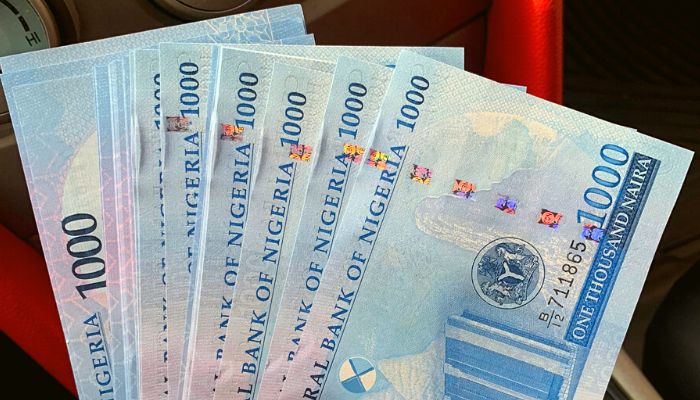
Nigeria’s economic crisis may not be rooted in a lack of money, but in a system that allows enormous revenues to disappear before they ever reach the nation’s central purse.
A new policy paper by Olisa Agbakoba Legal argues that trillions of naira meant for the Federation Account, the constitutional pool shared by federal, state and local governments, are routinely lost through deductions, under-remittances and opaque revenue practices, forcing a resource-rich nation to keep borrowing while millions sink deeper into poverty.
The paper, ‘The Federation Account of Nigeria and Infinite Possibilities’, argues that the country’s chronic poverty, collapsing infrastructure and escalating debt burden are not simply the consequences of low revenues or economic misfortune. They are symptoms of a deeper structural problem: Nigeria’s money is not arriving where the Constitution says it should.
That claim is difficult to ignore when set against the numbers.

Between 2023 and 2024, federation revenues rose from N16.8 trillion to N31.9 trillion, with 2025 figures showing continued growth. Yet in the same period, public debt ballooned to N159.27 trillion, while debt servicing swallowed 78 percent of federal revenues in 2023 and 69 percent in 2024, well above the 30–40 percent threshold considered sustainable by international financial institutions.
For ordinary Nigerians, these figures translate into visible decline: roads that decay faster than they are repaired, hospitals stripped of essential drugs, schools with no teachers, and electricity that disappears more often than it stays.
How does a country generating record revenues still borrow to survive?
The answer, the paper says, lies in what it calls “structural leakage.” Every day, billions of naira generated by agencies of government are deducted, retained, redirected or delayed before reaching the Federation Account. In 2025 alone, over N14.94 trillion, nearly 40 percent of gross federation revenues, was reportedly consumed by deductions before any distribution could occur.
This is not a technical irregularity buried in accounting ledgers. It is money that never became classrooms, never paved highways, never electrified villages.
And nowhere is the opacity more glaring than in Nigeria’s oil sector. The Nigerian National Petroleum Company Limited (NNPCL), the country’s single largest revenue generator, remitted only N600 billion of N1.1 trillion due in 2024, withholding N500 billion reportedly to offset legacy arrears. There is also an ongoing Federation Account Allocation Committee (FAAC) investigation into allegations of $42.37 billion in under-remittances between 2011 and 2017.
For years, critics have complained about NNPCL’s dual role as producer, seller, cost calculator and remitter of crude oil revenues. It is a structural conflict of interest that places accountability at the mercy of internal accounting.
The paper argues that no single institution should simultaneously earn revenue, determine deductible costs, calculate net proceeds and execute remittance.
But the crisis stretches beyond oil
Federal agencies, tax authorities, customs services and even courts generate enormous revenues, yet there is no single transparent dashboard showing exactly what is collected and what is remitted. The report notes that the Office of the Accountant-General itself identified N3.4 trillion in unaccounted MDA funds between 2019 and 2021, while a House of Representatives investigation found N8.7 trillion had passed through Treasury Single Account (TSA) gateways amid widespread unauthorised sub-accounts.
Which brings the report to one of its most provocative conclusions: the TSA, long celebrated as a hallmark anti-corruption reform, should be abolished. That recommendation will surprise many.
Introduced in 2015, the TSA was designed to consolidate federal revenues and reduce leakages. It was hailed as a major fiscal reform. But Agbakoba’s paper argues that it is constitutionally defective because it was created by executive directive rather than legislation and effectively intercepts revenues that constitutionally belong to all three tiers of government before they reach the Federation Account.
The paper calls the TSA “an unconstitutional usurpation.”
Its replacement, the authors argue, should be a Federation Account Administration Act that legally defines custodianship, enforces mandatory gross remittance, criminalises non-remittance, and creates a publicly accessible real-time revenue dashboard.
Under the proposed “gross remittance” model, every naira collected would first enter the Federation Account in full. Only afterward would operational costs or statutory deductions be appropriated transparently through the budget process.
It sounds like a technical adjustment. In reality, it could reshape Nigeria’s fiscal future.
The paper estimates that full compliance could increase distributable revenues by N15–20 trillion annually, enough to significantly narrow Nigeria’s infrastructure financing gap of roughly $100 billion a year. That is the difference between borrowing to stay afloat and investing to grow.
History offers precedent
The report points to China’s 1994 tax-sharing reforms, Ghana’s petroleum revenue architecture, and Kenya’s real-time treasury monitoring systems as evidence that disciplined revenue consolidation can transform state capacity.
Nigeria, it argues, already has the constitutional framework. What it lacks is enforcement. And that makes this more than an accounting issue. It is a democratic one.
Every election cycle, politicians promise roads, jobs, power and prosperity. Yet few are asked the simpler question: where is the money already collected in Nigerians’ name?
As the country inches toward the 2027 election season, the Federation Account may become more than a legal abstraction. It could become a political litmus test.
For President Bola Ahmed Tinubu, the paper says, the moment offers historic opportunity. It recommends an immediate executive order enforcing gross remittance, mandating public disclosure of all major revenue inflows, and beginning the legal dismantling of the TSA architecture. It would be among the most consequential fiscal reforms in Nigeria’s democratic history.
Because the central truth the report uncovers is difficult to dispute: Nigeria is not poor because it lacks resources. It is poor because too much of what it earns never arrives where the Constitution says it should.(BusinessDay)
-

 News22 hours ago
Tinubu extends 3-week vacation
-
Metro22 hours ago
Protest as hoodlums break into female hostel, rape student
-
Politics22 hours ago
I’ll never support Uzodimma to be senate president, says Wike
-
World News22 hours ago
US TV networks suspend Trump coverage after White House’s ban on three media outlets
-
News22 hours ago
FG Threatens To Shut Lagos-Calabar Coastal Road In Two Weeks
-
News22 hours ago
‘They’ve tasted its money’ — Umar Bago says boys are abandoning schools for mining in Niger state
-
Metro22 hours ago
Darkness hits Lagos-Ibadan Longbridge as more streetlights disappear
-
Business22 hours ago
Nigerian stock market valuation hits all-time high of N162.39trn