News
Nigeria has left behind its ‘fake life’ economy – Tinubu

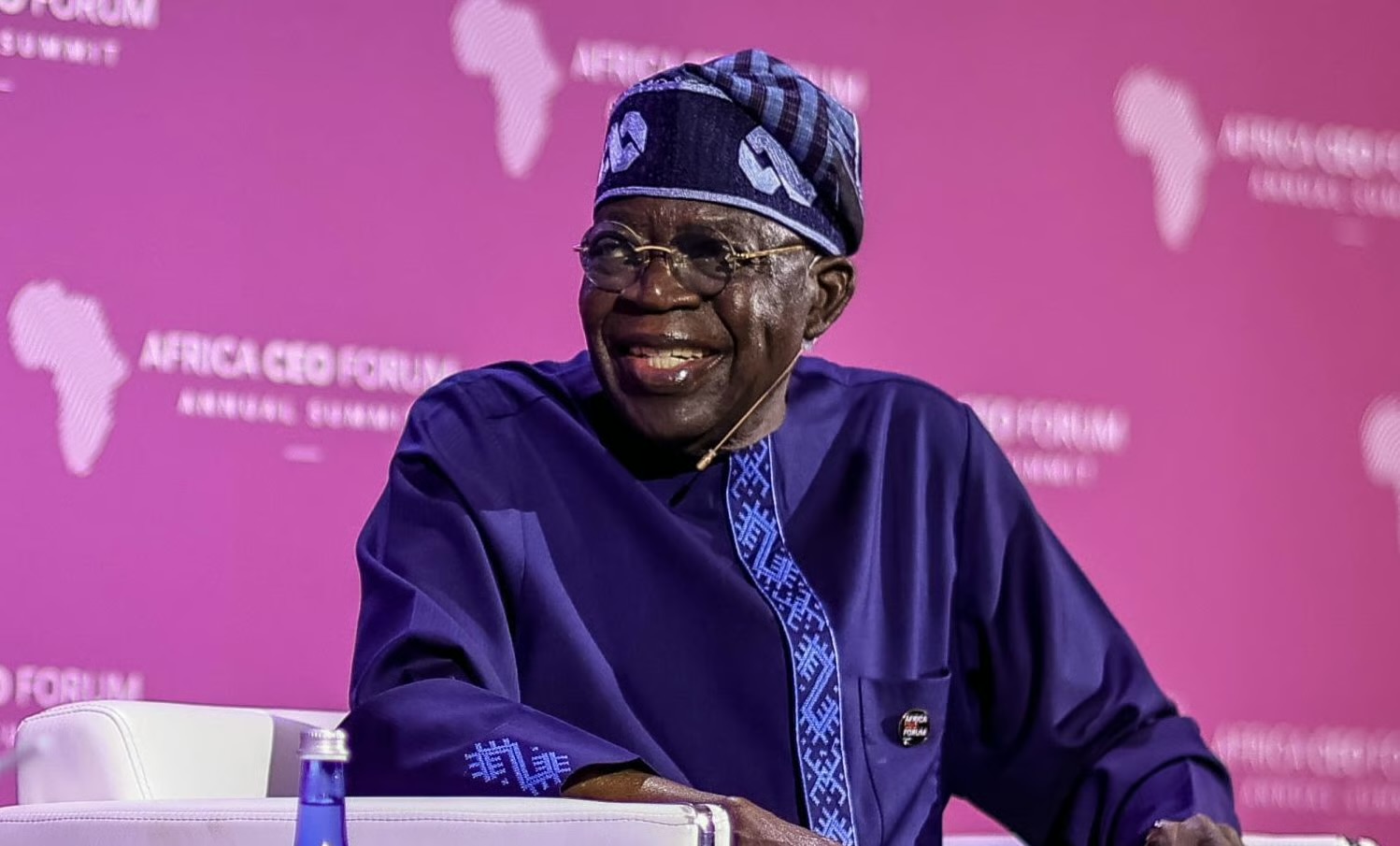
President Bola Tinubu has a phrase for the Nigeria he says he inherited: a “fake life”.
For decades, Africa’s most populous country subsidised petrol it could not refine at scale, defended a currency regime that drained foreign exchange, borrowed to fund consumption and watched oil revenues leak through smuggling, arrears and opaque import systems. In Tinubu’s telling, the removal of the petrol subsidy and the liberalisation of the naira were not ideological gambits but acts of fiscal survival.
“It is a fake life to think you can, in a global economy, continue [with] subsidy,” Tinubu told The Africa Report at the Africa CEO Forum in Kigali. Subsidies, he argued, encouraged “smuggling”, while a country that produced oil was left without functional refining capacity. Nigeria, he said, was “almost going bankrupt”, with 27 of its 36 states unable to pay salaries.
Stability without relief
Three years into his presidency, that remains the central claim of Tinubu’s economic project: that the shock was unavoidable. The harder question, with the 2027 election cycle already beginning to loom, is whether the pain can now be converted into a growth story voters can feel.

There are signs that investors and rating agencies are buying the first half of the argument. S&P this month upgraded Nigeria’s sovereign rating to B from B-, citing an improved macroeconomic profile, higher oil output, stronger domestic refining capacity and the exchange-rate reforms introduced after Tinubu took office. The World Bank expects growth of about 4.2% in 2026, while urging the government to maintain tight fiscal and monetary discipline.
But stabilisation is not the same as relief. Inflation has fallen sharply from the peaks reached after subsidy removal and currency depreciation, but the headline rate rose again to 15.69% in April from 15.38% in March, according to official data collated by Trading Economics. For households, ‘the naira is stable’ – as Tinubu now argues – is less persuasive than cheaper food, lower transport costs and regular work.
Tinubu’s answer is that Nigeria must build a new fiscal contract. Here, his language is blunt. Nobody likes tax, he says – not the wealthy, not the middle class, not the poor. But everyone wants roads, hospitals, schools, support for the vulnerable and the ability to prepare for shocks such as Covid-19. “Tax is a priority,” he said. “A citizen that pays taxes is a citizen, whether corporate or individual. If you are not a taxpayer and not exempted, then you are not a citizen.”
It is a politically brave line, and a dangerous one. Nigeria has one of the weakest tax-to-GDP ratios among large emerging economies, and successive governments have funded budgets by leaning too heavily on oil receipts and debt. Tinubu’s tax reform package, signed into law in 2025, seeks to simplify administration and broaden compliance. VAT remains at 7.5%, while the reforms revise the mechanics of collection and input recovery. Parliament had earlier softened parts of the package, including rejecting an increase in VAT to 12.5%, a reminder of how fragile the politics of revenue-raising remains.
The social bargain is obvious: Nigerians may accept a larger tax state only if it becomes a more capable state. Tinubu’s second-term answer, when asked what he would do with renewed political power, was not a detailed programme but a statement of temperament. “Do more work,” he said. “The world won’t wait for anybody.” The “hallmark of a transformative leader”, he added, is the ability to make decisions “at the time it has to be done”. In his first term, he said, he stopped reading newspapers because he knew the backlash would be fierce.
That reveals both the strength and weakness of Tinubu’s pitch. He has a theory of leadership based on decisiveness. What he still needs is a theory of delivery.
Nigeria first
He is most revealing not on austerity but on industrial policy. Tinubu is not presenting himself as a free-market reformer in the orthodox sense. Asked whether Nigeria should protect consumers or big business, he rejected the word “protection” but embraced “support” for large companies able to generate revenue and jobs. He named Dangote and BUA, then turned to infrastructure, domestic cement, Nigerian steel and crude supplied in naira to the Dangote refinery. “My philosophy is: Nigeria first,” he said.
This is the pivot. Tinubu wants to move from IMF-style stabilisation to developmental-state rhetoric: domestic champions, local inputs, import substitution where it saves foreign exchange, and infrastructure as a tool for market-making. The Dangote refinery is central to that story. Tinubu describes Aliko Dangote as a “risk-taker” who built an “audacious” refinery and should be supported with Nigerian crude sold in naira, avoiding letters of credit and foreign-exchange bottlenecks.
That agenda has obvious appeal in a country tired of exporting crude and importing scarcity. Yet it also raises the hardest policy question in Nigerian capitalism: where does legitimate support for national champions end, and market distortion begin? The refinery may strengthen fuel security and conserve dollars. But the downstream market will remain politically explosive if consumers suspect that state support for producers comes before competition and price discipline.
The Lagos-Calabar coastal highway is the second symbol of Tinubu’s new phase. He presents the 800km road as a nation-building corridor linking Lagos capital, South-South inclusion, eastern entrepreneurship and tourism. It is also meant to showcase his industrial logic: concrete roads using Nigerian cement, with steel made locally, reducing the need to spend scarce foreign exchange on imported bitumen.
The project is politically potent because it connects infrastructure with national integration. Tinubu explicitly framed it in inclusive terms: Nigerians do not choose whether they are born Igbo or Yoruba, he said; the country must be built together. But the road is also a stress test. Local reporting has questioned the cost, procurement and transparency of the project, with scrutiny intensifying around the secrecy of highway pricing and financing. If Tinubu wants the coastal road to stand for a new Nigeria, he must ensure it does not come to stand for the old one: megaprojects, opaque contracts and contested compensation.
The ECOWAS doctrine
The final plank is power abroad. Tinubu argues that Nigeria cannot face insecurity alone. It must work with neighbours, France, the US and African partners. “In ECOWAS [Economic Community of West African States], Nigeria is a big brother,” he said. “In Africa, we are the fat lady. We must sing the tune.”
That claim now faces a brutal test. The Sahel is fractured, Sudan is at war and jihadist networks continue to pressure the region. Nigeria’s rapid military support to Benin after the December 2025 coup attempt gave Tinubu a concrete example of regional leadership. Reuters reported that Nigeria’s Senate approved his request to deploy troops after Benin sought urgent air support, while ECOWAS condemned the attempted coup and moved to deploy a standby force.
Tinubu has moved Nigeria out of one “fake life”. His wager now is that a harsher reality can become a better one: a stable currency, higher revenue, domestic refining, visible infrastructure, jobs and restored regional influence. By 2027, Nigerians will not judge the courage of the shock. They will judge the life that followed. (The Africa Report)







-

 Business23 hours ago
BREAKING: Nigeria’s external reserves cross $54 billion, highest level in 18 years
-
News10 hours ago
Outcry as fake products flood markets
-
Metro24 hours ago
Ghanaian government launches app for lovers to verify each other’s marital status
-
Celebrity Gist10 hours ago
Okoye really sweet, Cardi B says after third sighting
-
News11 hours ago
N33.75bn Cash Transfer Mystery: FG Failed to Prove Millions of Vulnerable Nigerians Received Funds — Auditor-General
-
Business10 hours ago
Airport policies didn’t drive Uber out of Nigeria, says FAAN
-
Metro10 hours ago
Trafficker lures, sells 15 Nasarawa children