Politics
The economics of Atiku’s 33-year Aso Rock pursuit

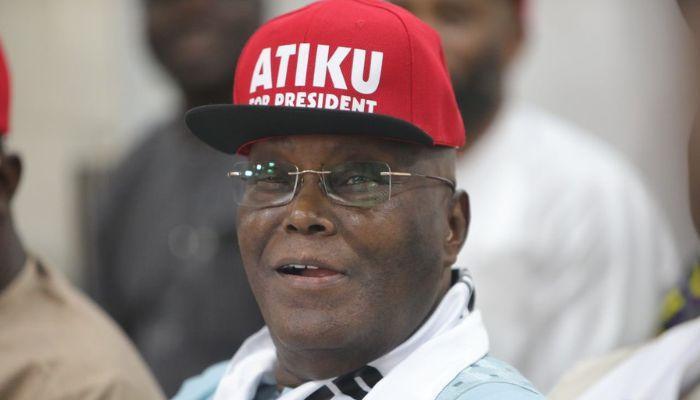
With his emergence as the presidential candidate of the African Democratic Congress (ADC) for the 2027 election, former Vice President Atiku Abubakar has once again positioned himself for a shot at Nigeria’s highest office.
The nomination marks Atiku’s seventh presidential primary contest since he first sought the presidency in 1993 and his fourth appearance on a general election ballot. It also extends one of the longest presidential pursuits in Nigeria’s political history.
While Atiku’s persistence has become a defining feature of his political career, his latest bid has renewed questions about the enormous financial and political costs associated with seeking the Nigerian presidency over three decades.
Although no publicly verified figure exists for how much Atiku has spent on his presidential ambitions, available records on nomination fees, campaign spending limits, lobbying contracts and election-related activities suggest a cumulative investment running into hundreds of billions of naira.

Rising cost of presidential tickets
One measurable component of Atiku’s presidential pursuit is the cost of obtaining party nominations.
His first attempt came in 1993 under the Social Democratic Party (SDP), whose presidential nomination and expression of interest form cost about N250,000. He eventually stepped down for the late Moshood Kashimawo Abiola, whose victory in the June 12 election remains one of the defining moments in Nigeria’s democratic history.
Following the return to civilian rule in 1999, Atiku became vice president under Olusegun Obasanjo and served for eight years.
By 2011, when he sought the Peoples Democratic Party (PDP) ticket against then-President Goodluck Jonathan, the form cost N5.5 million.
Ahead of the 2015 election, the All Progressives Congress (APC) fixed its presidential nomination and expression of interest forms at N27.5 million.
The PDP charged N12 million for its presidential ticket in 2019 and increased the amount to N40 million in 2023.
For the 2027 election, the ADC has pegged its presidential nomination and expression of interest forms at N90 million. In total, the former vice president spent approximately N175.2 million on forms alone.
While these figures represent only a fraction of actual campaign expenditure, they illustrate how the cost of political participation at the highest level has escalated dramatically over the years.
Campaigns beyond the nomination form
Political analysts note that nomination fees are often among the smallest expenses in a presidential campaign. The real costs arise from delegate mobilisation, nationwide consultations, political advertising, logistics, campaign staffing, polling agents, litigation and coalition-building.
Presidential candidates routinely travel across the country’s 36 states and the Federal Capital Territory, maintaining campaign structures and mobilising supporters over months.
Campaign spending limits established by electoral laws provide insights into the scale of resources involved.
For the 2007 election, the Electoral Act capped presidential campaign spending at N500 million. The limit increased to N1 billion for the 2019 election cycle and rose significantly to N5 billion under the Electoral Act 2022.
The newly enacted Electoral Act 2026 has further increased the ceiling to N10 billion for presidential candidates in the 2027 election.
Although campaign spending disclosures in Nigeria remain limited, major presidential contenders are widely believed to spend amounts approaching or exceeding statutory limits through direct and indirect campaign activities.
Given that Atiku has participated in multiple presidential primaries and general election campaigns since 1993, political observers argue that his cumulative expenditure is likely among the highest recorded by any Nigerian politician.
“The kind of massive corruption that goes into campaign funding should be an issue of interest to Nigerians. It is the reason why we must be bothered about where Tinubu, Atiku and Obi, the three major presidential contenders and governors in Nigeria, will secure the multibillion naira funds they need for the February 2023 elections,” Festus Adedayo, a columnist, wrote during the buildup to the 2023 elections.
“In developed democracies, a trackable account is opened, and a certified accountant is put in charge of the campaign office account. Every penny, whether secured through crowd funding, public or private donations, so far it goes into this account, is periodically subjected to the scrutiny of auditing.”
International lobbying and image management
Atiku’s political spending has not been restricted to domestic campaigns. Public filings under the United States Foreign Agents Registration Act (FARA) reveal that his political organisation has engaged foreign lobbying and public relations firms over the years.
Most recently, he retained Washington-based lobbying firm Von Batten-Montague-York, L.C., under a contract valued at $1.2 million over 12 months.
The agreement reportedly seeks to improve Atiku’s standing among US policymakers and shape international perceptions of Nigeria’s political environment ahead of the 2027 election.
The engagement underscores how modern presidential campaigns increasingly extend beyond domestic politics into international reputation management.
Sustaining a three-decade ambition
The scale of expenditure associated with Atiku’s political career has consistently raised questions about the source of funding for his campaigns.
Unlike many politicians whose wealth became visible only after entering public office, Atiku has repeatedly argued that his fortune predates his involvement in partisan politics.
He served for two decades in the Nigeria Customs Service, rising to the position of deputy director before leaving public service.
According to Atiku, investments in real estate, agriculture and logistics businesses formed the foundation of his wealth.
Particular attention has often focused on INTELS Nigeria Limited, one of the country’s largest oil and gas logistics companies, which evolved from earlier business ventures linked to him and his associates.
He also established the American University of Nigeria in Yola in 2004, an institution frequently cited by supporters as evidence of his entrepreneurial success.
Nevertheless, critics have continued to question whether private business interests and public service overlapped during certain periods of his career.
Political capital and repeated defections
Beyond financial expenditure, Atiku’s presidential ambition has also carried political costs.
Over the years, he has moved across several political platforms, including the SDP, PDP, Action Congress (AC), APC, PDP again and now the ADC.
While these movements enabled him to remain competitive in changing political circumstances, they have also provided opponents with ammunition to question his ideological consistency.
His 2007 departure from the PDP followed a highly publicised conflict with former President Olusegun Obasanjo, under whom he served as vice-president from 1999 to 2007. That fallout fundamentally altered the trajectory of his presidential ambitions and forced him into opposition politics.
Repeated presidential defeats have similarly tested his influence within party structures and among sections of the electorate.
Yet despite those setbacks, Atiku has remained one of the few opposition politicians capable of building national political coalitions across regional and party lines.
The burden of controversy
Atiku’s long political journey has also been accompanied by recurring corruption allegations and financial controversies.
One of the most prominent cases involved the Petroleum Technology Development Fund (PTDF), where investigations during the Obasanjo administration alleged irregular transfers of public funds into commercial banks and entities linked to him.
A Senate panel alleged that approximately $145 million had been improperly handled. Atiku denied wrongdoing and maintained that the allegations were politically motivated.
His name also surfaced in investigations connected to former US Congressman William Jefferson and later in a report by the US Senate Permanent Subcommittee on Investigations concerning financial transactions linked to one of his wives.
The reports generated significant public attention and became recurring issues during successive presidential campaigns.
However, despite years of allegations, Atiku has not been convicted by any court on the major corruption accusations made against him. That distinction has remained central to his defence and to the arguments of his supporters.
What does 2027 represent?
Atiku’s emergence as the ADC candidate raises questions about whether 2027 represents the culmination of a political project that began more than three decades ago.
At 80 years old by the time of the election, he will enter the race as one of the most experienced political figures in Nigeria’s democratic history.
But he will also confront the challenge of persuading voters who have repeatedly rejected his presidential bids.
For supporters, his persistence demonstrates resilience and commitment to public service. For critics, it reflects a political ambition that has survived longer than its electoral appeal.
Either way, Atiku’s presidential journey offers a case study in the growing financial demands of Nigerian politics.
From a N250,000 nomination form in 1993 to a N90 million ticket in 2027, from domestic campaigns to multimillion-dollar international lobbying contracts, his experience mirrors the increasing cost of seeking power in Africa’s largest democracy.
Whether the investment ultimately delivers the presidency remains uncertain. What is clear is that very few Nigerian politicians have devoted more money, time and political capital to the pursuit of Aso Rock than Atiku Abubakar. (BusinessDay)
-
News22 hours ago
Why I planned coup against Tinubu – Colonel Ma’aji
-

 News9 hours ago
BREAKING: NLC Disrupts Lagos Flight, Air Peace Passengers Stranded
-
 Metro9 hours ago
How Female Student Died On Lagos Campus – Law School
-
News9 hours ago
Security Operatives Abandon Kebbi Highway Over Lakurawa Attacks
-
Business9 hours ago
Dangote, NUPRC differ over Q2 crude supply
-
News9 hours ago
17 Bandits, 10 Police Officers Killed In Zamfara
-
News9 hours ago
PFIPC: Atiku raises concern over loopholes in Tinubu’s government
-
Metro8 hours ago
Uncertainty over Peller and Jarvis’ new N400m Abuja mansion as ‘original land owner’ storms court, petitions Tinubu, Wike