African News
South Africa’s worsening xenophobia exposes a broken economic promise

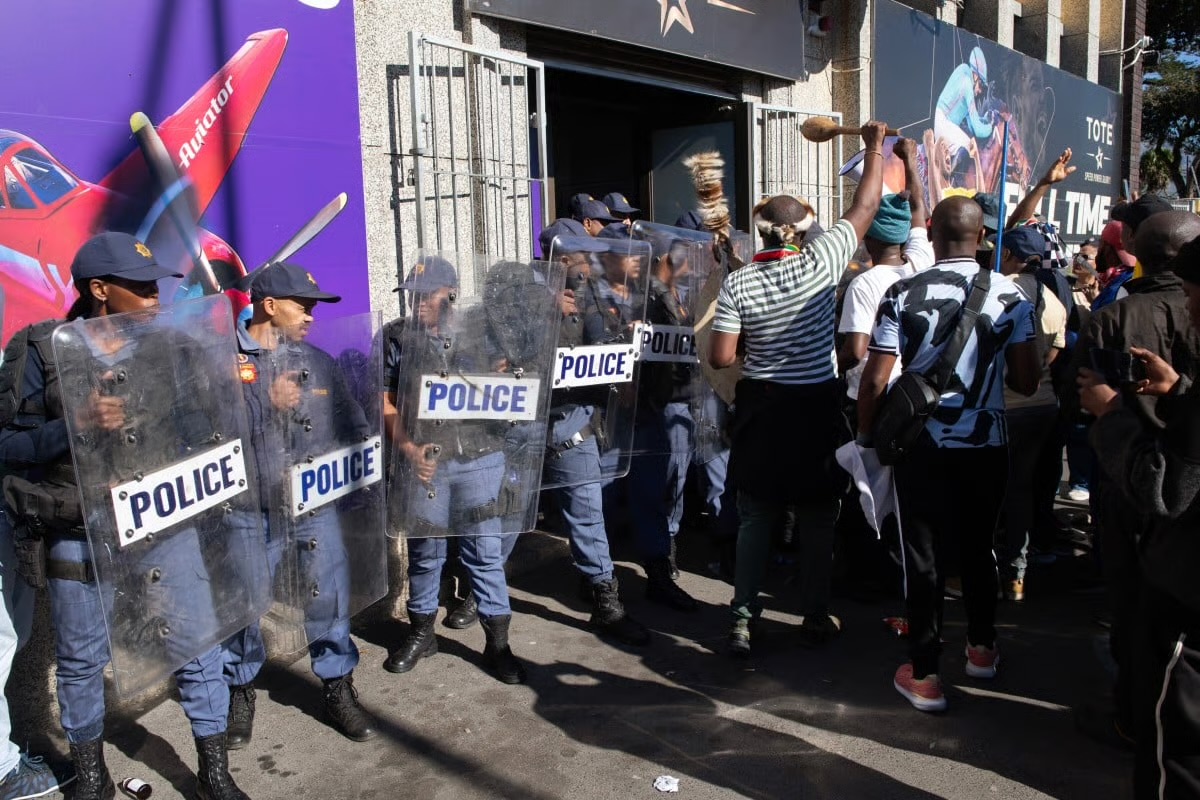
As one of Africa’s most industrialised economies, South Africa is also one of its main destinations for migrants. In 2022, it had about 2.4 million immigrants in a population of 63 million. Under apartheid, workers from neighbouring countries were used as cheap labour in mines and on farms. After democracy in 1994, labour migration spread into hospitality, security, transport and other services, according to Afrobarometer.
But anti-African migrant sentiment, often described by researchers as ‘afrophobia’ because it disproportionately targets African migrants rather than foreigners generally, has grown over the past two decades. Many low- and lower-middle-income South Africans increasingly blame migrants for unemployment and crime.
How did it come about?
Xenophobic violence first emerged as a major national concern during the attacks of 2008 and has continued intermittently ever since.
Xenowatch, an initiative of the African Centre for Migration & Society at the University of the Witwatersrand, has recorded 1,299 incidents of xenophobic discrimination and 696 related deaths since 1994. The monitoring group documented 406 verified incidents between 2022 and 2025, including 151 in 2025 alone, underscoring what it describes as a persistent pattern rather than a series of isolated outbreaks.

Many cases go unreported but together they create chronic insecurity
Most incidents occur in South Africa’s economic hub of Gauteng, followed by KwaZulu-Natal. The Western Cape and Eastern Cape have also recorded significant levels of anti-immigrant violence and discrimination.
What happened in the latest attacks?
Last week, about 400 immigrants in Mossel Bay, in the Western Cape, fled their homes after residents set houses alight. Mozambican authorities said five Mozambicans were killed in the violence, though South African police reported two deaths. Two others died in a car crash while fleeing.
Vigilante groups have previously blocked people without South African identity documents from accessing health care, until a court interdict stopped them. Immigrants are often scapegoated for food poisoning, crime, unemployment and other social problems.
In a recent statement, Xenowatch said xenophobic discrimination includes violence, denial of public services, eviction, extortion, harassment, selective enforcement of by-laws, threats, unlawful arrests and detentions, verbal abuse, hate speech and intimidation. Many cases go unreported, it said, but together they create “chronic insecurity”.
Why now?
Analysts say South Africa’s local government elections may be one catalyst.
“Inequality, unemployment and crime remain high or are rising,” Loren Landau, a senior migration researcher on the Xenowatch team, tells The Africa Report. “Add rising petrol costs, water cuts and irregular electricity, and you get widespread uncertainty and a loss of faith in the constitutional order.”
These pressures are sharpest among those already on the economic margins, he says. “Leaders – elected, selected and self-appointed – are capitalising on this disaffection for their own ends. We have seen xenophobic violence peak when leadership is disputed or up for grabs.”
“With the ANC [African National Congress] discredited and other parties short on concrete proposals to improve conditions, they are mobilising myths about foreigners’ impact to build support and stir passions,” he says.
ActionSA’s Herman Mashaba was among the first mainstream party leaders to put anti-immigrant rhetoric at the centre of his politics. Before becoming Johannesburg mayor on a Democratic Alliance (DA) ticket, he promised to “clean up” the city centre. His campaign targeted traders without the correct immigration papers or trading licences, and often took on afrophobic tones. Mashaba has insisted he opposes only undocumented migration.
Mainstream parties such as the ANC have warned against xenophobic rhetoric. Yet both the ANC and its national coalition partner, the DA, have hardened their language on border control, immigration and asylum rules.
Does South Africa have an illegal immigration problem?
In April, the Department of Home Affairs announced that it has deported nearly 110,000 undocumented immigrants since mid-2024, up 46% from the years before through campaigns like Operation New Broom, which employs new technologies like biometric scans.
…permits and visas were sold to the highest bidder
The land borders are also porous and unpatrolled in large sections, which allows for unauthorised and undetected crossings. Corruption among immigration officials also means “the country’s borders [are] not protected by law, but auctioned off through corruption”, the Special Investigating Unit said in February following a probe into the matter. The immigration system, it said, “has been treated as a marketplace, where permits and visas were sold to the highest bidder”.
Why are South Africans complaining?
The Human Sciences Research Council’s Social Attitudes Survey found that in 2025, South Africans were more hostile to immigrants than at any point since polling began in 2003. Hostility was strongest among poorer and working-class adults.
Steven Gordon, the council’s chief research specialist, wrote in The Conversation that KwaZulu-Natal had seen a sharp rise in anti-immigrant sentiment, linked to anger at the economic and political status quo.
South Africa’s deep inequalities worsened after the Covid-19 lockdowns. According to Gordon, hostility towards immigrants grew fastest among low- and lower-middle-income groups. “Poor people have been badly affected by a cost of living crisis and persistent deindustrialisation,” he said. “They need someone to blame and foreigners have long provided a handy scapegoat.”
That anger has been amplified by a digitally co-ordinated social-media campaign, driven by organised individuals and bots first set up during South Africa’s first Covid-19 lockdown in 2020 and reactivated earlier this year.
The posts helped spread news across the continent of largely peaceful anti-immigrant marches, initially organised by groups such as ‘March and March’. Unverified claims that a Ghanaian had been killed also circulated online, prompting Ghana’s government to arrange repatriation flights for 300 of its citizens.
How is the South African government responding?
President Cyril Ramaphosa has repeatedly condemned anti-immigrant hatred. In his Freedom Day address in April, he said: “We should never allow the legitimate concerns of our communities about illegal migration to breed prejudice towards our fellow Africans.”
In March 2019, the government adopted a national action plan to ‘combat racism, racial discrimination, xenophobia and related intolerance’. But it appears to have done little to reduce public hostility towards migrants. Security ministers held an emergency meeting on 25 May to finalise a framework for the plan. Attacks have continued.
Government figures have also helped fuel anti-immigrant sentiment. Health Minister Aaron Motsoaledi has blamed migrants for burdening the health system, while insisting that all sick people, including undocumented migrants, are entitled to state care. Arts and Culture Minister Gayton McKenzie’s Patriotic Alliance ran an aggressive campaign against illegal immigration before the 2024 election. It later joined Ramaphosa’s coalition government.
During a News24 interview, International Relations Minister Ronald Lamola suggested that diplomatic pressure over the attacks, especially from Nigeria and Ghana, was being co-ordinated by opponents of South Africa’s foreign policy – particularly its genocide case against Israel at the International Court of Justice.
Officials have pointed to statements by Nigeria and Ghana in May about deepening ties with Israel. Israel’s government communications office did not respond to an email sent on Thursday 28 May 2026 seeking comment on the allegation. (The Africa Report)
-

 Politics14 hours ago
2027: Atiku demands names of firms printing INEC’s ballot papers
-
Business13 hours ago
How 18yrs multiple gas policies sidelined domestic consumers
-
Business14 hours ago
Refiners back forward crude sales, oppose petrol price cap
-
Business14 hours ago
Nigeria’s debt interest soars 124% above revenue
-
Politics14 hours ago
Crude shortfall makes Atiku’s subsidy plan not workable – Presidency
-
News13 hours ago
NDLEA Arrests 83-Year-Old Woman Again, Intercepts Drugs At Nigerian Airports
-
 News14 hours ago
World Bank report affirms reform gains — Tinubu
-
Politics14 hours ago
2027: Tinubu can break Obi’s Southeast hold – Group