Politics
2027: How Governor Alia is turning the tables on Benue’s godfather

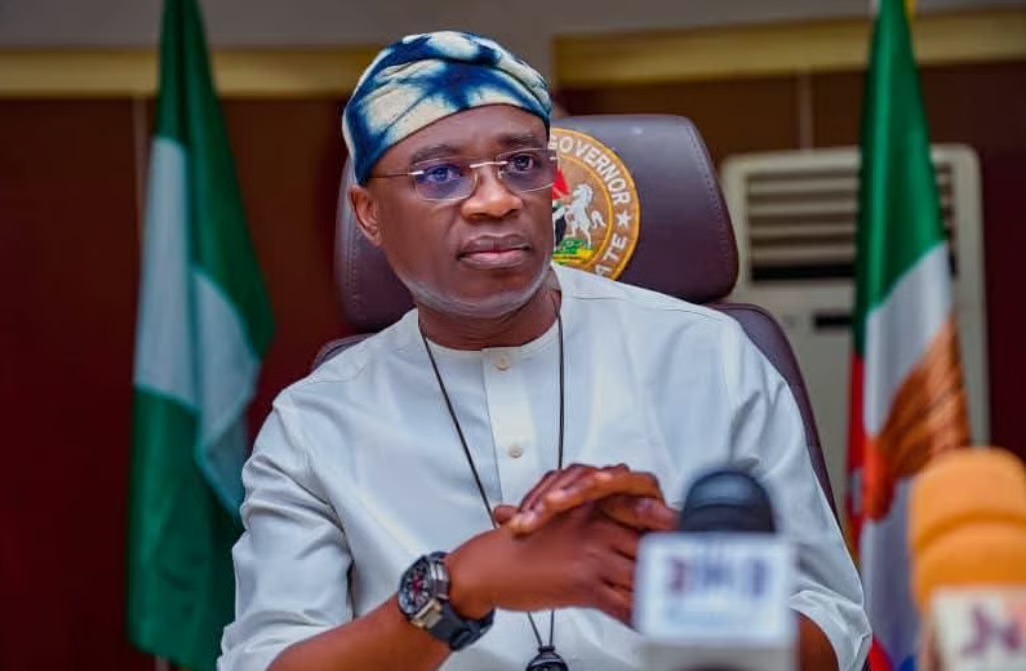
Three years after George Akume helped carry him from the pulpit to the governorship, Alia is using the office to strip his former godfather of the party machinery that once made him.
The latest blow came in the All Progressives Congress (APC) state and national assembly primaries, where candidates loyal to the governor swept through tightly controlled contests. Akume’s camp has cried foul, taken its complaints to the party’s appeal committee in Abuja and warned that Alia is pushing the ruling party towards rupture before the 2027 elections.
For Alia, the primaries were more than a candidate-selection exercise. They were a test of whether he, rather than Akume, now controls the Benue APC.
The risks of defying a godfather are clear elsewhere. In Rivers State, Governor Siminalayi Fubara has been boxed in after falling out with Nyesom Wike, the powerful former governor who helped install him. Alia has so far avoided that fate. He has survived an impeachment threat, reshaped the state assembly and secured his path towards a second-term ticket.

The godfather who made him
Alia’s political career began only four years ago, when he left the church’s frontline and joined the APC in 2022. That same year, he entered the governorship race and defeated a field of established politicians, including former ministers, a federal lawmaker and Barnabas Gemade, a former national chairman of the Peoples Democratic Party (PDP).
Alia studied the experiences of former governors Gabriel Suswam and Ortom, both of whom accused Akume of exercising excessive political control after helping them become governor
The APC primary was disputed and had to be conducted three times. Alia won each round. But Akume’s support was decisive.
“It was possible because Akume supported him,” says one Benue APC insider. “Akume lobbied and insisted on a direct primary, knowing that Gemade would have swayed delegates with his financial muscle if the party had opted for an indirect primary.”
Gemade, a two-time former senator, challenged Alia’s victory and described the direct primary as “improper, ultra vires and unacceptable”. When litigation followed, Akume picked up Alia’s legal bills, according to the insider.
Alia then won the March 2023 governorship election, riding on the popularity he had built as a priest through his healing ministry. His campaign slogan, “Yes Father”, gave the APC a candidate with a ready-made following.
“Alia was popular, but he did not have the resources needed for such a campaign,” says an APC chieftain. “It was Akume and his loyalists who raised money for him.”
Akume’s investment in Alia was also a way to settle scores with Samuel Ortom, the outgoing governor. Akume had helped Ortom win power in 2015, only for the relationship to collapse. Ortom returned to the PDP and declared in 2019 that he had “retired” Akume after the former governor lost his Senate seat.
With Akume behind him in 2023, Alia polled 473,933 votes to defeat Ortom-backed PDP candidate Titus Uba, who won 223,913 votes.
Breaking free
Once in office, Alia began to loosen Akume’s grip.
“Alia studied the experiences of former governors Gabriel Suswam and Ortom, both of whom accused Akume of exercising excessive political control after helping them become governor,” says an APC insider. “Alia decided he would not be controlled in the same way.”
His first move was to secure the Benue State House of Assembly. Akume wanted his former media aide, Becky Orpin, as speaker. Alia backed Hyacinth Dajoh instead.
“The party leadership had zoned the position to Gboko, and Akume had pencilled down Becky Orpin,” says a source familiar with the talks. “But Alia backed Dajoh, who is also from Gboko.”
With Dajoh in place, Alia had a legislature willing to approve key requests, including a controversial ₦6.6bn budget for local government elections. The House also backed a petition to remove the state’s chief judge, Justice Maurice Ikpambese, whom the governor accused of politicising his office.
The move triggered resistance from the Nigerian Bar Association and the National Judicial Council. It also opened a crisis inside the assembly after 13 lawmakers distanced themselves from the petition. For Alia, the episode showed the value of controlling the legislature. It also showed the cost.
When the speaker turned
The Alia-Dajoh alliance held for a time. By August 2025, it had broken down.
Tensions peaked after Alia ignored a House resolution suspending Grace Adagba, chair of the State Universal Basic Education Board, and two other officials. In response, the Dajoh-led House stopped receiving correspondence from the governor and refused to screen his commissioner nominees.
Dajoh also opposed Alia’s decision to exclude pro-Akume lawmakers from official benefits, including government vehicles, according to an insider.
“The governor felt Dajoh was becoming too powerful and moving closer to Akume’s camp,” says a party source.
Four pro-Alia lawmakers then launched impeachment proceedings against Dajoh. He fought back and suspended them. But the speaker’s position collapsed after lawmakers began gathering signatures for his removal. Dajoh resigned.
One of the four pro-Alia lawmakers, Alfred Emberger, became speaker. He later suspended Dajoh for three months over an alleged plot to impeach the governor. The House then cleared two commissioner nominees who had been rejected under Dajoh’s leadership.
Dajoh has since alleged that Alia forced him out because he refused to support a plan to relocate the palace of the Tor Tiv, the paramount ruler of the Tiv people, to the governor’s hometown. He also alleged that Alia squandered ₦200m in public funds on the failed bid to remove the chief judge.
Alia’s spokesman, Tersoo Kula, dismissed Dajoh’s claims as “a cocktail of conspiracy theories, unfounded accusations, outright falsehoods and reckless claims”.
Battle for the APC
While the assembly crisis unfolded, Alia was also targeting Akume’s hold over the APC structure in Benue.
By August 2024, the party had split into two bitter factions. Alia deployed security forces to seal the secretariat used by Akume’s camp to block a rival executive meeting.
“The last time I checked, I am still the APC leader in the state,” Alia said. “No APC meeting can be summoned without my knowledge.”
The feud deepened in November 2025, when part of a Tinubu campaign office in Makurdi, built by Akume’s camp, was demolished shortly after it was unveiled. Akume’s loyalists called it a political vendetta. Alia said the building was on a highway expansion corridor.
If he were a political strategist, he would know that causing division within your own party can be dangerous. It can cause the party to implode
By then, the struggle had moved beyond local control. A divided Benue APC threatened Tinubu’s 2027 map in the Middle Belt.
President Bola Tinubu and Vice President Kashim Shettima intervened, urging both camps to agree on a truce. But a reconciliation meeting in May produced only surface peace.
Akume told journalists that Tinubu had endorsed automatic tickets for the governor and all serving state and federal lawmakers. Alia publicly disagreed, insisting that aspirants would have to test their popularity in primaries.
The disagreement was not procedural. It went to the heart of the fight. Automatic tickets would have preserved Akume’s network by protecting sitting lawmakers and federal allies. Competitive primaries gave Alia a chance to replace them with loyalists.
The governor got his way.
The 2027 game
The direct primaries that followed handed victories to Alia’s loyalists and left several aspirants in Akume’s camp stranded.
Akume’s allies have challenged the exercise before the APC appeal committee in Abuja. Alia’s camp insists the process was transparent.
“The primary favoured those who mobilised support at the grassroots, not those who were merely close to the governor,” says Benedict Yawe, spokesman for the Alia faction. “Claims of irregularities are fabricated and do not reflect what happened.”
Akume’s camp rejects that account.
“The primary was a charade,” Daniel Ihomun, spokesman for the Akume camp, tells The Africa Report. “The governor’s camp made away with voting materials to exclude our supporters.”
He also rejects the idea that Alia has proved himself a strategist.
“If he were a political strategist, he would know that causing division within your own party can be dangerous,” Ihomun says. “It can cause the party to implode.”
That is now the central question in Benue. Alia has moved faster and harder than many expected. He has taken on the godfather who made him, captured the assembly and bent the APC primaries to his advantage.
But the victory is not yet secure. In trying to free himself from Akume, Alia may have deepened a split that could haunt the APC when the real election begins. (The Africa Report)
-

 Metro13 hours ago
Man Held Over Undeclared $265,000 At Kano Airport
-
News14 hours ago
30 states’ debt outpaces half their annual revenue
-
Metro13 hours ago
Abuja motorists battle cattle on city roads
-
Metro8 hours ago
US death row inmate survives execution after two lethal injections
-
Social Media News8 hours ago
WhatsApp introduces parental controls for teens
-
News13 hours ago
Reforms over, we’ve laid foundation for lasting prosperity — Tinubu
-
News13 hours ago
Tinubu Signs Bill Extending 2025 Budget Implementation To Dec 2026
-
Politics13 hours ago
Gombe PDP Suspends Pantami’s Challengers