News
Fulani settlers abandon southern communities, cite ethnic profiling

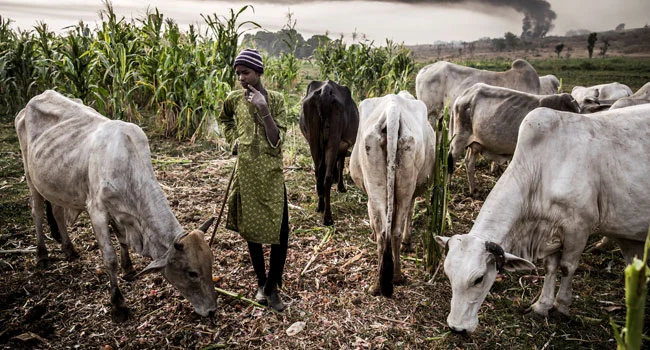
Many Fulani settlers in the southern part of the country are quietly abandoning communities they have lived in for decades over alleged ethnic profiling and rising insecurity, Sunday PUNCH reports.
Findings showed that many Fulani settlers in the South-East and South-West are either fleeing or being forced out of communities they have lived in for years, as host communities accuse them of complicity in terrorism and banditry.
Some of the settlers disclosed that many of them were facing hostility, while their cattle had been stolen, a development that has triggered a gradual migration of herders and cattle breeders to West African countries and other locations perceived as safer.
The development comes amid rising insecurity, including killings and mass abductions, which have fuelled accusations against Fulani communities and herders in some parts of the country.

While many residents in the affected communities continue to express concerns over violent crimes, leaders of the Miyetti Allah Cattle Breeders Association of Nigeria absolved their members of any criminal acts.
They insisted that ethnic profiling had resulted in the killing, ejection and forced relocation of innocent herders.
The South-West Chairman of MACBAN and Sarkin
Fulani of Abeokuta, Alhaji Muhammad Labar, told Sunday PUNCH that fear had spread among Fulani communities across the region, and confirmed that some pastoralists had relocated, along with their cattle, to neighbouring countries and other areas perceived to be safer.
“Some of our members have already left the South-West. They relocated to places where they believe they will be safer and more comfortable. There is fear within the Fulani community because of the way criminality is increasingly being linked to our people,” Labar said.
He added that MACBAN had intensified sensitisation efforts among its members to prevent panic and promote peaceful coexistence with host communities.
“We keep telling our people to remain calm because we know ourselves. We are peace-loving Nigerians, and we have lived in many of these communities for generations. We contribute significantly to the economy through cattle rearing and the livestock business. We have no interest in anything that can disrupt the peace of the South-West,” Labar stated.
The MACBAN leader stressed that the association had consistently condemned criminality and supported security agencies in apprehending anyone involved in kidnapping, banditry or other crimes.
“We have always maintained that anybody found wanting should face the law. We will never allow the image of the Fulani community to be dragged into criminality. We have been part of the South-West for over 200 years, and we want to continue living peacefully with our hosts,” he added.
Sunday PUNCH also gathered that the herders are facing increasing stigmatisation and hostility, with some allegedly killed or forcibly ejected from their communities.
The Deputy Director General of MACBAN, Gidado Siddiki, who supervises South-East and South-South, said the pastoralists were suffering stigmatisation, hostility and expulsion in some eastern states.
He expressed concern over the safety of pastoralists in Enugu State, where he claimed some of them had been killed, describing the state as the most difficult environment for pastoralists in the South-East.
“Between November 2025 and May 2026, at least 11 pastoralists were reportedly killed in various communities across Uzo-Uwani, Nkanu East, Enugu East and Igbo-Etiti Local Government Areas.
“Among the victims listed by the association were Bello Kabiru, Nasiru Mohammed, Manu Shehu, Altine, Manu Modi, Jibir Haruna, Ibrahim Musa, Ahmadu Musa, Abdullahi Bello, Gayya Shuaibu and Dr Idris,” Siddiki said.
In addition to the human loss, he said more than 40 cattle were reportedly killed during attacks across different communities.
According to him, many of the cases had been reported to security agencies but remained unresolved.
Siddiki also said Fulani settlers in Nkaleha community in Ebonyi State had been forcefully ejected, even after the Department of State Services committed them and leaders of the host communities to a Memorandum of Understanding.
“We are suffering stigmatisation, hatred and ejection in some states. Our people have been ejected from Nkaleha community despite the intervention of the DSS. Presently, we don’t have our people in Nkaleha and Nselu at all,” he said.
In Abia State, Siddiki said there was relative peace in most areas but alleged that pastoralists in Abia North Senatorial District continued to face discrimination and restrictions.
While noting improvements in security in Anambra State, he disclosed that more than 50 pastoralists were killed between 2021 and 2024, with hundreds of cattle either rustled or destroyed during attacks.
The association, however, acknowledged that security initiatives introduced by the state government and security agencies had significantly reduced incidents of violence in recent years.
Despite the improvements, Siddiki stated that two pastoralists were murdered by unidentified assailants in Isiagu community, Awka South Local Government Area of Anambra State, in 2026.
Speaking on condition of anonymity, a Fulani farmer living in Ifon Orolu, Osun State, decried the deteriorating level of trust between Fulani people living in the state and host communities.
He also said many Fulani people living in Osun were born and raised in the state and should not suddenly become objects of suspicion.
“Many of us were born and raised in Osun. I was born in Ifon some 41 years ago. I don’t think it is normal for people to start seeing me as a criminal because some people from my tribe are engaging in crime.
“I have been a victim of these violent people. My people are from Zamfara State. I visited the state about two years ago and was abducted by bandits. My family paid N7.5m before I was released.
“Since then, I have not visited the state. These criminals do not represent any tribe. We know ourselves, and we monitor our people living in the state. We have their data, and if any new person comes in, we will know.”
“We will continue to support our host communities and the security agencies in ensuring the security of the state. We have been sharing information with security personnel and remain committed to ending the insecurity,” he said. (Punch)
-

 Business18 hours ago
OPay seeks DSS, police probe over shutdown rumour
-
 Business19 hours ago
BREAKING: Uber shuts down operations in Nigeria
-
Business19 hours ago
NNPC profit drops 48% to N279bn as July revenue falls
-
Politics19 hours ago
2027: I’ll be Atiku, Obi’s first casualty if Tinubu loses — Wike
-
Business19 hours ago
FG’s reforms restore investor confidence, put Nigeria on recovery path – Dangote
-
Sports19 hours ago
Premier League breaks transfer record for second straight summer
-
Metro19 hours ago
Awujale stool: Court sends Fusengbuwa suit to administrative judge for reassignment
-
Politics21 hours ago
Wike accuses Imo, Kwara govs of waging war against him