News
Power debt: Tinubu’s N4trn bond is a racket, says Atiku

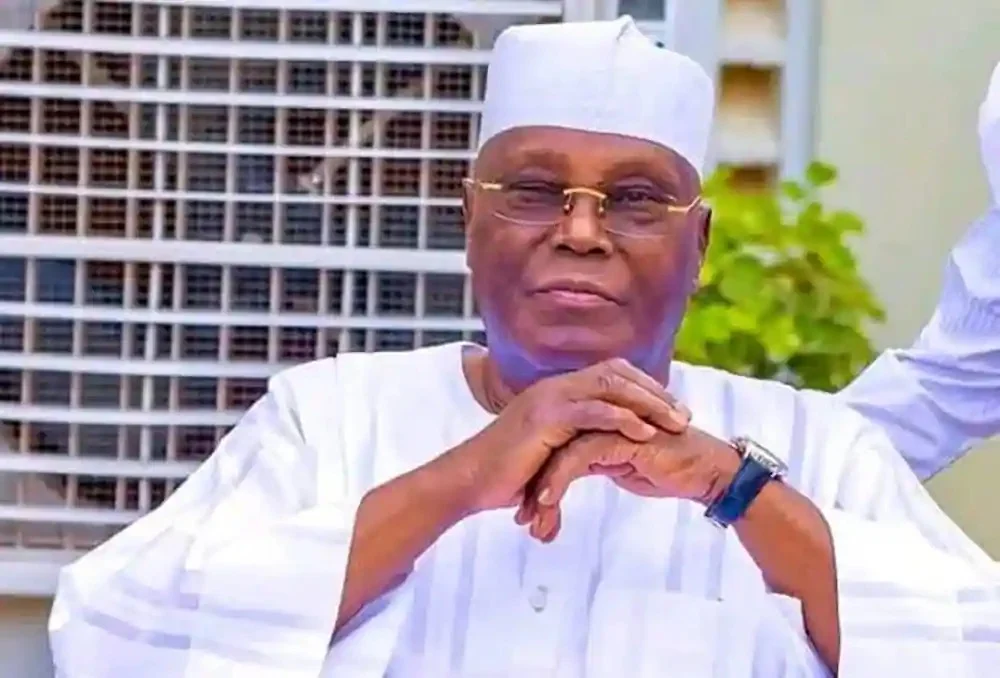
Former Vice President, Atiku Abubakar, has accused the Federal Government of engaging in what he described as a “racket dressed up as reform” by repeatedly borrowing to settle debts in the power sector, questioning the whereabouts of previously raised funds and demanding a full public account before any fresh bond is issued.
Atiku, through his Senior Special Assistant on Public Communication, Phrank Shaibu, on Sunday, described the Federal Government’s latest plan to raise a bond that will increase the debt liability to N4tn to clear outstanding obligations in the electricity sector as “a scandalous display of fiscal recklessness, institutional dishonesty, and brazen contempt for public accountability.”
The African Democratic Congress presidential candidate said Nigerians were justified in demanding explanations from the administration of President Tinubu over what he called a recurring cycle of borrowing to address the same problem without disclosing how previous interventions were utilised.
“Nigerians have every right to be outraged by what is fast becoming a recurring cycle of borrowing, deception, and non-disclosure under the Tinubu administration,” the statement said.

According to Atiku, the government had on several occasions announced debt-clearing initiatives for the power sector, only for the liabilities to remain unresolved.
He recalled that on December 20, 2025, “The Federal Government announced the issuance of a N590bn power sector bond to clear debts owed to electricity generation companies and gas suppliers.
“Barely a month later, another N501bn bond under the same programme was reportedly fully subscribed and earmarked for settlement of verified obligations.”
The former Vice President further noted that in April 2026, “President Tinubu approved a fresh N3.3tn plan to clear power sector debts, with government officials presenting the initiative as a breakthrough in efforts to restore stability to the electricity market.”
However, Atiku said recent disclosures by the Association of Power Generation Companies suggested that the debts remained largely unsettled.
“Yet, in a stunning contradiction of those claims, the Association of Power Generation Companies has publicly disclosed that the debts remain largely unpaid,” he added.
He cited comments attributed to the association’s Chief Executive Officer, Joy Ogaji, who reportedly stated that the N501bn bond raised to settle part of the debt had yet to translate into payments to creditors.
“In simple terms, billions were raised, subscriptions were celebrated, announcements were made, and victory was declared, but the creditors are still waiting for payment,” the statement added.
Atiku also referenced Tinubu’s June 12 Democracy Day address, during which the President highlighted a fresh intervention in the power sector as evidence of his administration’s reform agenda.
“What makes this development even more troubling is that President Bola Tinubu, in his June 12 Democracy Day address, publicly touted a fresh debt-clearing initiative for the power sector as evidence of his administration’s commitment to reform.
“Yet, before the applause from that announcement could die down, Nigerians were confronted by the uncomfortable reality that previous debt-clearing bonds remain shrouded in unanswered questions,” he stated.
The former Vice President argued that accountability, rather than repeated announcements, should be the measure of government performance.
“Democracy is not sustained by grand declarations; it is sustained by accountability. A government cannot celebrate a new solution while refusing to explain the fate of the old one,” he stressed.
Raising concerns over transparency in the management of public funds, Atiku asked the government to disclose details of all monies raised under various power-sector debt settlement programmes.
“This raises a simple question that the Tinubu administration appears unwilling to answer: What happened to the money?” he queried.
Using logic to illustrate his point, Atiku likened the recurring debt-settlement initiatives to “a man repeatedly returning to the marketplace with the same goat he claimed to have sold the previous day.”
“The Nigerian people are counting, and what they are seeing does not add up.
“There is a name for repeatedly collecting money to solve the same problem while the problem remains unsolved. It is called a racket,” he argued.
He added that the pattern of announcing a crisis, borrowing to address it, celebrating the intervention and then returning for fresh borrowing without proper disclosure would trigger investigations in any serious democracy.
“What makes this scandal particularly alarming is the emerging pattern. The government announces a crisis. It raises debt in the name of solving the crisis. It celebrates the intervention. It refuses to provide a detailed account of how the funds were utilised. The problem remains. Then another borrowing programme is unveiled to solve the same problem all over again.
“That is not reform. That is not economic management. That is not governance. It is a revolving door of debt and opacity that would trigger investigations in any serious country,” the statement added.
Atiku said the consequences of the persistent liquidity crisis in the electricity sector continued to be borne by ordinary Nigerians through poor power supply, rising energy costs and increasing dependence on alternative power sources.
“The tragedy is that while government officials move from one announcement to another, ordinary Nigerians continue to suffer the consequences of a dysfunctional power sector. Businesses are collapsing under crushing energy costs. Manufacturers are struggling to remain competitive. Families spend a significant portion of their income on alternative power sources,” he further said.
He therefore called on the federal government to provide a comprehensive breakdown of all funds raised under the various debt-settlement arrangements.
“The government must disclose how much was raised, where the funds were domiciled, who received payment, what debts were settled, what obligations remain outstanding, and why fresh borrowing has become necessary despite repeated assurances that the problem was being addressed.
“Anything short of full disclosure will only reinforce the growing public perception that the power sector has become a conduit for financial manipulation rather than a vehicle for national development,” he said.
Concluding, Atiku warned against further borrowing without accountability.
“No serious nation can continue to borrow its way into darkness. No responsible government repeatedly seeks fresh debt to settle liabilities it previously claimed to have settled.
“Before another bond is issued, before another debt is raised, and before another round of self-congratulatory announcements is made, Nigerians deserve answers. Until those answers are provided, this entire exercise will remain what it increasingly appears to be: a racket dressed up as reform and a scandal searching desperately for a cover story.”
The federal government has yet to officially respond to the allegations.
Nigeria’s power sector has struggled for years with mounting debts owed to generation companies and gas suppliers, a situation that industry operators say has constrained investment, threatened electricity supply and deepened the sector’s liquidity crisis.
Successive administrations have introduced intervention funds and financing arrangements aimed at stabilising the market, but concerns over transparency and the effectiveness of such interventions have persisted. (Punch)
-

 News17 hours ago
Nigerians Already Enjoying Cheaper Transport Fares – Tinubu
-
News12 hours ago
Inside Sunrise’s Mambilla money trail: $1.74m to Dasuki’s son, Agunloye’s ‘medical expenses’ — and a promised cut for Malami
-
Metro11 hours ago
Woman Allegedly Kills Husband Planning To Marry Second Wife In Kano
-
News35 minutes ago
EFCC sets up team to investigate Atiku, Malami, others named in ICC ruling on Mambilla deal – Report