Nearly 80% of Nigerians say the country is moving in the wrong direction ahead of the 2027 general election, according to the first wave of the Nigeria 2027 Voter Sentiment Tracker released by SBM Intelligence.
The report found that almost eight in every 10 respondents expressed dissatisfaction with the country’s trajectory, reflecting widespread concerns over economic conditions, insecurity, unemployment, and governance.
According to the report, the survey was conducted across Nigeria’s six geopolitical zones and covered 829 eligible voters in eight states and the Federal Capital Territory.
The exercise was carried out in the third week of May 2026 through face-to-face interviews conducted in markets, schools, viewing centres, and hotels.

SBM Intelligence said the survey was designed to gauge electoral sentiment ahead of the 2027 elections, covering voter registration, turnout intentions, issue priorities, candidate favourability, confidence in the electoral process, media consumption patterns, and concerns about artificial intelligence-driven misinformation.
What the data is saying
The report shows that dissatisfaction with the country’s direction cuts across virtually all regions of Nigeria.
- Wrong-direction scores exceeded 88% in the South-East, South-South, North-Central and North-West zones. The South-East recorded the highest level of dissatisfaction, with 92.2% of respondents saying the country is headed in the wrong direction.
- The South-South followed closely with 89%, while the North-West recorded 88.2%. In the North-Central, 90.1% of respondents expressed a negative assessment of the country’s direction.
- The South-West and North-East recorded relatively lower levels of dissatisfaction, though majorities in both regions still expressed concerns. About 60.3% of South-West respondents and 63.5% of North-East respondents said the country was moving in the wrong direction.
The findings suggest that public discontent remains widespread despite regional differences in political preferences and voting behaviour.
The report also found that insecurity remains the dominant concern for many Nigerians.
Across the country, 45% of respondents identified insecurity and terrorism as their most pressing concern. Another 34% cited a combination of economic hardship and insecurity, while 13% pointed primarily to economic issues.
Insecurity was particularly prominent in the North-West, South-West and South-East, where large majorities identified security challenges as the issue that worries them most.
However, it is important to note that the survey reflects the views of 829 respondents interviewed across Nigeria’s six geopolitical zones and should be interpreted as a snapshot of voter sentiment rather than a prediction of the 2027 election outcome.
Assessment of Tinubu administration
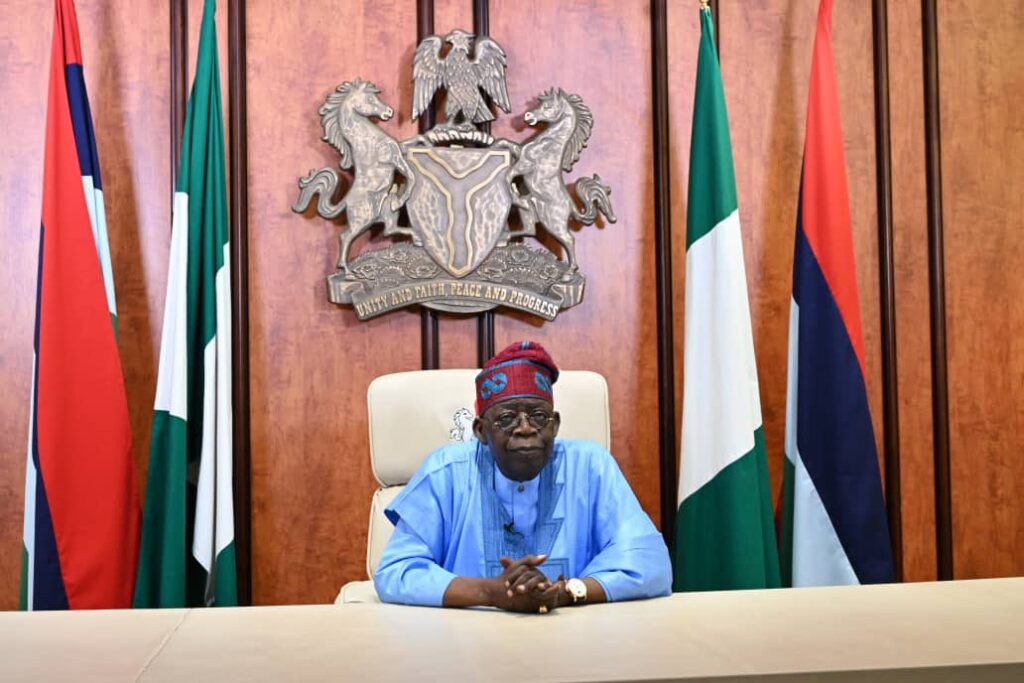
The survey paints a bleak picture of public perceptions of President Bola Tinubu’s administration.
According to the report, Tinubu recorded a national net favourability score of negative 58.5, making him the least popular among the leading political figures assessed.
Respondents were also asked to rate the administration’s performance across five policy areas, including inflation, taxation, security, jobs and electricity.
- The South-East gave the administration its lowest average rating of 1.14 on a four-point scale, while the North-West recorded the highest score of 2.02. However, even the highest rating remained below the midpoint of 2.5, indicating that respondents generally viewed government performance negatively.
The report noted that approval ratings remained weak across all geopolitical zones, reflecting widespread frustration with living conditions and governance outcomes.
More insights
Beyond dissatisfaction with current conditions, the survey suggests that voter sentiment could significantly influence the outcome of the 2027 election.
The report found that regions with the strongest turnout intentions also recorded some of the highest levels of dissatisfaction with the country’s direction.
- The South-East recorded the highest turnout intention at 87.4%, followed by the South-South at 82.9% and the North-West at 82.4%.
SBM Intelligence noted that these regions could play a decisive role in determining the outcome of the next presidential election, particularly if voter mobilisation remains high.
The survey also highlighted concerns about the growing influence of social media and artificial intelligence on political information.
According to the report, social media is now the primary source of news for many Nigerians, particularly in the South-East where usage was highest.
At the same time, significant numbers of respondents expressed concern about AI-generated misinformation and deepfakes, raising questions about the quality of information voters may consume during the election season.
What you should know
The findings come as political activity ahead of the 2027 election continues to gather momentum, with the contest already shaping up to resemble the three-way presidential race that characterised the 2023 election.
- While party alignments could still change before the polls, the current political landscape points to a contest involving President Bola Tinubu of the APC, Peter Obi of the NDC, and former Vice President Atiku Abubakar of the ADC, with each expected to command support in different parts of the country.
The survey also comes amid growing concerns over insecurity, particularly the resurgence of kidnappings across several states. In recent months, reports of abductions involving commuters, farmers, students, traditional rulers, and other citizens have continued to dominate public discourse, reinforcing security as one of the most important issues likely to influence voter decisions ahead of the election.
According to the report, the combination of widespread dissatisfaction, strong voter motivation in key regions, and an increasingly fragile information environment could make the 2027 election one of the most consequential in Nigeria’s recent hist.(Nairametrics)