Politics
POST-MORTEM: History made — how Oyebanji defied Ekiti’s consecutive-term governor jinx

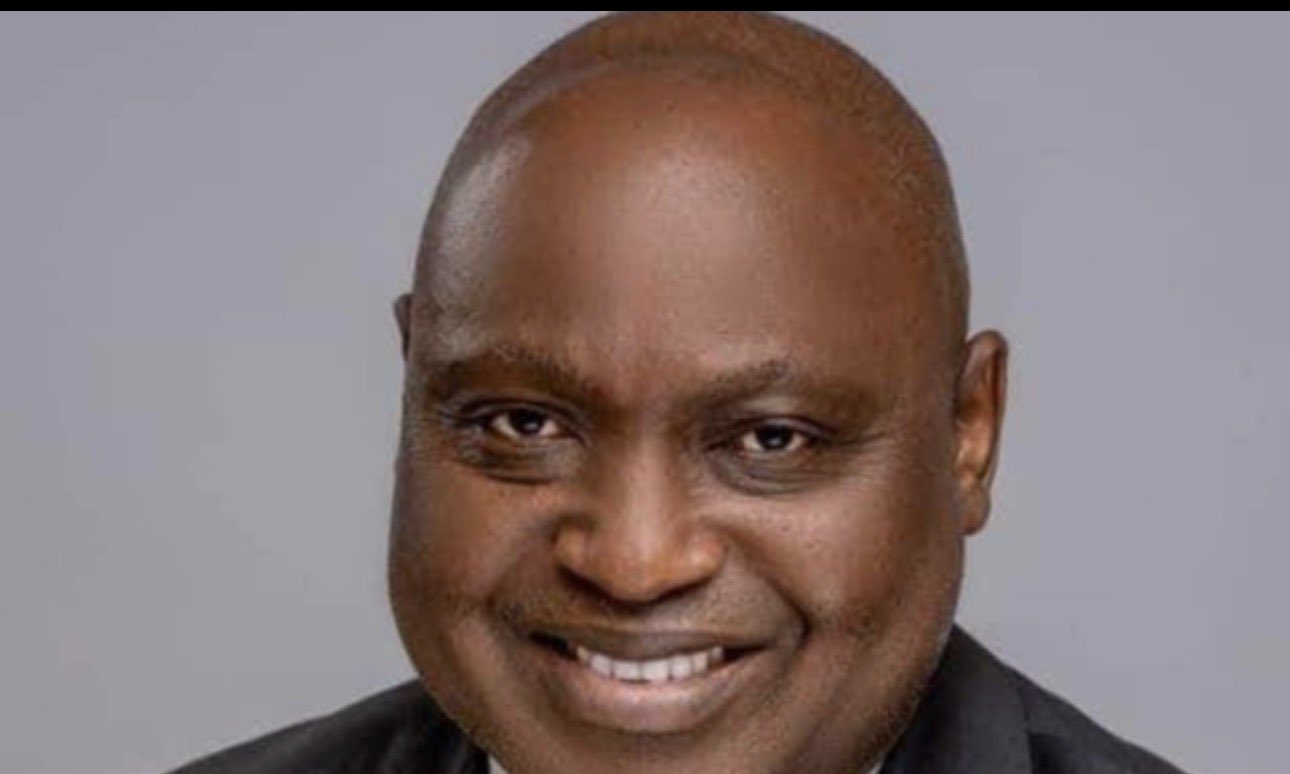
On Saturday, Biodun Oyebanji, candidate of the All Progressives Congress (APC), was re-elected as the governor of Ekiti state.
He secured 319,224 votes to defeat Wole Oluyede of the Peoples Democratic Party (PDP), who polled 40,543 votes, and Dare Bejide of the African Democratic Congress (ADC), who got 12,872 votes.
The significance of the feat lies not merely in winning another election, but in overcoming an entrenched historical trend that had come to define the state’s political identity.
What historical trend? You ask.

For more than two decades, Ekiti cultivated one of the most intriguing electoral traditions in the country.
Since the return to democratic rule in 1999, the south-west state, created from Ondo in 1996, developed a tradition of refusing to grant sitting governors a second consecutive term after their first four years in office.
Successive governors either served a single term and exited power or, in the case of those who eventually returned to the government house, did so only after years in the political wilderness.
The pattern gave rise to a popular view among political observers that Ekiti voters preferred change over consecutive administrations.
From Niyi Adebayo, the state’s first civilian governor, to Ayodele Fayose, Segun Oni, and Kayode Fayemi, no occupant of the government house was able to secure consecutive terms.
A HISTORY OF ALTERNATING MANDATES
Ekiti’s democratic history has largely been defined by electoral reversals and changing political loyalties. Adebayo was elected in 1999 on the platform of the defunct Alliance for Democracy (AD). His administration gave way to Fayose’s Peoples Democratic Party government in 2003, which ruled until 2006.
Fayose, the state’s second civilian governor, was impeached on October 16, 2006, by the state house of assembly.
He was briefly replaced by Friday Aderemi, who was the speaker of the state assembly at the time.
Biodun Olujimi, Fayose’s deputy, would also declare herself the governor, setting up a parallel government.
To quell the conundrum, former President Olusegun Obasanjo suspended all claimants to the office and the state assembly and appointed Tunji Olurin, a retired brigadier general, as the sole administrator to run the state.
The PDP retained power when Segun Oni was elected in 2007.
Oni’s tenure was interrupted by protracted litigation and rerun elections, and subsequent efforts to return to office were rebuffed by the electorate.
This paved the way for Fayemi’s emergence in 2010.
Four years later, in 2014, Fayose returned to office under the PDP, only for Fayemi to reclaim power in 2018 under the All Progressives Congress (APC).
The pendulum-like nature of these transitions helped cement Ekiti’s image as one of Nigeria’s most unpredictable political theatres.
Unlike many states where incumbency often translates into electoral dominance, Ekiti repeatedly demonstrated a willingness to interrupt continuity.
HOW OYEBANJI REWROTE HISTORY
Against the weight of history, Oyebanji’s re-election marked a significant departure from the state’s entrenched electoral tradition.
His victory effectively dismantled a 27-year-old pattern that had survived changes in parties, personalities and political alliances.
In becoming the first governor to secure consecutive terms since the advent of the Fourth Republic, Oyebanji accomplished what had eluded his predecessors.
The victory has etched his name into Ekiti’s political history as the man who finally shattered the state’s long-standing succession jinx.
His path to re-election was largely smooth, and the political dynamic tilted overwhelmingly in his favour.
The PDP went into the election deeply divided, while the ADC — which has failed to secure victory in any election since its emergence as an opposition coalition in July last year — lacked the grassroots structure needed to mount a serious challenge in the state.
His administration’s regular salary payments, investment in infrastructure projects and a relatively stable political environment also endeared him to voters.
FACTORS THAT WORKED AGAINST THE PDP
The PDP entered the governorship election hobbled by a debilitating leadership crisis and entrenched factional rivalries, exposing deep fissures within the opposition party.
Oluyede is of the camp led by Kabiru Turaki, while the rival faction aligned with Nyesom Wike, minister of the Federal Capital Territory (FCT), enjoys official recognition from the electoral umpire.
The internecine struggle spilt into the courtroom and cast a shadow over the party’s preparations for the polls.
Citing unresolved judicial pronouncements arising from the leadership tussle and the conduct of the party’s primary, INEC omitted Oluyede’s name from both the provisional and final lists of candidates — a development that threatened to torpedo the PDP governorship candidate’s bid.
It took the order of the court of appeal to compel the electoral commission to recognise Oluyede as the party’s legitimate standard-bearer.
In the end, the PDP’s internal crisis and the ADC’s weak presence in the state all but handed Oyebanji victory on a platter.(TheCable)
-

 Business13 hours ago
Again, petrol price hike looms after crude hits $115
-
Business13 hours ago
CBN grants JPMorgan preliminary approval for merchant bank
-
News13 hours ago
Wike’s son accuses businessman, lawyer of making false claims over ‘$2.1m fraud’ case
-
Politics13 hours ago
Tinubu’s Kaduna rally won’t save him in 2027 — Makinde campaign
-
Sports13 hours ago
Kompany hospitalised after collapsing at Bayern training ground
-
News13 hours ago
Ogun Govt Mulls Relocation Of Communities Over Gas Leak
-
News13 hours ago
Ebola virus in Nigeria genetically related to Kenya’s index case, says Ali Pate
-
News13 hours ago
Canada grants asylum to 7,643 Nigerians in 30 months