Politics
2027: Why Mohammed Abacha’s path to Kano power keeps closing

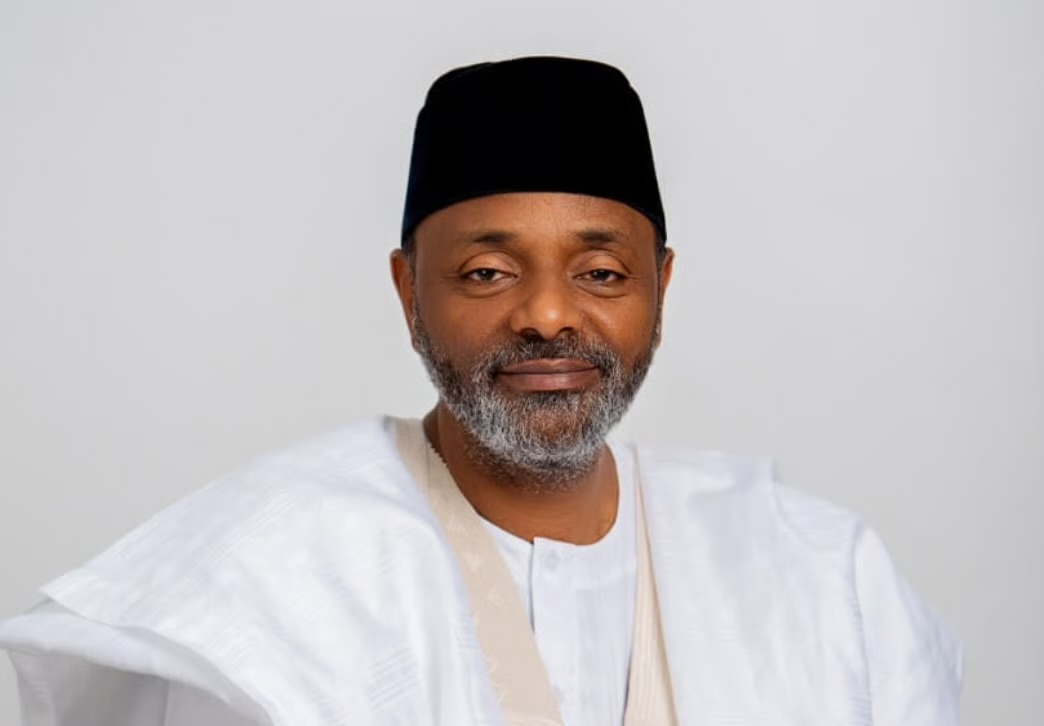
Mohammed Abacha’s latest setback came in the Peoples Democratic Party (PDP) governorship primary ahead of Nigeria’s 2027 election, where he finished behind Muhammad Bello Dalhatu. It was not an isolated defeat.
Since 2011, Mohammed has pursued the Kano governorship across three parties, through primaries, defections and court battles. Each route has ended in failure.
The question is no longer whether he has ambition. It is why the door keeps closing.
An unfinished family project
His father’s sudden death on 8 June 1998 also left behind an unfinished political project. Sani Abacha, who had seized power in the coup that nearly succeeded five years earlier, was widely believed to have been preparing a transition from military ruler to civilian president. Mohammed’s later entry into Kano politics therefore carried a dynastic charge. It looked less like an ordinary governorship bid than an attempt to reclaim a place for the family in Nigeria’s civilian order.

Part of the answer lies in the name he carries. To some northern admirers, Sani Abacha’s years in power are remembered as a period of relative economic stability and strong central authority. To critics, he remains a byword for repression, corruption and one of Nigeria’s most notorious kleptocratic regimes.
For Mohammed, that inheritance has proved double-edged. The Abacha name guarantees attention in a crowded political field. But it also makes him hard to embrace for elites who fear the stigma that still surrounds the family.
“Naturally, his father’s name is a factor,” says Adamu Garba, a Kano-based political analyst and chieftain of the All Progressives Congress. He argues that the association of the Abacha era with “state criminality” and the movement of public funds abroad has continued to weigh on Mohammed’s chances. Garba adds that Mohammed was close enough to power for some old grievances to linger.
The burden of inheritance
That baggage did not start with his formal entry into politics. After Nigeria returned to civilian rule in 1999, President Olusegun Obasanjo’s government pursued the Abacha family over alleged financial crimes. Mohammed spent three years in detention and also faced allegations linked to the assassination of Kudirat Abiola, wife of Moshood Kashimawo Olawale ‘MKO’ Abiola, the presumed winner of the annulled 1993 presidential election. He regained his freedom in 2002 after agreeing to return more than $2bn in assets allegedly looted by the family.
When he entered politics in 2009, he appeared to be testing whether the family name could be rehabilitated in Kano. He told journalists he had come “first to understudy the situation”. His mother, Maryam Abacha, also appealed publicly to the state’s people to treat her children as their own – a bid to turn memory, kinship and nostalgia into political capital. Mohammed then joined the PDP, hoping to win its governorship ticket.
Blocked by the machinery
But Kano was already crowded with heavier players. Rabiu Musa Kwankwaso, seeking a return to power, dominated the PDP space. Mohammed complained of a lack of internal democracy and defected in 2010 to the Congress for Progressive Change (CPC), the party founded by Muhammadu Buhari, one of his father’s closest allies.
On paper, the move made sense. Abacha had appointed Buhari to head the Petroleum Trust Fund, and Buhari had often resisted attempts to portray the late military ruler as corrupt. Yet even there, Mohammed could not force his way through. He won the CPC governorship primary, but the party denied him the ticket and replaced him with Brigadier General Lawal Ja’afaru Isa. Buhari’s intervention did not produce a reversal.
The Abacha name may be famous, but fame is not the same as embedded power
The episode revealed the weakness that has followed Mohammed ever since. His surname gave him visibility, but not control of party machinery. In Kano, where political outcomes are shaped by organised blocs, patrons and former governors, recognition alone is not enough. Mohammed later described the CPC episode as “very bitter”, a revealing phrase given the party’s links to Buhari and the Abacha family.
A costly misread
Mohammed returned to the PDP in 2013, saying its leadership had addressed his concerns about internal democracy. But the timing was poor. Much of northern Nigeria was turning against President Goodluck Jonathan and moving towards Buhari and the newly formed APC. Mohammed and Maryam Abacha instead backed Jonathan.
“The APC today is not an option,” Mohammed said at the time. It proved a costly misread. In 2015, he entered the PDP governorship race, then boycotted the primary, alleging that the outcome had been predetermined in favour of Salihu Sagir Takai, backed by former governor Ibrahim Shekarau. He challenged Takai’s emergence in court and lost.
Outside the structures
His next experiment was more damaging. After leaving the PDP again, Mohammed emerged as the All Peoples Democratic Alliance (APDA) governorship candidate for the 2019 election. He won just 3,025 votes, while APC candidate Abdullahi Ganduje polled more than one million. The result showed how little a famous name could achieve without grassroots structures.
By 2023, Mohammed was back in the PDP. He won a factional primary, only for the courts eventually to hand the ticket to Sadiq Aminu Wali. His latest PDP defeat has now reinforced the pattern: promise, dispute and exclusion.
Fame is not power
Garba says the underlying problem is Kano’s political architecture. “In Kano’s mature political system, it is almost impossible to become governor without the buy-in of key stakeholders,” he says. “It doesn’t appear that Mohammed enjoys that support.”
He also argues that Mohammed has struggled to convert his paternal Kano identity into a durable local base, especially without his father alive to rally senior figures around him. The Abacha name may be famous, but fame is not the same as embedded power.
That is where the legacy becomes most complicated. The late military ruler still retains a measure of popularity in parts of northern Nigeria, especially among those who compare his rule favourably with the leaders who followed. The North, Garba says, benefited from his administration, particularly through Buhari’s Petroleum Trust Fund. But elites are more cautious. In private, he says, some may speak warmly of Abacha’s record. In public, they keep their distance.
Mohammed’s persistence suggests he has not abandoned the governorship dream. But unless he rebuilds his image, enters Kano’s stakeholder circles and turns recognition into alliances, his path will remain blocked.
The Abacha name still opens conversations in Kano. It has not opened Government House.(The Africa Report)
-

 Business13 hours ago
Again, petrol price hike looms after crude hits $115
-
Business13 hours ago
CBN grants JPMorgan preliminary approval for merchant bank
-
News13 hours ago
Ogun Govt Mulls Relocation Of Communities Over Gas Leak
-
News13 hours ago
Wike’s son accuses businessman, lawyer of making false claims over ‘$2.1m fraud’ case
-
Politics13 hours ago
Tinubu’s Kaduna rally won’t save him in 2027 — Makinde campaign
-
Sports13 hours ago
Kompany hospitalised after collapsing at Bayern training ground
-
News13 hours ago
Canada grants asylum to 7,643 Nigerians in 30 months
-
News13 hours ago
Ebola virus in Nigeria genetically related to Kenya’s index case, says Ali Pate