African News
African nations demand formal apology, reparations over transatlantic slave trade

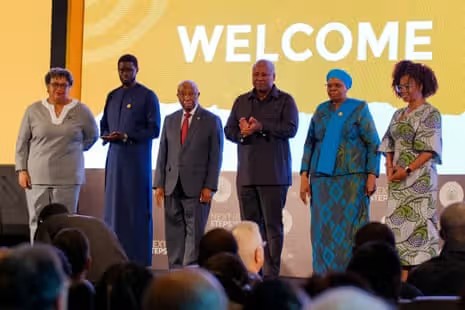
African and Caribbean countries have reiterated calls for reparations from countries that benefited from the transatlantic slave trade.
The nations also asked for a formal apology, with Ghanaian President John Dramani Mahama telling delegates: “History does not ask us to inherit guilt, but it asks us to inherit responsibility.”
The demands were made on Friday at the end of a three-day conference in Accra, which looked to advance the push for reparatory justice, the first major meeting since the adoption of the landmark United Nations (UN) resolution in March declaring the trafficking of enslaved Africans as the gravest crime against humanity.
After last week’s conference, a 19-point global framework for reparatory justice was laid out.

The document dubbed ‘The Accra next steps commitment on reparatory justice’ included a call for “all state and non-state institutions yet to do so” to “offer full, formal and unconditional apologies as a foundational step towards reconciliation, trust-building and reparatory justice”.
Mahama, who is also the African Union (AU) champion on reparations, said the adoption of the resolution was intended to provide the foundation for “more meaningful” engagement, reflection, and action on reparatory justice.
Samuel Ablakwa, Ghanaian minister of foreign affairs, said some countries announced commitments during the conference.
Ablakwa said the Netherlands had pledged to return about 2,000 artefacts to Ghana, while Germany had indicated its readiness to repatriate artefacts from the Bono traditional area.
He added that Denmark had reaffirmed its apology for its role in the slave trade and pledged support for the preservation of Christiansborg Castle in Accra as a site of remembrance.
Ablakwa noted that the participation of countries such as China, India and Russia reflect growing global support for the reparatory justice movement.
French President Emmanuel Macron also gave a virtual note at the conference, where he recognised that enslaved people were “dehumanised and treated as goods”.
However, he cautioned against reducing reparations for slavery to financial compensation alone, saying they should not be seen as a “cheque written to bring the story to a close”.
The conference called on African leaders to complement demands for external reparations with domestic measures to restore dignity and address contemporary forms of exploitation. (TheCable)
-

 News17 hours ago
UK universities withdraw admission offers to Nigerians over visa crackdown
-
News17 hours ago
Why kidnappers target NYSC members — Security experts
-
Politics17 hours ago
2027: Protest, relief as INEC releases final candidates’ list
-
News17 hours ago
Benue: Suspected herdsmen kill nine in fresh Ukum attacks
-
Politics16 hours ago
2027: Opposition, APC clash over campaign funding
-
World News17 hours ago
US gunman shoots dead 7 relatives, family friend
-
Business17 hours ago
Fitch revises Nigeria’s outlook to positive, affirms ‘B’ rating
-
Opinion16 hours ago
Did Obi actually win in 2023?