Business
Nigeria’s economic crisis may be fueling a silent mental health emergency

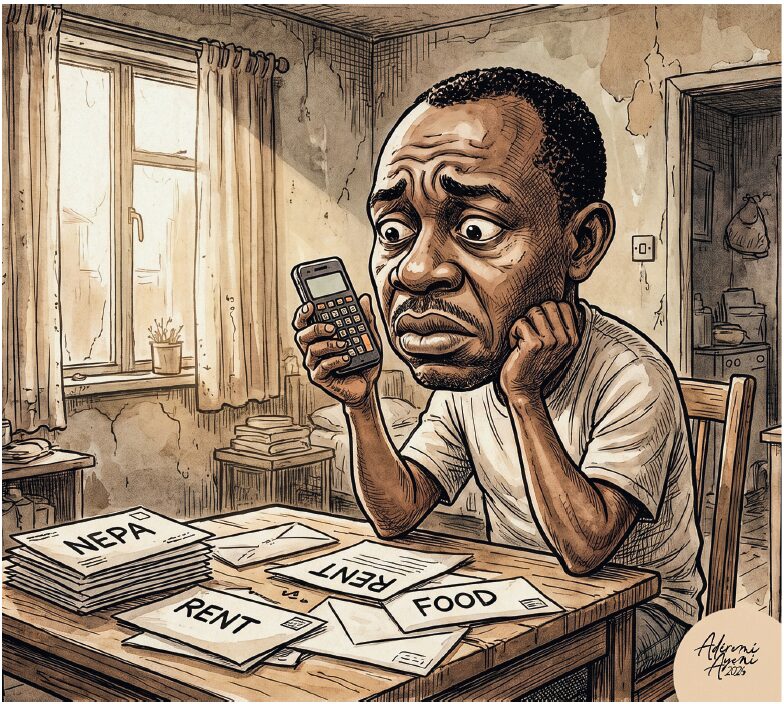
Inflation, rising housing costs, unemployment, insecurity and declining purchasing power have become defining features of everyday life in Nigeria. Much of the public conversation around these challenges focuses on economic indicators, government reforms and their impact on household finances. Far less attention is paid to another consequence that affects millions of Nigerians: mental health. As economic pressures persist across the country, many Nigerians are confronting anxiety, depression and emotional exhaustion that rarely feature in policy discussions despite their consequences for wellbeing and national productivity.
By 2025 and into 2026, economic pressures on households have deepened rather than eased. While reforms such as fuel subsidy removal and exchange-rate unification were intended to place the economy on a more sustainable footing, many families continue to grapple with rising living costs, shrinking purchasing power and a fragile sense of financial security.
Across major urban centres such as Lagos, Abuja and Port Harcourt, housing costs have risen sharply, with landlords frequently demanding between six months and one year’s rent upfront. According to property market reports, rents in parts of Lagos have doubled within a relatively short period. Housing, once considered a basic necessity, has become a major source of financial and psychological stress for many households. Rising rents have also pushed many workers farther from their workplaces, resulting in long commutes, fatigue, overcrowded living conditions and additional pressure on mental well-being.
These conditions are not merely economic statistics. They shape how people think, feel and function daily. Studies by the World Health Organisation and public health researchers estimate that roughly one in five Nigerians experiences a mental health condition, with anxiety and depression among the most common.

Poverty and financial instability remain among the strongest drivers of psychological distress. The inability to meet basic needs such as food, shelter and healthcare creates chronic stress that often develops into prolonged anxiety, depression and emotional exhaustion. Social pressures, family expectations and the stigma associated with financial hardship frequently compound the problem. The impact is particularly evident among informal sector workers, who account for more than 60 per cent of Nigeria’s labour force according to the National Bureau of Statistics. Without stable incomes or meaningful social protection, increases in food, transport and housing costs translate directly into emotional strain.
Nigeria’s youth unemployment and underemployment are also one of the causative factors to the state of mental health in the country. It is estimated that over 40 per cent of graduates face prolonged uncertainty after completing tertiary education and the National Youth Service Corps (NYSC).
This has given rise to what is popularly described as “NYSC drift”, a period of stagnation marked by joblessness, underemployment, or reliance on unstable gig work. At the same time, the “Japa” phenomenon, mass emigration in search of better opportunities, has become both a coping mechanism and a new source of stress, as individuals navigate visa uncertainties, financial strain, and social dislocation.
Insecurity further compounds the challenge. From insurgency in the North-East to banditry in the North-West and kidnapping across many parts of the country, millions of Nigerians live with varying degrees of fear and uncertainty. According to the Internal Displacement Monitoring Centre, more than three million Nigerians remain internally displaced, many of whom face trauma-related conditions, including post-traumatic stress disorder.
The relationship between economic hardship and mental health also operates in the opposite direction. Poor mental health can reduce productivity, limit employability and weaken income-earning capacity, creating a cycle that deepens poverty. Globally, depression and anxiety are associated with significant productivity losses and reduced workforce participation. In an economy with limited social safety nets, diminished productivity can quickly translate into reduced earnings or job loss, while treatment costs place additional pressure on already strained households.
Nigeria’s mental health infrastructure remains critically underdeveloped. The country has fewer than 300 psychiatrists serving a population of over 200 million people, according to the Association of Psychiatrists in Nigeria. Most are concentrated in urban areas, leaving rural communities with little or no access to specialised care.
Stigma remains another major obstacle. Mental illness is often misunderstood and attributed to spiritual causes or personal weakness, discouraging many people from seeking professional support. Although Nigeria enacted the National Mental Health Act in 2023, implementation has been slow, and integration into primary healthcare remains limited. Cost also remains a significant barrier, as most mental health services are financed through out-of-pocket spending.
Addressing this crisis requires coordinated interventions that recognise the link between economic policy and mental wellbeing. Evidence from global development programmes shows that social protection initiatives, such as conditional cash transfers, can significantly improve mental health outcomes. Expanding such programmes in Nigeria could provide immediate relief for vulnerable populations.
Mental healthcare should also be integrated more effectively into the National Health Insurance Authority framework. Training primary healthcare workers to deliver basic mental health services offers a practical response to the shortage of specialists. School and university counselling services should be strengthened, while workplace mental health programmes should become more common across both the public and private sectors.
Technology provides additional opportunities. Nigeria’s growing digital ecosystem can support telemedicine platforms that make mental health services more accessible and affordable, particularly for younger populations. Public awareness campaigns and community-based support initiatives can also help reduce stigma and encourage early intervention.
Nigeria’s economic challenges are unlikely to disappear overnight, but ignoring their psychological consequences will deepen the crisis. Mental health is a core component of economic well-being. A workforce under chronic stress cannot drive sustainable growth, while widespread psychological distress limits national productivity and development. (BusinessDay)
-

 Business19 hours ago
Why J.P. Morgan picked five Nigerians to lead its merchant bank
-
Business24 hours ago
Petrol Consumption Hits Record Low Amid Rising Prices
-
News17 hours ago
Nigeria no longer has Ebola, says WHO
-
Business23 hours ago
FirstHoldCo Reports N911bn Profit Before Tax in 9 Months 2026; Reinforcing Profitability and Resilience
-
Politics24 hours ago
INEC To Decide On Pantami, Gwarzo, Adebutu, Others October 29
-
Politics17 hours ago
2027: Oluremi Tinubu confirms vehicle donation to APC youth leaders
-
News24 hours ago
FCT: Rising Transport Fares Threaten Children, Teachers’ School Attendance
-
News17 hours ago
Court rules El-Rufai has case to answer in phone-tapping trial