News
Nigeria’s security spending trap leaves violence undefeated

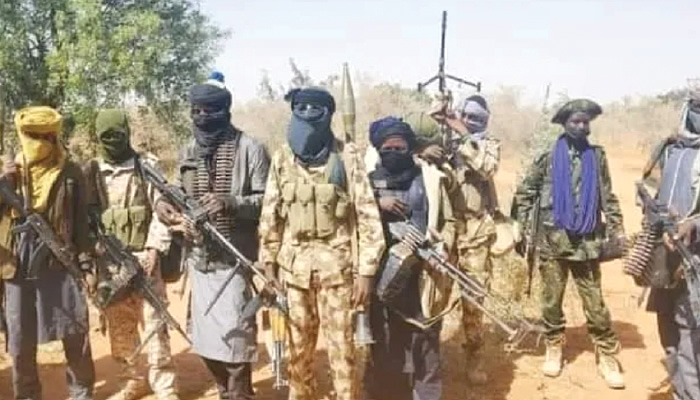
For years, Nigeria’s response to insecurity has followed a familiar pattern: increase spending, deploy more forces, launch operations and hope the situation improves.
But the violence keeps changing shape.
A new security assessment by SBM Intelligence shows why Nigeria’s security challenge has become harder to solve. The problem is no longer only the number of attacks happening across the country, but the ability of armed groups to adapt faster than the state can respond.
From bandits expanding into new territories, terrorists changing their tactics, and kidnapping networks relocating after pressure from security agencies, the report paints a picture of a country spending heavily on security but struggling to turn that spending into lasting safety.

The biggest challenge is that Nigeria is often fighting insecurity after it has already happened.
Across the North Central region, armed groups are taking advantage of large forests and weakly controlled borders between states, with kidnapping and banditry networks using corridors linking Kwara, Kogi, Benue and Nasarawa to move freely, making it easier to escape security operations and establish new bases.
This creates a difficult situation for security forces. A community may receive attention after an attack, but once pressure increases in that location, criminals can simply move somewhere else.
The result is a cycle where security agencies are constantly responding to new threats rather than preventing them.
The North West shows how complex this problem has become. The region is no longer dealing with one type of armed group. Different criminal and extremist networks are competing for influence, territory and control over vulnerable communities. The assessment points to clashes involving groups such as Lakurawa and the Islamic State Sahel Province as evidence of how non-state actors are increasingly fighting for local dominance.
For residents caught in these areas, insecurity becomes more than occasional attacks. Armed groups begin to influence everyday life, creating their own systems of control where government presence is weak.
In the North East, Nigeria’s long battle with insurgency shows another side of the challenge. Military operations have weakened terrorist networks, but the groups have also adapted. Instead of relying only on large-scale attacks or holding territory, they have moved towards smaller, more mobile operations that are harder to eliminate completely.
The attack around Chibok, despite the heavy security presence in the area, showed that terrorist groups can still exploit gaps and carry out targeted attacks.
This is the difficult reality facing Nigeria: defeating one group or pushing criminals out of one location does not necessarily remove the conditions that allow violence to return.
The economic cost is also becoming harder to ignore.
Insecurity is affecting the same sectors Nigeria depends on for growth, agriculture, transportation and local commerce. In Benue, continued attacks on farming communities are worsening displacement concerns and threatening agricultural activity. In parts of the North West, repeated attacks on rural communities are disrupting farming and daily economic activity.
For businesses, insecurity adds another layer of cost. Companies spend more on logistics, private security and risk management, while investors become more cautious about operating in unstable areas.
The problem is not that security operations are failing completely. The report also records instances where troops have disrupted attacks, rescued victims and pushed back armed groups.
But the wider picture shows that Nigeria is dealing with a system where threats keep evolving.
In the South South, kidnapping networks have shown they can relocate after security pressure into new areas where forests, poor infrastructure and limited surveillance create opportunities.
That means removing one criminal leader or disrupting one network does not automatically end the problem. The wider ecosystem that supports these groups, from local intelligence gaps to weak state presence, remains.
This is why Nigeria’s security spending debate is becoming more complicated. The question is no longer only whether the government is spending enough. The bigger question is whether the money is producing the kind of security outcomes the country needs.
A security system built mainly around responding to attacks will continue to be expensive because every new threat requires another operation, another deployment and another emergency response.
The evidence from the report suggests Nigeria needs to move towards a system that focuses more on intelligence, prevention and stronger local security structures.
Because the challenge Nigeria faces today is not simply that there is not enough money going into security.
It is that insecurity is evolving faster than the system designed to stop it. (BusinessDay)
-

 Business14 hours ago
Dangote lowers diesel price as crude falls
-
News14 hours ago
Officers’ Moments Before Crash
-
Politics14 hours ago
Rainbow Coalition: Wike, Chinda meet Fubara
-
News14 hours ago
W’Bank raises Nigeria growth forecast
-
Sports14 hours ago
Messi retires with goal, assists as Argentina beat Benin 3-0
-
Politics9 hours ago
2027: I’ll bring petrol price down to ₦300 — Donald Duke
-
News14 hours ago
Lagos opens toll-free line to report fake products
-
News14 hours ago
Emefiele trial: CBN withdrew N124.86bn without recourse to any government office – Witness tells court