News
Court adjourns trial of six alleged coup suspects until July 20

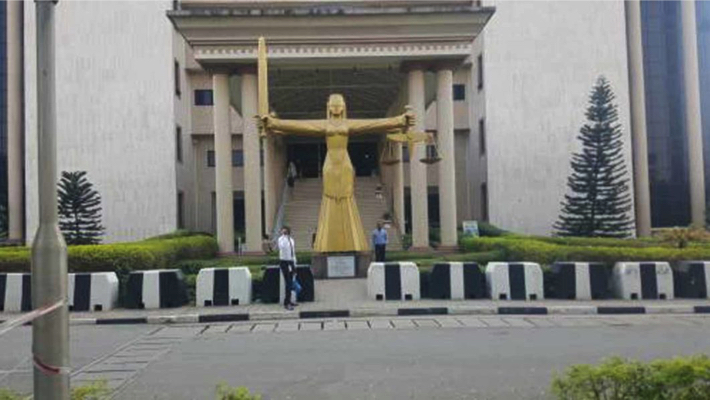
The Federal High Court, Abuja Division, on Tuesday adjourned the trial of six alleged coup plotters until July 20.
The case, fixed for the continuation of the trial-within-trial by Justice Joyce Abdulmalik, could not proceed after repeated disputes over the interpretation of the sixth defendant’s testimony.
Defence lawyer Sanusi Musa, SAN, complained that interpreters were not accurately translating the testimony of the sixth defendant, Abdulkadir Sani.
Mr Sani, who spoke in Hausa while giving his testimony, challenged the voluntariness of the statements the prosecution sought to tender against him as evidence.

Following the complaint, Justice Abdulmalik discharged the last interpreter and directed the parties to produce a neutral interpreter from the defendant’s exact linguistic background, rather than relying on a general Hausa interpreter.
“Find out exactly where this witness is from,” the judge said, explaining that the court needed a neutral interpreter who could accurately interpret the witness’s evidence for both the court and the parties.
She adjourned the matter until July 20 for continuation of the trial-within-trial.
The federal government, through the Office of the Attorney-General of the Federation (AGF), arraigned the defendants on a 13-count charge on April 22.
The charge, marked: FHC/ABJ/CR/206/2026, was filed on April 20 by the Director, Public Prosecutions of the Federation, Rotimi Oyedepo, SAN.
Others named in the charge are retired Maj.-Gen. Mohammed Gana, retired Navy Capt. Erasmus Victor, Insp Ahmed Ibrahim, Zekeri Umoru, and Bukr Goni.
The former Minister of State for Petroleum Resources, Timipre Sylva, who is alleged to be part of the act, is listed as being at large.
The defendants were accused of offences ranging from treason and terrorism to failure to disclose security intelligence and money laundering linked to terrorism financing.
When the case was called on Tuesday, Mr Musa complained about the interpreter’s translation of the Hausa Language into English.
The first interpreter was challenged after the defence lawyer complained that he was not accurately translating the witness’s evidence.
The court allowed another interpreter, a woman, to take over, but the defence again complained that the interpretation did not accurately reflect the testimony of the witness.
A third interpreter, a young lawyer associated with the defence team, was then called to assist.
Before he began interpreting, Mr Musa informed the court that if the lawyer assumed the role of interpreter, he would no longer act as counsel in the proceedings.
As the witness continued his testimony, Mr Musa again complained that the witness did not understand the questions put to him.
At this point, Justice Abdulmalik observed that an interpreter owed duties to both the court and the witness.
Justice Abdulmalik had, on May 11, ordered the trial-within-trial after defence lawyers objected to the admissibility of the statements and video recordings the prosecution sought to tender.
They argued that the statements were not made voluntarily.
The objection came after the prosecution had called four witnesses.
The fourth prosecution witness, an army officer identified only by the codename AAA for security reasons, is yet to be discharged.
The PW-4 tendered video recordings of the defendants’ interrogations before the trial-within-trial began.
The federal government, however, closed its case in the trial-within-trial on 23 June, after which the defendants began opening their defence on 25 June.
(NAN)
-

 News23 hours ago
Ebola: Don’t panic – FG tells Nigerians
-
News23 hours ago
Gas leak: Ogun schools shut, over 100 pupils hospitalised
-
News23 hours ago
Italy rejects 2,220 Nigerians seeking asylum
-
 Politics24 hours ago
Imam Removed After Campaigning For Tinubu At Bauchi Mosque
-
Sports23 hours ago
Como Humiliates Manchester United 4-1, Osimhen Scores In Galatasaray UCL Win
-
News23 hours ago
State Police: Ekiti, Kebbi endorse bill, tally hits 15
-
Business23 hours ago
Guinness Nigeria profit jumps 53% to N40.69bn
-
Business23 hours ago
Nigerian billionaire Aliko Dangote eyes Egypt oil refining in $15 billion plan