News
Lagos Assembly backs state police, debates bill to curb street begging

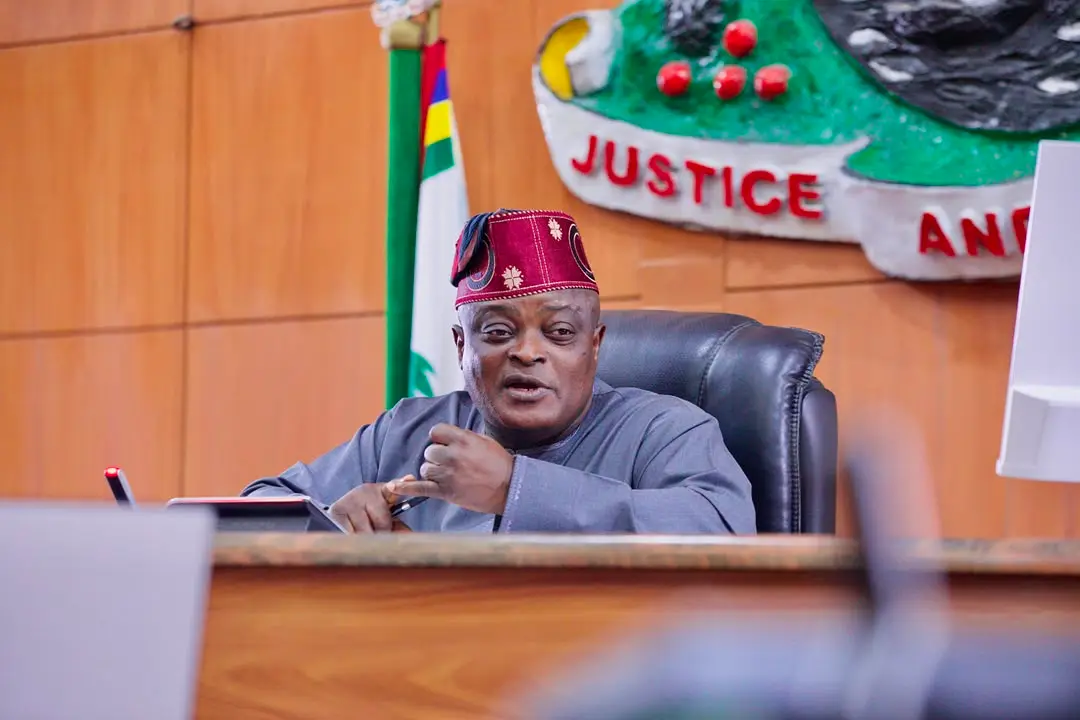
The resolution was reached during Wednesday’s plenary session presided over by Speaker Mudashiru Obasa, following a motion sponsored by Hon. Stephen Ogundipe and seconded by Hon. Aro Moshood.
Lawmakers said the proposed constitutional reform represents a crucial step towards tackling Nigeria’s persistent security challenges, including kidnapping, banditry and other violent crimes, while improving community-based policing.
Commending Bola Ahmed Tinubu, the National Assembly and other stakeholders for advancing the constitutional amendment process, Obasa described State Police as the most practical response to the country’s evolving security landscape.

“State Police remains the most practical solution to Nigeria’s worsening security challenges, including kidnapping and banditry,” the Speaker said.
Obasa stressed, however, that any State Police structure must preserve genuine operational autonomy for state commands.
He argued that federal intervention should only occur under clearly defined circumstances involving threats to national security and should be exercised transparently.
The Speaker also endorsed provisions in the Constitution alteration bill empowering governors to appoint State Commissioners of Police, subject to confirmation by their respective State Houses of Assembly.
In addition, Obasa proposed that appointments to key operational positions, including Area Commanders and Zonal Commanders, should also undergo legislative screening to strengthen accountability.
He urged Nigerians not to allow those fears to derail reforms intended to improve public safety and protect lives.
Other lawmakers noted that Lagos has consistently advocated State Police as part of broader efforts to strengthen community policing and improve security at the grassroots.
They called on State Houses of Assembly nationwide to expedite consideration of the constitutional amendment, describing the reform as a collective national responsibility requiring broad legislative support.
Following deliberations on security reforms, the Assembly shifted attention to a proposed bill seeking to prohibit street begging and hawking across Lagos State.
The legislation, which passed its second reading, is intended to address growing concerns over urban disorder while incorporating measures aimed at protecting vulnerable persons.
During the debate, Hon. Desmond Elliot advocated a compassionate approach towards children found on the streets, urging the government to prioritise their rescue, rehabilitation and welfare through relevant state agencies.
Hon. Aro Moshood called for careful scrutiny of the bill’s provisions to prevent possible abuse by law enforcement personnel during implementation.
Hon. Bonu Solomon argued that many street beggars in Lagos originate from outside the state and suggested that the proposed law should discourage indiscriminate public donations while providing sanctions for adult beggars.
Hon. Noheem Adams described the bill as timely, recommending that beggars be relocated to rehabilitation centres where they could receive vocational training and social support.
He cited similar interventions already adopted in several states and the Federal Capital Territory.
Summing up the debate, Obasa acknowledged that charitable giving remains an important social value but warned that the increasing prevalence of street begging has become a growing security concern.
The Speaker proposed the creation of structured government channels through which charitable donations could be directed to genuinely needy individuals while ensuring effective rehabilitation and reintegration programmes for those removed from the streets.
He also directed that the proposed legislation be harmonised with existing laws to avoid conflicts during implementation.
The bill was subsequently referred to the House Committee on Youth, Sports and Social Development, which has been given two weeks to submit its report.
The renewed endorsement of State Police comes amid increasing national momentum for constitutional reforms aimed at decentralising policing.
Over the past year, governors, state legislatures and security stakeholders have intensified calls for a policing system that allows states to respond more effectively to local security threats while operating within a constitutional framework.
-

 Business24 hours ago
EKEDC Accused of Demanding ₦112,606 From Solar-Powered Lekki Resident Over ‘Loss of Revenue’
-
Sports21 hours ago
Regulator has ‘power’ to force Man city sale if charges upheld
-
News21 hours ago
Fasoranti: My father had covenant with God to die at 100 – Son
-
News21 hours ago
Student loans voluntary, not compulsory – NELFUND tells tertiary institutions
-
Opinion21 hours ago
Can Tinubu campaign without campaigning?
-
News21 hours ago
After 8-Month Uncertainty, Mexico Clears Omokri To Serve As Ambassador
-
Politics19 hours ago
Denying Tinubu Second Term Could Trigger Crisis – Ex-NAHCON Chairman
-
News19 hours ago
Military Replaces Pension Board Chair Amid Faceoff With Veterans