Business
Nigeria’s Stock Overtakes South Korea As World’s Best-Performing

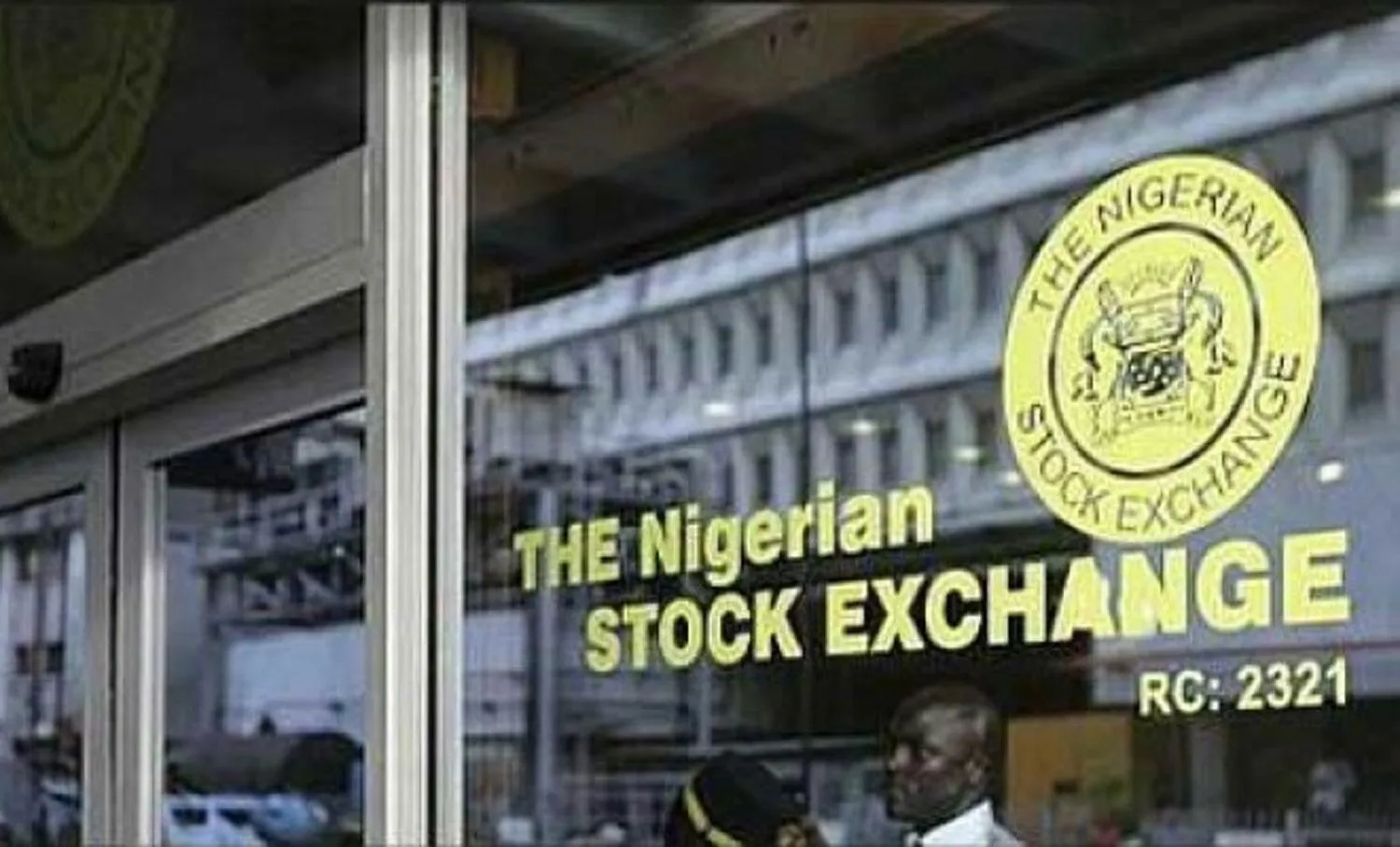
Nigeria’s stock market has emerged as the world’s best-performing equity market in dollar terms this year, overtaking South Korea as investors increasingly reward the country’s improving macroeconomic outlook and ongoing economic reforms.
According to Bloomberg data tracking performance across 92 global stock exchanges, Nigeria’s benchmark equity index has delivered a 67% return in U.S. dollar terms since the beginning of the year, narrowly surpassing South Korea’s Kospi Index, which has returned 66%.
The shift in global rankings comes as South Korea’s stock market faces mounting pressure from a sharp correction in technology and artificial intelligence-related stocks. The Kospi has entered a technical bear market after declining 22% from its June 19 peak, reflecting growing concerns over the sustainability of the AI-driven rally that had propelled the market earlier in the year.
Currency weakness has added to the pressure on South Korean equities. The won has depreciated by about 5% against the U.S. dollar this year, making it one of Asia’s weakest-performing currencies and reducing returns for foreign investors.

Nigeria, by contrast, has benefited from improving economic fundamentals, sustained policy reforms, firmer global oil prices and improved foreign exchange liquidity. These developments have strengthened investor confidence and supported capital inflows into the Nigerian Exchange (NGX).
The appreciation of the naira by approximately 4% against the U.S. dollar since January has further enhanced returns for international investors, contributing significantly to the market’s leadership in dollar terms.
Financial services stocks have been among the strongest drivers of the rally, with several banking and insurance companies posting substantial gains. Fortis Global Insurance Plc has emerged as one of the standout performers, generating an estimated 1,400% return in dollar terms this year.
Unlike South Korea, where technology and AI-related companies account for a significant share of market capitalization, Nigeria’s listed companies have limited direct exposure to the sector. This has insulated the local market from the recent global technology sell-off and helped sustain investor appetite.
Market sentiment has also received a boost from S&P Dow Jones Indices’ decision to place Nigeria on its 2027 watchlist for a potential upgrade from a “Standalone” market to a “Frontier” market.
The index provider cited improvements in market regulation, accessibility, transparency, enforcement and overall market integrity as key factors supporting the review.
The market’s strong momentum was reinforced on July 8, 2026, when the NGX All-Share Index gained 2.27% to close at 242,459.98 points, up from 237,083.28 points. Market capitalization also increased by N3.45 trillion to N155.59 trillion.
The rally was largely driven by Airtel Africa, whose shares rose by the maximum daily limit of 10% to close at N5, 801.40.
The surge lifted the market’s year-to-date return to 55.81%, marking a sharp recovery from the 46.78% recorded on July 7 and restoring the benchmark to levels last seen before the June market correction.
A statement from the NGX said the decision of S&P DJI to place Nigeria on its 2027 Country Classification Watchlist, positions Nigeria among markets under formal review for a possible change in classification next year.
The statement indicated that while the announcement does not constitute an immediate upgrade, it signals that the country’s recent regulatory and structural reforms are gaining recognition from one of the world’s leading index providers.
In its assessment, S&P DJI said “the Nigerian regulatory environment has modernized to improve transparency, enforcement, and market integrity,” adding that consistent policy implementation and operational resilience will be critical in determining whether Nigeria qualifies for Frontier Market classification during the 2027 review.
The development comes as Nigeria’s capital market continues to implement wide-ranging reforms led by the Securities and Exchange Commission (SEC), in collaboration with Nigerian Exchange Group (NGX Group), Central Securities Clearing System (CSCS) and other market stakeholders. These reforms have focused on strengthening investor protection, enhancing market transparency, improving operational efficiency, modernising post-trade infrastructure and aligning Nigeria’s market with international standards.
According to the Director-General of the Securities and Exchange Commission (SEC), Dr. Emomotimi Agama, the Commission’s reform agenda is focused on building a forward-looking market structure capable of supporting intelligent investing through faster settlement systems, tokenised securities and deeper derivatives markets.
He has maintained that these reforms are designed to modernise Nigeria’s capital market, improve efficiency, enhance investor confidence and position the market in line with global best practices.
“At SEC, our priority is to sustain a fair, orderly and transparent market that protects investors and supports long-term capital formation. We will continue to work with exchanges, market infrastructure institutions, operators and other stakeholders to strengthen policy consistency, enforcement, market integrity and operational resilience.”
Commenting on the development, the Group Managing Director and Chief Executive Officer of NGX Group, Temi Popoola, said the announcement reinforces growing international confidence in the direction of Nigeria’s capital market reforms.
“This is an encouraging development for Nigeria’s capital market and an acknowledgement of the collective efforts of regulators, market infrastructure institutions and market operators to build a more transparent, efficient and globally competitive marketplace.”
According to Popoola, the recognition demonstrates that the market’s reform agenda is beginning to resonate with global institutions responsible for assessing investment destinations.
“While this is not yet a reclassification, it is an important validation of the progress being made. Our priority remains to sustain the momentum by deepening liquidity, improving market accessibility, strengthening investor confidence and continuing to support reforms that position Nigeria as a preferred destination for domestic and international capital.”
Nothing to celebrate yet – Expert
A market analyst and investor, Adeleke Adebayo, told Daily Trust, that there’s nothing to be celebrated if the development hasn’t translated into gains for investors and Nigerians at large.
“I’m an investor. And for me, I don’t know unless it translates to gains for investors within the Nigerian space. So when we are comparing ourselves to ourselves, like the Bible says, we just become fools.
“So what joy do we have for overtaking South Korea or U.S. if it is not translating to measurable or tangible results for us in the country. So honestly speaking, I don’t do that,” he said.
According to him, the capital market had over N13trillion wiped out of the market capitalisation last month, and such should be a concern.
“For me, our capital market has been in doldrums over the past three weeks. We have lost close to 12% or 25% of the market capitalisation.
“There’s just a little reversal this week and we’re excited about it. We should be talking about what concerns us, what touches us most, what impacts our lives. So whatever we are overtaking in South Korea, and so? Is our consumer price index better than that of South Korea?
“Is our GDP better than that of South Korea? Is our expected lifespan better than that of South Korea? Is our security level better than that of South Korea?
So why are we talking about just one figure,” he asked.
He said he is not bothered unless it becomes evident that the development translates to what is going to affect the life of ordinary Nigerians, or the capital market space.
Adebayo said “If I can see how it translates to helping my business to grow, maybe it will make some sense. But as far as I’m concerned, I don’t compare myself to my next neighbor, whether he’s buying a jeep or buying a private jet. The issue is, how is my home economy? Is my wife and my children okay? Are they fine? Are they contented? Is there anything we need to do here and get our address sorted out? That’s it.”
-

 Politics19 hours ago
‘Weapon fashioned against APC’ — outrage as youth leader gifts 2026 Prados to party officials, then deletes post
-
News20 hours ago
Ebola: NCDC to pay contacts N100,000 weekly
-
Politics20 hours ago
We’ll Soon Expose Those Plotting To Scuttle My Guber Ambition – Pantami
-
Politics20 hours ago
We Won’t Allow Repeat Of 2023 Defeat – Lagos APC
-
News20 hours ago
Zamfara Steps Up Ebola Containment Measures After Passenger With 38°C Fever Arrives Airport
-
Metro20 hours ago
Okonjo-Iweala’s mother dies at 96
-
News19 hours ago
States’ six-month debt servicing bill hits N800bn
-
Politics19 hours ago
2027: NDC slams Tinubu, APC over ₦1bn worth of Prado SUVs for youth leaders