News
State police without guaranteed funding risks abuse by governors – Opeyemi Bamidele

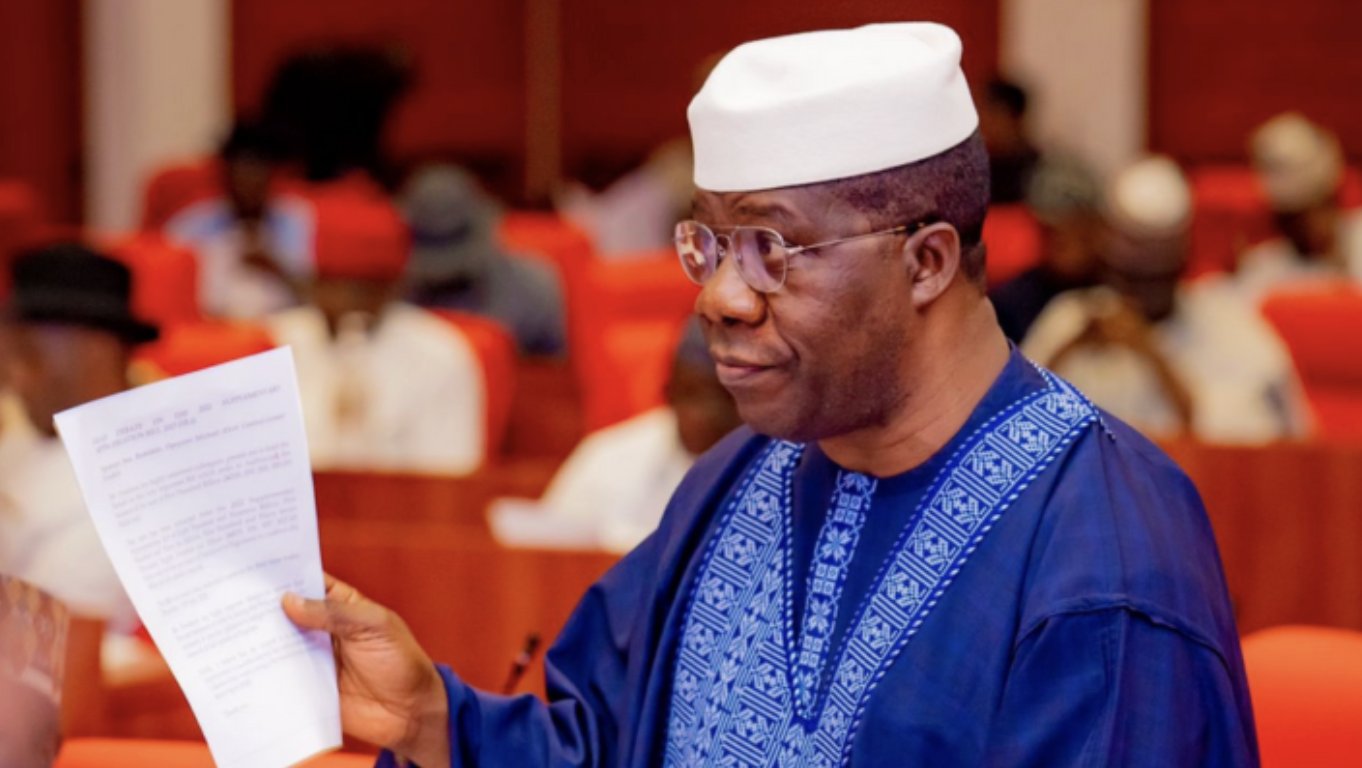
Opeyemi Bamidele, senate leader, says creating state police without constitutionally guaranteed funding could put the proposed security architecture at risk of abuse by governors, private citizens and criminal groups.
Speaking on Thursday at the Arise TV town hall meeting on state police in Abuja, Bamidele said concerns about state police were legitimate and rooted in Nigeria’s policing experience.
Bamidele said accountability and financial independence must be built into the framework to protect the citizens.
He noted that, aside from political interference, inadequate funding remains one of the major weaknesses of state policing.

The senate leader said whoever controls police finances could control its operations.
“If the state police is not well funded, it’s not only the state actors or politicians that can abuse this. Let me tell you, members of the business class can also abuse it,” he said.
“Some other organisations, even criminals, the cabals, can abuse it because it is a question of he who pays the piper dictating the tune.
“So, if the state police is not well funded, by any means, we will have a situation where it may as well be a highway to nowhere.”
Bamidele said the law should guarantee a first-line charge for state police funding to prevent governors from using budgetary allocations as leverage over police commands.
He said a fixed percentage of state budgets should be reserved for policing, with clear legal provisions governing how the funds are accessed and managed.
The senate leader said constitutional amendments alone would not resolve concerns surrounding state policing, adding that the national assembly would also amend the Police Act and enact additional legislation to define operational responsibilities, funding mechanisms and safeguards against abuse.
Bamidele said the effectiveness of state police is tied to local government autonomy.
On his part, Benjamin Kalu, deputy speaker of the house of representatives, said the centralised policing structure has failed to effectively protect lives and property.
Kalu said consultations conducted by the green chamber showed broad public support for decentralising policing.
He said the current system delays responses because operational authorisation is concentrated in Abuja, while officers are often deployed to unfamiliar environments.
“If the authorisation point is in Abuja and events are happening far from Abuja, by the time the authorisation comes, you find out that an incident of crime has already taken place,” Kalu said.
“And it gets to a point where, if you don’t respond within the expected time, by the time you respond, it is irredeemable. It means that the police have not achieved the purpose for which it was set up.” (TheCable)
-

 News10 hours ago
Court Orders Wike’s Son Jordan to Produce American Passport in $2.1m Abuja Land Suit
-
Politics9 hours ago
Pantami wins PDP repeat governorship primary in Gombe
-
News9 hours ago
NEMA deploys rescue teams as floods ravage states
-
News8 hours ago
After 68 Days Vacation, Lawmakers Embark On Another Recess
-
Metro9 hours ago
Lagos teen detained over slippers freed after four years
-
News9 hours ago
Mixed reactions as FG demarcates First Niger Bridge
-
Sports9 hours ago
AFCON Qualifier: Guinea-Bissau Humble Super Eagles 3-0
-
News9 hours ago
High fuel price, wage award: Public servants begin nationwide warning strike Oct 2, if…