Business
NERC’s CapEx Order sparks industry uproar as DisCos, state regulators push back

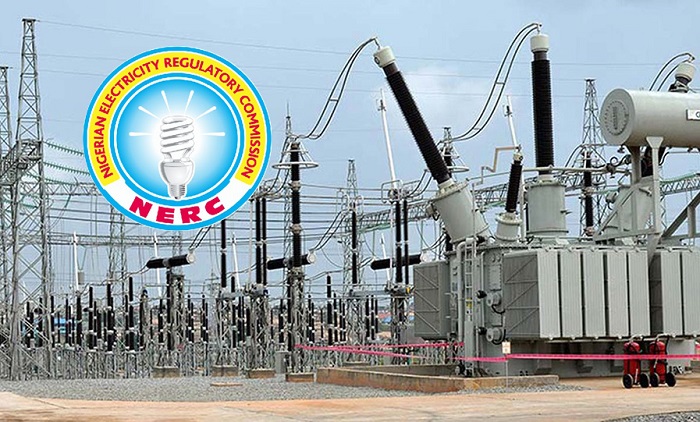
A new Nigerian Electricity Regulatory Commission (NERC) directive requiring electricity distribution companies (DisCos) to set aside part of their collections for network investments has triggered a major dispute within Nigeria’s power sector.
The directive, which took effect on July 1, 2026, requires DisCos to dedicate a significant portion of their surplus operating revenues to capital expenditure and market debt repayment while obtaining NERC’s approval before the funds can be spent.
Although none of the electricity distribution companies has issued an official statement, Nairametrics gathered from multiple industry sources that the companies oppose the directive, a position also reflected in reports by several national newspapers.
The disagreement has now drawn in state electricity regulators, the Federal Ministry of Power and lawmakers, highlighting growing tensions over the evolving balance of power between federal and state electricity regulation.

What they are saying
At the centre of the controversy is NERC’s Order on Successor Distribution Companies’ Utilisation of Earned Non-Administrative Operating Expenditure (Order No. NERC/2026/062), which became effective on July 1, 2026.
- The Order requires DisCos to dedicate a substantial portion of their earned non-administrative operating expenditure to network investments, debt repayment and other regulated purposes while securing the Commission’s approval before deploying the funds.
- According to sources familiar with the matter, representatives of NERC, the Federal Ministry of Power, State Electricity Regulatory Commissions (SERCs), the Senate Committee on Power and other stakeholders met earlier this week to address the growing dispute.
- The meeting reportedly agreed to establish a seven-member committee comprising representatives of the Ministry of Power, NERC, SERCs, the Office of the Special Adviser on Power, Dr. Lanre Babalola, the Senate Committee on Power and the Bureau of Public Enterprises (BPE) to review the issues raised and recommend a way forward.
Presenting its position during a legal and regulatory harmonisation workshop in Abuja, the Forum of Commissioners of Power and Energy in Nigeria (FOCPEN) stated: “This workshop exists precisely because the transfer of regulatory oversight from the Nigeria Electricity Regulatory Commission (NERC) to State Electricity Regulatory Commissions (SERCs) is, in places, not being honoured in practice.”
Nairametrics also reached out to the Executive Director of Research and Advocacy of the Association of Nigerian Electricity Distributors (ANED), Sunday Oduntan, for comments on the controversy. He declined to comment.
While the DisCos have remained publicly silent, Nairametrics understands discussions are being held with regulators and industry stakeholders to arrive at a workable solution.
However, some DisCos who spoke to Nairametrics under the condition of anonymity argue that the Order goes beyond regulation by effectively allowing NERC to determine how privately owned utilities allocate their revenues.
- FOCPEN also cited Section 230(6) of the Electricity Act 2023, which states that NERC “shall have no further regulatory responsibility whatsoever for electricity market activities carried on entirely within the State to which regulatory responsibility has been transferred,”arguing that commercial regulation should rest exclusively with the relevant State Electricity Regulatory Commission once the transition process has been completed.
More insights on the dispute
NERC maintains that the Order is intended to ensure tariff revenues earmarked for infrastructure are invested in electricity networks.
According to the Commission, DisCos are required under the Multi-Year Tariff Order (MYTO) 2024 framework to utilise approved revenue requirements to improve service delivery, undertake network maintenance and expand electricity infrastructure.
- The regulator stated that while many DisCos continue to struggle financially, some now generate revenues above their administrative operating costs and should channel those funds towards improving network reliability.
- Under the Order, DisCos without market debts must transfer 70% of eligible surplus operating funds into dedicated capital expenditure accounts. Indebted utilities must allocate 50% to market debt repayment, 35% to capital expenditure and retain only 15% for operational use. The funds can only be deployed with NERC’s approval.
- Industry stakeholders supportive of NERC’s point of view argue that years of underinvestment in distribution transformers, 11kV feeders and other infrastructure have contributed to persistent outages, with many communities forced to fund repairs themselves when DisCos delayed intervention.
- Some operators, however, contend that many of these investments are commercially difficult because certain locations generate insufficient revenues to justify major capital expenditure.
Experts also questioned whether the regulatory approach adopted by NERC is appropriate.
Dr. Muda Yusuf, Chief Executive Officer of the Centre for the Promotion of Private Enterprise (CPPE), said prescribing exactly how revenues should be allocated may be excessive, although encouraging infrastructure investment is justified.
- “Having a guideline to ensure that there is much better investment in infrastructure is not out of place. But going to the level of prescribing how revenue should be spent, I think that is a bit on the extreme,” Yusuf said.
He added that the sector’s more pressing challenge remains its liquidity crisis, noting that tariffs remain below the actual cost of supplying electricity.
Energy consultant and Managing Director of New Hampshire Capital Ltd, Odion Omonfoman, similarly argued that the Order intrudes into the financial management of private companies and warned that it could discourage lenders from financing DisCos whose cash flows are increasingly subject to regulatory controls.
- “The Order from NERC cannot achieve the intention NERC set out to achieve because DisCos are not collecting enough in the first place. This is definitely a clear intrusion into the financial management of privately owned companies. There are better ways for NERC to do this,” he said
Some stakeholders also believe NERC’s objective is understandable but question whether the mechanism adopted amounts to regulatory overreach.
They argue the Commission already possesses several enforcement tools under the Multi-Year Tariff Order (MYTO), including disallowing unrecovered capital expenditure from future tariffs, downgrading poorly performing feeders to lower service bands—thereby reducing allowable tariffs—or imposing financial penalties where utilities fail to invest approved capital allocations.
Get up to speed
The dispute stems from Nigeria’s electricity sector reforms under the Constitution and the Electricity Act 2023, which allow states to establish independent electricity markets and regulators. FOCPEN argues that the reforms transferred regulatory authority over electricity markets operating entirely within participating states.
- FOCPEN relies on Item 14 of the Concurrent Legislative List, which empowers states to legislate on the generation, transmission and distribution of electricity within their territories.
- The group also cites Section 2(2)(a) of the Electricity Act, which preserves the validity of state laws covering all aspects of electricity generation, transmission, distribution, supply and retail within the state.
NERC, however, argues that the MYTO framework already obliges DisCos to invest tariff revenues in maintaining and expanding their networks.
The Commission also relies on Section 34(1) of the Electricity Act, which empowers it to ensure the efficient utilisation of resources and sufficient investment in electricity infrastructure.
The differing interpretations have intensified debate over where federal regulatory authority ends and state oversight begins in Nigeria’s evolving electricity market.
What you should know
The disagreement has grown beyond a single regulatory Order into a broader debate about how Nigeria’s decentralised electricity market should function. The financial implications are significant given the scale of revenues flowing through the electricity distribution segment.
- Nigeria’s 12 electricity distribution companies collected about N2.16 trillion from electricity customers in 2025, based on quarterly collections of approximately N406.51 billion in the first quarter, N551.35 billion in the second quarter, N570.25 billion in the third quarter, and a record N630.93 billion in the fourth quarter.
- In the first quarter of 2026, the DisCos collected another N597.56 billion out of N756.93 billion billed to customers, representing a collection efficiency of 78.95%. About N159.37 billion in electricity bills remained uncollected during the quarter.
- Although NERC’s directive applies only to earned non-administrative operating expenditure rather than total collections, it potentially affects hundreds of billions of naira that could otherwise be available for working capital, debt servicing or discretionary investment.
- NERC argues stronger controls are necessary to ensure revenues intended for network upgrades are invested in transformers, feeders and other critical infrastructure, while critics maintain the directive raises significant legal, governance and investment concerns.
With a multi-stakeholder committee expected to review the issues, the outcome could influence not only the implementation of NERC’s CapEx Order but also the future relationship between federal and state electricity regulators and investor confidence in Nigeria’s evolving electricity market. (Nairametrics)
-

 Opinion22 hours ago
Lagos-Calabar coastal highway: When transparency takes the back seat, Nigerians pay the price
-
Sports22 hours ago
Netflix secures rights to air 2030 World Cup in Spain
-
Politics32 minutes ago
2027: Nigerians Won’t Renew A Mandate Of Hardship – Atiku Tells Tinubu
-
News17 hours ago
Court remands alleged ISWAP ransom negotiator in Kuje prison
-
Sports31 minutes ago
CAF Hands NFF, Other Member Federations $175,000 Boost In Annual Subvention
-
News29 minutes ago
Experts caution as IMF offers fresh advice on subsidy
-
News24 hours ago
Nigerians still suffer high cost of living, despite economic growth — IMF
-
Business22 hours ago
CPPE says petrol discount will have minor impact on household welfare