Business
Food prices now biggest threat to Nigeria’s inflation, beyond CBN control—Analysts

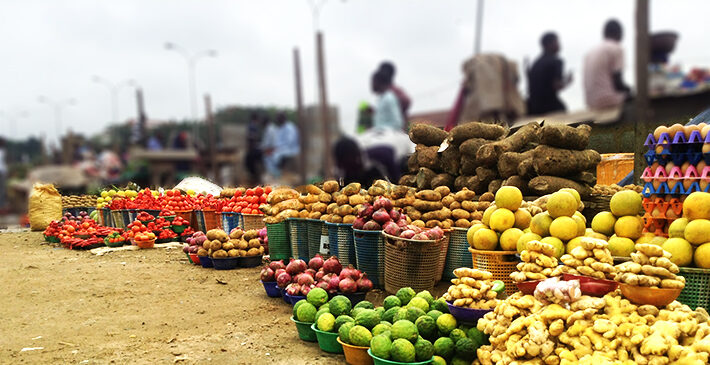
Analysts at Zrosk Equity Research have warned that Nigeria’s inflation outlook is increasingly being driven by rising food prices that are largely beyond the control of monetary policy of the Central Bank of Nigeria (CBN).
They stated this in their analysis of the June Consumer Price Index (CPI) data released on Wednesday by the National Bureau of Statistics (NBS).
The research firm said the sharp rise in farm produce prices was responsible for the bulk of June’s inflation, despite broad-based easing across other sectors of the economy.
The NBS reported that headline inflation slowed marginally to 15.91% year-on-year in June from 15.93% in May, while month-on-month inflation eased to 1.66% from 1.75% in the previous month.

However, food inflation accelerated, with the monthly food inflation rate rising to 3.75% in June from 2.98% in May.
What they are saying
According to Zrosk Equity Research, the moderation in headline inflation masked a significant surge in farm produce prices, which climbed 4.42% month-on-monthin June after easing to 0.86% in May.
- “June’s deceleration to 1.66% MoM is not the disinflation signal it appears. Core cooling to 1.66% is genuine, but farm produce at +4.42% MoM opens an independent, inflation channel the CBN has no monetary tool to address — the risk has shifted from services to food,” the analysts said.
The analysts described the spike as a genuine agricultural supply shock that was impossible to predict using conventional inflation models.
They noted that farm produce accounts for about 95% of Nigeria’s food basket and 26.61% of the overall CPI basket, making it the single largest driver of consumer prices.
As a result, farm produce alone contributed 1.18 percentage points to June’s 1.66% monthly headline inflation, representing approximately 71% of the entire inflation print.
This marked a sharp increase from May, when farm produce contributed just 13% of monthly inflation.
According to the analysts, the contribution is comparable to levels recorded during the peak of the Strait of Hormuz crisis, when higher global energy prices combined with seasonal food pressures to push inflation higher.
- “This increase came from a sub-component driven solely by domestic agricultural supply conditions,” the report stated.
More insights
The report argues that the latest inflation dynamics present a new challenge for policymakers because the current pressure is no longer being driven primarily by energy prices or broad demand conditions.
They warned that if farm produce inflation remains elevated in July, headline inflation could stay above 1.5% month-on-month regardless of developments in energy prices or exchange rate stability.
According to the report, the shift in inflation composition means that while conventional monetary tightening may continue to contain demand-driven inflation, addressing food inflation will require measures that improve agricultural production, food supply chains and market distribution rather than additional interest rate increases.
What you should know
Based on the current inflationary pressures, Standard Chartered Plc. In its latest economic outlook said it expects the CBN to reduce interest rates by only 150 basis points (bps) in 2026.
The bank said it expects the Monetary Policy Rate (MPR) to end 2026 at 25%, while also raising its average inflation forecast for the year to 15.5% from an earlier projection of 12%.
Standard Chartered said lingering inflationary pressures have significantly reduced the room for aggressive monetary easing, prompting the bank to lower its expectations for interest rate cuts next year. (Nairametrics)
-

 Politics17 hours ago
If Buhari, A Retired General Could Not Wipe Out Insecurity, What Do You Expect Of Tinubu? – Yari
-
 Politics17 hours ago
Tinubu Campaign Spokesperson Breaks Silence On Wife’s Fresh Role At INEC
-
Business6 hours ago
FG targets ₦750tn capital market, seeks NNPC, NLNG listing
-
Politics17 hours ago
Stop sending money to relatives at home; tell them to vote for competent leaders – Obi tells Nigerians abroad
-
Business7 hours ago
I’d rather go to prison than lose my phone – Dangote
-
News17 hours ago
FCT Residents Make ‘Tough’ Adjustments Over Rising Cost Of Living
-
Politics17 hours ago
INEC Mum Over Rejection Of Tinubu Spokesperson’s Wife As Head Of Electoral Operations
-
 News7 hours ago
Tinubu Extends Tenures Of Immigration, Prison CGs