Opinion
On Tinubu’s $1trn GDP target and Rufai Oseni’s tears

We live in an impressionable world, even though literacy has continued to improve the world over – Nigeria inclusive. One of the downsides of social media is the velocity of information being pushed at everyone – information and data that no mind can fully process. Coupled with this velocity is also the fact that most people don’t want to even try to interrogate what they hear and see on all these media; people just accept as true, so long as the information fits their sentiments. Very few interrogate or subject information to careful veracity tests. Most times, we just rush to share rather than ruminate over whether new information is true. With social media, dogmatism (the art of adopting someone else’s belief) has increased, paradoxically as the world got ‘smarter’. Nigerians top the global chart (according to the World Economic Forum) in terms of the average time that citizens spend on social media. And that is something. AI puts us at fourth position after Kenya, Brazil and South Africa. In each of these countries, people spend just below 4 hours everyday on social media. Nigeria happens to control the most population in Africa, and just about the same population as Brazil which is a middle-income country. Plot the graph, and Nigeria is a social media time bomb!
This social media penetration in Nigeria is a phenomenon that should be carefully managed because it shows just how easy it is to penetrate the minds of our people – for good or ill. It just so happens that for now, the purveyors of pessimism, hopelessness, despair and doom happen to have secured the upper hand. They said no news is good news. Good news is boring. Bad news sells. And psychologically, with our current state of social psychology, millions of Nigerians are wired to seek negative news about their country, and about others, and to believe such news and spread it on the spur. It is also agreed that Nigerians are exceptionalists – we often go around bragging about how great we are as human beings, as ethnic groups, and as a nation. Humility is not one of our fortes. But this also spills over to the other side. When we start to complain about our country, we speak in superlative, nihilistic, and fatalistic terms – Nigeria is dead! Nigeria is finished! There is no hope for this country! And on and on. Even those whose livelihood is established on ruining the country, her image, her resources, are often the most strident in condemning the country and writing off any chances of us escaping Armageddon. Nigerians often speak as if history itself originated here. Like Americans, we have been developing a certain tunnel vision that focuses us only on ourselves. Tell us to take a pause, contextualise and compare carefully with other nations, or carefully examine history, and many just flip into a rage. This is the reason why I strive daily to contribute my quota in pushing back as much as possible, especially as it pertains to the Nigerian economy.
This week, two recent events need to be explained with a view to disabusing the minds of millions of Nigerians who had imbibed the untruths. The first is a criticism of President Tinubu’s stated ambition to achieve a $1 trillion Gross Domestic Product (GDP) for Nigeria by the year 2030. Mr Mustapha Chike Obi, a well-respected financial expert and pioneer MD of the Asset Management Company of Nigeria (AMCON) had made a statement three years ago doubting the possibility of the current administration being able to achieve that feat. The video went viral for some reason, with opponents of the government making a feast of it.
My quick response to that statement is that the idea behind setting targets is to be able to strive for greater heights. They say when we aim for the skies, we may find ourselves among the stars. So, if Nigeria aims for $1 trillion and clocks in at $750 billion or $800 billion by the year 2030, I reckon that that will already be a pass mark and quite remarkable. Perhaps more poignantly is to note that Nigeria’s GDP is currently close to N500 trillion in Naira terms. The recent IMF Article IV report has it that our GDP will be at N530 trillion by the end of this year and will grow to N580 trillion by 2027. I believe it will be more than this. This means that if exchange rates were left at the Buhari-era rate of N490=$1, Nigeria’s GDP in US Dollar terms would be $1.08 trillion by the end of this year, even though the target is for 2030. Naysayer should note this.

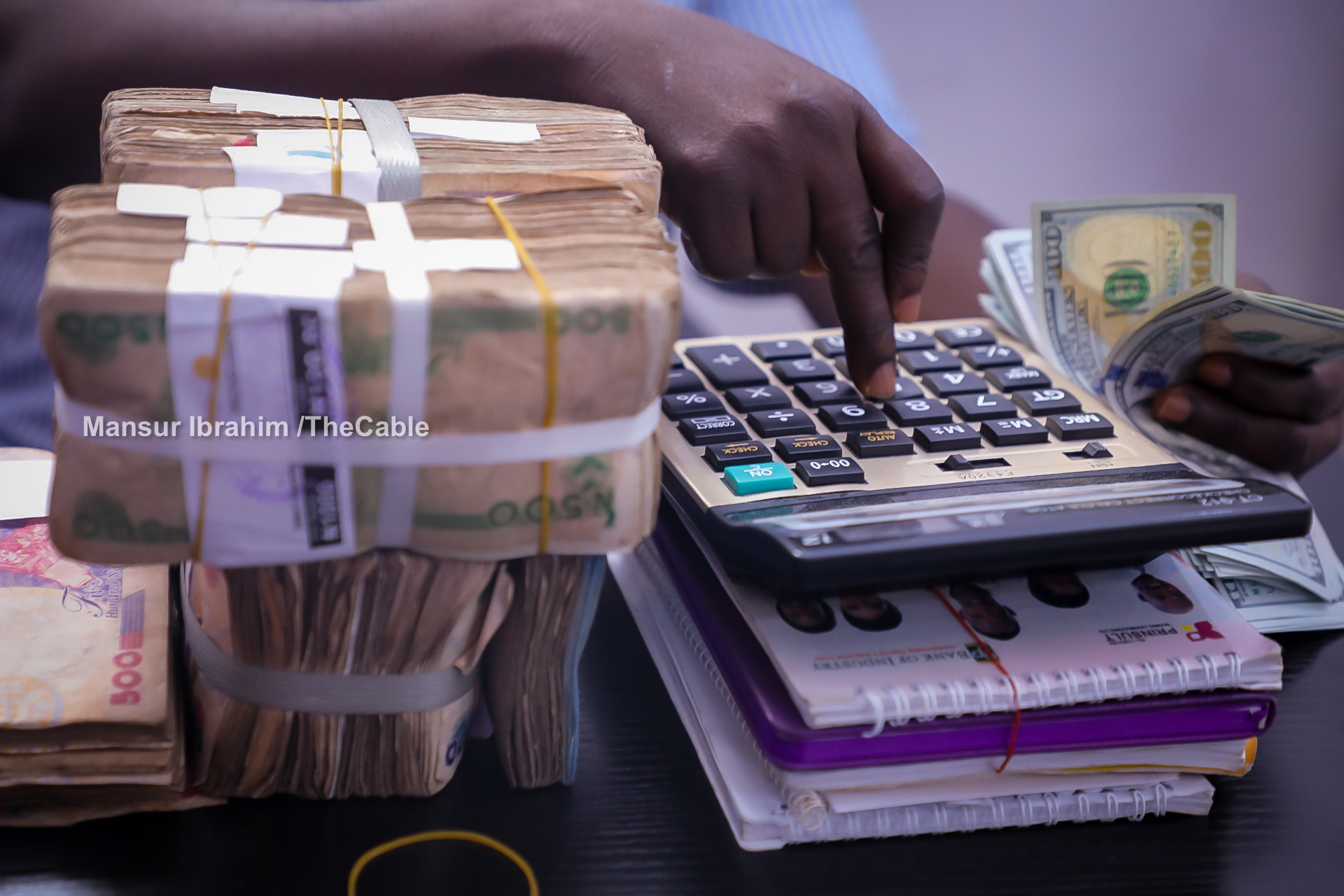
Now, we have explained why the Naira had to depreciate through the deployment of market forces in 2023 and 2024. The 70%-80% arbitrage that existed between official and unofficial rates has now totally disappeared, and users of foreign exchange sometimes find it cheaper to buy in unofficial channels these days. The weaker Naira has also brought in some advantages in discouraging importation and encouraging exports of primary and secondary products, thereby placing the Nigerian economy on a more solid footing. So, the Central Bank of Nigeria is not in a hurry to make the Naira stronger – only to encourage more importation and return pressure on the currency. As things stand, all demands for the dollar are being met, and reserves are surging. The IMF Report also stated that the Naira is now undervalued and should trade at around N1,147=$1. This is the first time in a long time that the IMF Group will hint Nigeria that our currency is overvalued. For many years, we only heard the devaluation din. Foreign Reserves, which sit at $52 billion today (we already exceeded the target for the year), are predicted to close at $58 billion by the end of 2026 by the same IMF.
This means that at some point in the future, the Naira may strengthen. Imagine that the Naira strengthens today to say N1,000, our GDP will immediately hit $500 billion and return to being the largest in Africa. If we continue along the current trajectory of economic growth, and the Naira appreciates somewhere down the road, then we can at least get near the $1 trillion mark. It should also be noted that what really matters to us in Nigeria is Naira, and not dollars. Whereas a nation requires foreign exchange for many important procurements, but the vast majority of our transactions are increasingly done in the Naira. This is even more imperative as Mr. President continues to push for local government autonomy. At the local government level, the Naira matters more and goes further. The Purchasing Power Parity concept ensures this because a dollar goes ten times further in Nigeria than it does in the US. Given this fact, we should compare ourselves less with USA or any other OECD country. The focus, really, should be on how fast we can grow our Naira GDP, in a manner that ensures more inclusivity and better equality of income. At current growth rates, in compounded fashion, we can hit N700 trillion by 2030, and if GDP growth rates pick up as we hope, this can be much better. We are almost there. And in this pursuit, we are most likely to reemerge as the largest economy in Africa, beating Egypt and South Africa (a country where the people have currently undone their economy with their ill-advised xenophobia) for the top spot.
The other dramatic event was when TV anchor Oseni Rufai wept on his show. Whereas it is still a puzzle to me that news anchors in Nigeria now use prime time to air their own personal opinions (maybe a Nigerian invention as I haven’t seen that done elsewhere), Rufai did put up a good show. But there was a flaw.
My friend Rufai was discussing the fact that in the heady days of the oil boom in 1974, Nigeria lent $240 million to the World Bank and $120 million to the International Monetary Fund (IMF). Nigeria had a temporary boom then, and that was expressed when the then Governor of the Central Bank of Nigeria, Dr Clement Isong, stated to the Head of State, General Yakubu Gowon, that money was not Nigeria’s problem but how to spend it. This was a valid statement given the turn of events. Nigeria had little intellectual depth then to understand what to do with the sudden burst of dollar liquidity. Our GDP in 1960 was a mere $4 billion, which has now grown a hundredfold to $400 billion today. Nigeria had just a few thousand university graduates in 1960, and the number had grown to maybe tens of thousands in 1974, and to tens of millions today. So, in 1974, we were out of our depth with the idea of planning for such money. And the World Bank/IMF stepped in and relieved us of the money. If Rufai wanted to shed a tear, he should for the ‘chancing’ of Nigeria by these multilaterals at that point. Of course, less than a decade after that event, we were running back to them because commodity prices – including crude oil – had crashed. Let’s call it a learning curve, but some economists have written that the crash in crude oil prices was orchestrated by powerful western countries as revenge for the OPEC gang-up. It was geopolitics and war by other means.
The real reason to shed tears was that we didn’t use the 1970s oil boom money for even more extensive infrastructure, even though we had quite a bit of that done. Nigeria has just emerged from two bloody coups and a civil war. I think we could put it down to the Nigerian economy not having the capacity to absorb such liquidity. Gowon and his team must have struggled to deal with it. On one hand, they had a cement armada because Nigeria ordered 16 million metric tonnes of cement to build military barracks, and we ended up with 400 ships choking Apapa ports with huge demurrage costs to boot. On the other hand, we still had too much liquidity, and had to pay the Udoji Awards to civil servants by January 1975, creating inflation and whatnot. This was a temporary, commodity-price-linked liquidity. Rufai should not confuse the public that Nigeria had arrived in 1974. We had a firmament of infrastructure to build. And our population was still rural and mostly uneducated. But I agree with his anguish at the deluge of properties forfeited by Abubakar Malami – especially if those properties are traced to corruption. But these are different issues entirely.
What is more? In comparing the excess liquidity issues of 1974 to the debts of today, we should understand that nations are a lot wiser now. We should also constantly learn from the best. In 1974, as in today, we are still writing our own histories in real time. Dynamism is involved in national development. I wrote an article on this page some weeks back titled “Nigeria is Not Overborrowed but Underfinanced”, in which I noted the critical reality that Africa as a whole holds a mere 1.8% of global debt. This is the kind of thing that should concern great minds, beyond hysteria and loud wailing. Our people say that when we weep, we should still be able to see clearly. Why is the whole of Africa holding the debt of Australia, and mere fractions of what the UK, France and other countries owe? Why did these powerful nations grant themselves such proportions of global debt and then leave Africa in the lurch? Why does Nigeria have a debt-to-GDP ratio of 38%, which is much lower than many of her contemporaries (South Africa, Egypt, Kenya, Brazil, etc), and we are wailing about too much debt? Have we noticed that Nigeria is doing much better in the revenue area? Do we have the infrastructure to finance? Is finance important? Should we use short-term revenue to build long-term infrastructure, resulting in a mismatch and abandoned projects? Have we not become smart enough to be able to create structures where public and private sector collaboration can guarantee performance and eradicate corruption in the main? Do we really seek development, or do we wish to remain in the dark past? Are we ready? These are the questions to ask ourselves on this matter. Whatever our answers are will dictate the next step.
I wish to advise my friend Rufai – who knows better and whom I’ve known for at least ten years – to impute less emotion into his daily interventions and to depress our people less. His platform is too strategic for drama. Nigeria has totally transformed since 1974 and is progressing daily. Many Nigerians are taking advantage of our daily evolution, and what they need is direction, encouragement, and hope. The daily deluge of a potpourri of toxic pessimism, dooms-baiting, and negativity bias is not doing Nigeria any favours in the long run. It just damages our image and closes many doors against the nation and its businessmen. It slows our progress and renders every Nigerian a suspect and the nation a pariah! It also pays. Yes, it turns out to be good cash for the media boys, many of whom have set up channels through which they get paid more dollars for doing constant damage to this country. They sometimes convince themselves, though, that they are only doing their jobs. Without mentioning names, I doubt if these guys are interested in a better Nigeria, because if Nigeria really gets better, this news format disappears, and so will the money. Or maybe these guys do these things to get the attention of powerful men and to get paid. Whichever way, the people who should help Nigeria to seize any escape route out of structural underdevelopment are the same ones – wittingly or unwittingly – ensuring that we all stay stuck, with a battered image, confusion, less hope in our future and enraged children. Good for them. Bad for Nigeria. Something must shift.
•Written By Tope Fasua, Special adviser to President Bola Tinubu on economic affairs
-

 News23 hours ago
‘Fake Agency’ Boss Defends Position With Appointment Letter
-
 News6 hours ago
BREAKING: Nollywood great Taiwo ‘Ogogo’ Hassan is dead
-
Business23 hours ago
Abuja residents lament as AEDC increases price of electricity by 100%
-
Metro11 hours ago
‘101-year-old’ great-grandmother arrested for selling cannabis in Ogun
-
News13 hours ago
How states were ‘deceived’ into nominating coordinators for ‘fake’ Made in Nigeria agency – Report
-
Politics24 hours ago
2027: How President Tinubu is wooing northern elites by giving their children key roles
-
Politics7 hours ago
2027: Row Over NRS Boss Adedeji’s Inclusion In Tinubu Campaign
-
News7 hours ago
Nigeria would have been a different place if Yar’Adua had not died – Pat Utomi