Business
Consensus On CBN Holding Rates At 26.5% Ahead MPC Decision

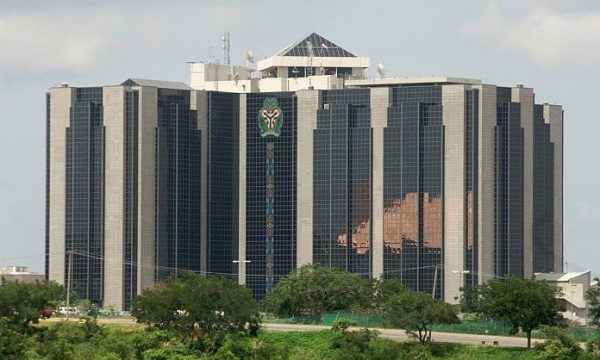
As the Central Bank of Nigeria’s (CBN) Monetary Policy Committee (MPC) commenced its 306th policy meeting on Monday, a growing consensus has emerged among economists, bankers and investment analysts that the apex bank will retain its benchmark Monetary Policy Rate (MPR) at 26.5 per cent, citing persistent inflationary pressures and heightened global uncertainties.
The two-day meeting, which runs from July 20 to 21, is expected to determine the direction of Nigeria’s monetary policy at a time inflation remains elevated despite recent moderation, while geopolitical tensions continue to pose risks to global commodity markets.
Leading the expectations is Access Bank’s Economic Intelligence Unit, which said the current macroeconomic environment supports maintaining a tight monetary policy stance to preserve price stability and sustain investor confidence.
The bank expects the MPC to leave all key policy parameters unchanged, including the MPR at 26.5 per cent, the asymmetric corridor at +50/-450 basis points around the MPR, the Cash Reserve Ratio (CRR) for Deposit Money Banks at 45 per cent, the CRR for Merchant Banks at 16 per cent, and the Liquidity Ratio at 30 per cent.


According to Access Bank, although Nigeria’s economy has shown signs of resilience, inflation remains the most significant domestic challenge.
Headline inflation rose for three consecutive months before easing marginally to 15.91 per cent in June, while food inflation remains elevated at 17.52 per cent, reflecting continued pressure from transportation costs, agricultural inputs and food supply constraints.
The bank also pointed to renewed geopolitical tensions involving the United States and Iran, warning that volatility in global oil prices and shipping costs could trigger fresh imported inflation, making it risky for the CBN to begin easing monetary policy prematurely.
It argued that keeping rates unchanged would allow the cumulative impact of previous monetary tightening to continue filtering through the economy while safeguarding exchange rate stability and financial market confidence.
Similarly, research and investment firm, VNL Research, projected that headline inflation could moderate further to 15.67 per cent in July, but stressed that the anticipated decline is unlikely to persuade the CBN to cut interest rates at this stage.
The firm attributed the expected easing in inflation to lower domestic petrol prices, improving foreign exchange stability and favourable base effects.
However, it warned that inflation remains broad-based, with nearly half of the consumer basket still recording elevated price increases, indicating that underlying price pressures have not eased sufficiently.
According to VNL, expectations of an interest rate cut may have to be deferred as policymakers remain focused on ensuring inflation is firmly anchored before considering monetary easing.
The research firm added that investors in the fixed-income market are likely to remain cautious pending clearer evidence that inflation is on a sustainable downward trajectory.
The Chartered Institute of Bankers of Nigeria (CIBN) also aligned with the growing consensus.
Its President and Chairman of Council, Dele Alabi, said inflation has neither declined enough nor worsened significantly to justify a change in policy direction.
Its President and Chairman of Council, Dele Alabi, said inflation has neither declined enough nor worsened significantly to justify a change in policy direction.
“I expect the MPC to keep the interest rate constant and monitor developments over the next couple of months before considering any adjustment,” Alabi said.
According to him, retaining the current policy stance would enable the apex bank to assess evolving inflationary trends and broader economic conditions before making any further adjustments.
Analysts noted that while Nigeria’s macroeconomic indicators have improved in recent months, with stronger external reserves, higher crude oil production and steady GDP growth, policymakers are expected to remain cautious until inflation shows a more convincing and sustained decline.
Since adopting an aggressive tightening cycle in 2024 to curb inflation and stabilise the naira, the CBN has consistently prioritised price stability over growth concerns.
At its last meeting in May, the MPC unanimously retained all monetary policy parameters after reviewing inflation, exchange rate developments and domestic economic conditions.
With inflation still above the CBN’s long-term comfort zone and global uncertainties persisting, most market participants believe the committee will once again opt for policy continuity rather than risk loosening financial conditions too early.
The MPC is expected to announce its decision at the conclusion of the meeting on Tuesday.
-

 Business11 hours ago
FG targets ₦750tn capital market, seeks NNPC, NLNG listing
-
Politics21 hours ago
If Buhari, A Retired General Could Not Wipe Out Insecurity, What Do You Expect Of Tinubu? – Yari
-
 Politics21 hours ago
Tinubu Campaign Spokesperson Breaks Silence On Wife’s Fresh Role At INEC
-
Business11 hours ago
I’d rather go to prison than lose my phone – Dangote
-
Politics21 hours ago
Stop sending money to relatives at home; tell them to vote for competent leaders – Obi tells Nigerians abroad
-
News21 hours ago
FCT Residents Make ‘Tough’ Adjustments Over Rising Cost Of Living
-
 News11 hours ago
Tinubu Extends Tenures Of Immigration, Prison CGs
-
Politics21 hours ago
INEC Mum Over Rejection Of Tinubu Spokesperson’s Wife As Head Of Electoral Operations