Politics
2027 presidential elections: INEC ‘helpless’ as early campaigns flout Electoral Act, fairness rules


• APC, ADC, NDC, SDP, APM, PDP begin mobilisation
• Parties campaign under guise of consultations, stakeholder engagements
• Stakeholders: Prolonged campaigns erode fairness, raise election costs
• INEC’s failure to enforce rules reflects accountability collapse – Utomi
Some months before the 2027 election campaigns, the early drumbeats of the presidential campaigns had begun to roll deftly in parts of the country, though in violation of the guidelines and provisions of the 2025 Electoral Act.
While the Independent National Electoral Commission’s (INEC) timetable has set August 19 as the start of electioneering campaigns for Presidential and National Assembly candidates, all the major parties have begun grassroots mobilisation and subtle campaigns across the states.

Investigation by The Guardian shows that the political parties, including the ruling All Progressives Congress (APC), the opposition parties – African Democratic Congress (ADC), National Democratic Congress (NDC), Social Democratic Party (SDP), Allied Peoples Movement (APM) and Peoples Democratic Party (PDP), have begun reaching out to voters.
Party members said that a thin line exists between an outright embargo on political activities and electioneering, stressing that in the absence of open-air rallies or canvassing for votes, it remains debatable to say that political campaigns have begun in breach of INEC regulations.
The electoral umpire, however, said it was helpless in enforcing compliance with the timetable. INEC told The Guardian that it had no extant law to fall back on to compel outright obedience to the campaign rules.
However, stakeholders and political observers warn that allowing some parties to dominate the political space in the months before the official start of campaigns undermines the principle of a level playing field, particularly for smaller parties with limited financial resources.
They reckon that prolonged unofficial campaigns could increase campaign spending beyond statutory limits and weaken the credibility of regulations designed to ensure orderly electoral competition.
Parties campaign under guise of consultations, stakeholder engagements, thank-you visits
Findings show that most political parties have been running subtle campaigns through political activities and events that influence public engagement and awareness, including expressing intent to contest specific positions and nominating candidates.
Already, the country’s political atmosphere is charged with the quiet competition for voter preference, thereby raising doubts about the efficacy of the INEC timetable, its compliance with the Electoral Act, and the commission’s ability to enforce compliance with its regulations.
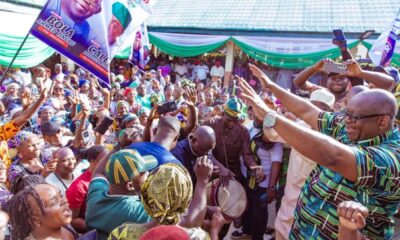
Political parties have intensified activities under the cover of consultations, stakeholder engagements, thank-you visits and policy interactions, even as they are widely seen as subtle campaign strategies aimed at gaining an early advantage before the legal campaign window opens.
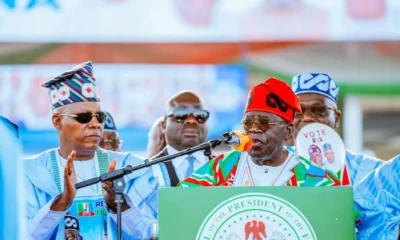
The ruling party, APC, which enjoys the power of incumbency, has sustained nationwide mobilisation around President Bola Tinubu’s second-term bid, through endorsements by party organs, strategic consultations, town hall meetings and support group rallies.
Billboards, branded campaign materials, and media promotions bearing the President’s image have also become increasingly visible in many states.
The ADC has equally intensified political engagements around its presidential candidate, Atiku Abubakar, ever since he emerged as the party’s flag bearer, including the search for his running mate, which he reportedly embarked on consultations with traditional rulers, political leaders and party stakeholders while also addressing supporters in different parts of the country.
The NDC was also not left out, as the party intensified public engagements involving its presidential candidate, Peter Obi, while party leaders and supporters continued town hall meetings, youth interactions, and policy conversations that many observers interpret as indirect campaigns.
But what could be a tacit acceptance that the party has been conducting political campaigns emerged last Monday, when the NDC’s vice-presidential candidate, Senator Rabiu Musa Kwankwaso, disclosed that the presidential candidate endorsed a one-term plan if he wins the election.
On its part, the SDP, which has been embroiled in leadership litigations, sustained its visibility through public appearances and issue-based engagements by its presidential candidate, Adewole Adebayo.
Adebayo has also been reaching out to voters in the North through town hall meetings, where he preaches his ‘bye-bye to poverty’ messages, assuring that only the SDP guarantees the welfare of Nigerians, while repudiating the APC and President Tinubu’s policies and programmes.
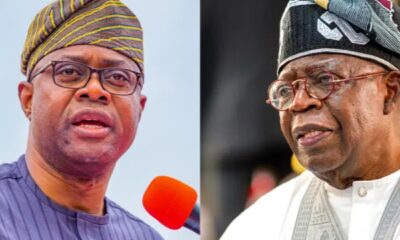
As a newcomer to the presidential contest, the Allied Peoples Movement (APM) has increased mobilisation around Oyo State Governor Seyi Makinde, such that across Ibadan and many parts of the state, campaign posters, billboards, and branded materials promoting Makinde have become prominent, even though the official campaign timetable has yet to commence.
APC: Not just an endorsement
Against INEC’s timetable, the growing number of governors have openly endorsed President Tinubu’s second-term ambition, fuelling concerns over premature electioneering.
Leading the endorsements are the Progressive Governors Forum (PGF) and first-term APC governors, who have, at separate meetings, pledged to mobilise support for Tinubu’s re-election, citing the need for policy continuity and the success of the Renewed Hope Agenda.
Several South-West governors, including Babajide Sanwo-Olu (Lagos), Dapo Abiodun (Ogun), Lucky Aiyedatiwa (Ondo) and Biodun Oyebanji (Ekiti), have publicly vowed to deliver overwhelming votes for the President in 2027. Governors in the South-South APC bloc have also declared their readiness to work for Tinubu’s re-election.
Individually, Edo State Governor Monday Okpebholo has acknowledged commencing mobilisation for Tinubu’s second-term bid, while Kebbi State Governor Nasir Idris joined a major APC rally alongside Minister of Budget and Economic Planning, Atiku Bagudu, to galvanise support for the President.
Although a member of the New Nigeria People’s Party (NNPP), Kano State Governor Abba Yusuf has also urged residents to support Tinubu, describing him as deserving of another term for his commitment to the state.
Similarly, Niger State Governor Mohammed Bago and Kwara State Governor AbdulRahman AbdulRazaq have spoken in support of the President’s political strategy ahead of the next election cycle.
The endorsements have coincided with the reappearance of pro-Tinubu 2027 billboards in Abuja, Kaduna, Kebbi and Kwara, despite an earlier disclaimer by the Presidency distancing itself from the campaign materials.
Similarly, this month, APC officially inaugurated the national executives of the PBAT Door-to-Door Movement, launching a nationwide grassroots mobilisation campaign for the 2027 elections.
The initiative, inaugurated by APC National Chairman Professor Nentawe Yilwatda, tasks members with direct community engagement to promote President Bola Ahmed Tinubu’s “Renewed Hope” agenda.
Acid test for INEC, Electoral Act 2026
Although none of the parties openly admits to violating the Electoral Act, analysts argue that the distinction between consultations and campaigns is becoming increasingly blurred.
INEC, however, maintained that its powers are limited.
The Commission’s Director of Voter Education and Publicity, Victoria Eta-Messi, said that although the Commission had observed the increase in political activities, it lacked the legal authority to stop parties or aspirants from engaging in consultations before the official campaign period.
She disclosed that the issue had featured prominently during a recent stakeholders’ summit involving political parties, the Advertising Regulatory Council of Nigeria (ARCON), the Nigerian Bar Association (NBA), media organisations and other relevant bodies.
According to her, while INEC fixed the campaign timetable in line with the Electoral Act, “the enforcement of activities regarded as premature campaigns remains outside the commission’s statutory powers”.
The development has, however, renewed debate on the effectiveness of the electoral laws, stakeholders’ compliance level and the cost of elections.
Political economist and former presidential candidate, Prof. Pat Utomi, described the trend as another manifestation of institutional decline in the country.
According to him, Nigeria has gradually become a society where rule violations attract little or no consequences.
“My worry is that if INEC says it has no legal standard to stop anybody from campaigning, then which institution is responsible?” he asked.
Utomi argued that the inability of relevant institutions to enforce electoral regulations reflects a broader collapse of governance and accountability.
“It is tragic and very sad. Everything has fallen apart. Our culture is in total collapse. God help us,” he lamented.
He further accused INEC of failing to act impartially, alleging that the APC had effectively begun campaigning months ago without incurring any sanctions.
“I am sure if it were another party, the commission would have taken drastic action. But for the ruling party, it is another measure entirely,” he said.
Former National Chairman of the ADC, Ralph Nwosu, also expressed concern over what he described as the ruling party’s early mobilisation.
He alleged that, beyond subtle campaigning, the APC was deploying state institutions in ways that could intimidate opposition parties ahead of the 2027 elections.
“What you see APC doing is the personalisation of government institutions to suppress opposition parties ahead of 2027,” he claimed.
A blindside in the Electoral Act
The controversy has once again exposed a grey area in Nigeria’s electoral law.
While Section 94 of the Electoral Act prescribes the period within which campaigns may be conducted, legal experts argue that the law provides no sufficiently clear mechanism for distinguishing consultations from campaigns or empowering INEC to halt activities that fall within that grey zone.
Consequently, political actors continue to exploit the ambiguity, effectively launching campaigns under different labels without attracting sanctions.
The situation is particularly significant in the Southwest, where political calculations have intensified following the emergence of three major presidential contenders from the region—President Tinubu of the APC, Governor Makinde of the APM, and Adewole Adebayo of the SDP.
heir simultaneous quest for support from the President’s traditional political base is expected to reshape political alignments and campaign strategies in the months ahead.
The wave of endorsements has drawn criticism from civil society organisations, which have petitioned INEC to enforce the Electoral Act, arguing that the coordinated mobilisation and public declarations amount to campaigns outside the legally approved timetable.
Supporters of the President, however, insist they are merely expressing confidence in the administration and promoting its achievements rather than engaging in formal electioneering. (Guardian)
-

 Politics22 hours ago
Tinubu using foreign reserves to create misleading impression of economic growth – Makinde
-
Politics22 hours ago
ADC mocks APC over ‘rented crowds, empty seats’ at Kaduna rally
-
Politics22 hours ago
2027: It’s Our Turn To Repay Tinubu – Shettima Tells Northerners
-
Politics22 hours ago
2027: Forget About Social Media News, Nigerians Love Tinubu – Information Minister
-
Metro22 hours ago
How AI-generated photo cost kidnap victim N4m ransom – Freed Benue graduate
-
Politics21 hours ago
Ebola: Parties reject campaign suspension
-
Metro21 hours ago
Expert warns of declining sperm concentration in Nigerian men
-
Politics21 hours ago
2027: Pantami, Adebutu, Gwarzo’s fates uncertain