Business
Oil giants make billion-dollar deepwater bets after onshore divestment wave

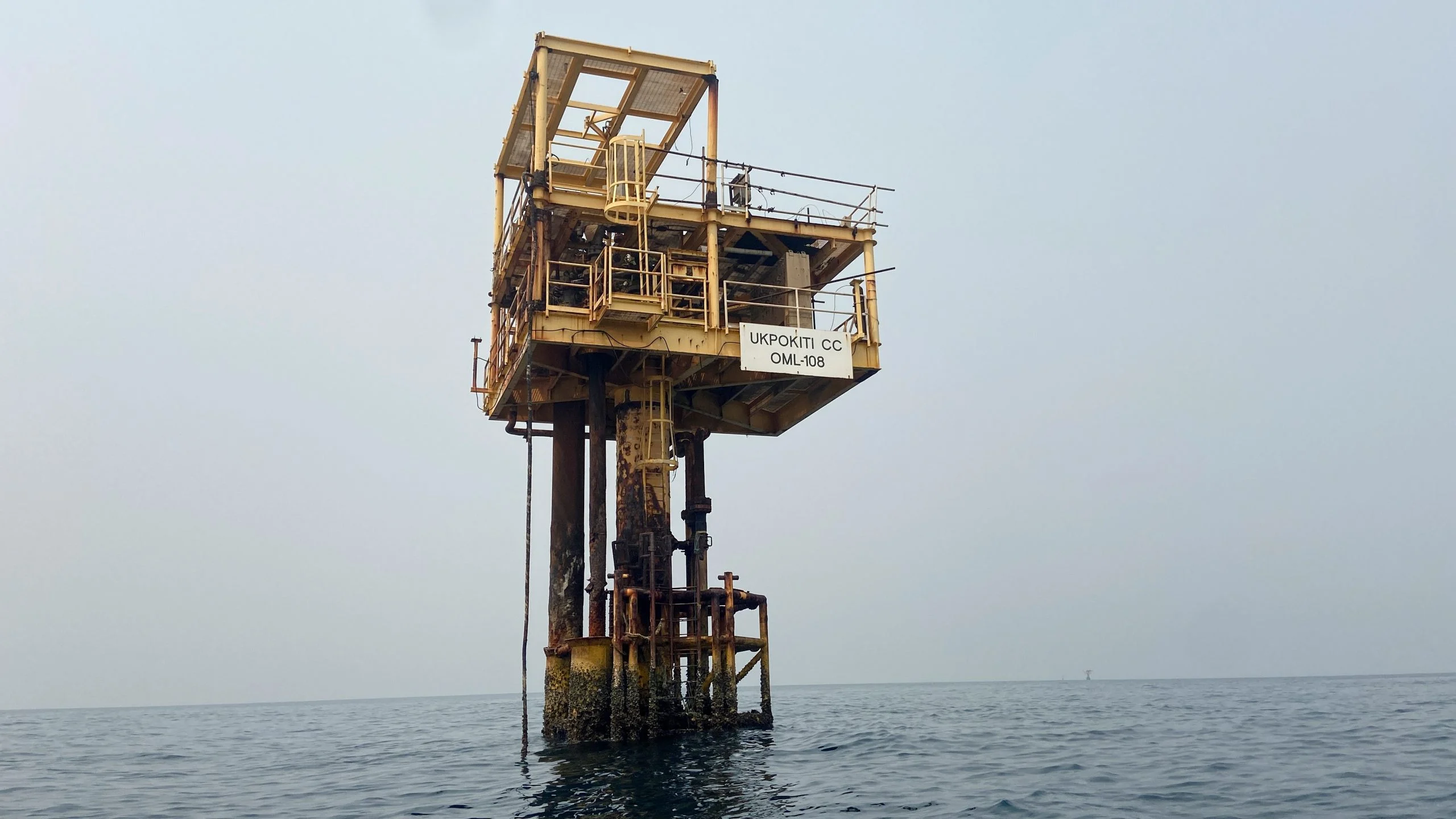
ExxonMobil’s $1bn Usan investment is the latest sign that international oil companies (IOCs) are shifting capital towards Nigeria’s deep waters, following another wave of divestment that saw them offload onshore and shallow-water assets to domestic players.
The US oil giant is preparing to resume drilling at the Usan field after a decade-long hiatus, with the deepwater infill project expected to unlock 40,000 barrels per day (bpd) of additional production.
Esso Exploration and Production Nigeria Limited, ExxonMobil’s Nigerian subsidiary, announced on 8 July at an industry event in Abuja that on-block execution of the project would begin in August. A deepwater drilling rig is due to arrive at the field, alongside major new subsea equipment.
The investment follows ExxonMobil’s December 2024 sale of its Nigerian subsidiary, Mobil Producing Nigeria Unlimited, to Seplat Energy for $1.28bn.

Nigeria’s onshore operating environment had become too fraught with community unrest, oil theft and regulatory uncertainty, prompting IOCs to redirect their attention towards large-scale deepwater projects.
“This Usan Infill Project is the first of what we hope will be a long line of opportunities at OML 138 and several other deepwater blocks,” says Jagir Baxi, Esso Nigeria’s managing director.
Unlike a greenfield development, Usan’s existing infrastructure enables ExxonMobil and its partners to pursue a shorter timetable. First production is expected about six months after execution begins.
More than $300m has already been committed by the partners in Oil Mining Lease (OML) 138: ExxonMobil, Chevron, TotalEnergies and Nexen, according to Baxi, who said the project is expected to generate $1.2bn in government revenues over four years.
‘A very attractive proposition’
The renewed interest follows years in which IOCs prioritised selling assets rather than developing new ones.
The first significant wave of IOC divestments occurred between 2010 and 2014. Since 2021, additional fields, pipelines and joint-venture interests previously controlled by Shell, Eni, ExxonMobil and Equinor have been transferred to indigenous operators.
Those exits reflected concerns about oil theft, pipeline vandalism, community disputes and the costs of operating mature onshore assets.
Now, the IOCs are concentrating capital and technical expertise in deep water, where projects can deliver large volumes with less exposure to onshore security risks.
“The deep offshore space in Nigeria has now become a very attractive proposition, not only for oil but also for gas,” Abdullah Bukar, a former Nigerian National Petroleum Company board member and director at Frontier Oil, tells The Africa Report.
Nigeria’s onshore reserves are maturing, he says, while its offshore resources remain underdeveloped. A series of discoveries along Africa’s Atlantic margin has also reinforced confidence in the region’s geological potential, he adds.
“We have been in a trough since 2008, but it is good to see now that the attractiveness of offshore acreages in Nigeria, with relatively bigger reserves, has become very obvious,” Bukar says. “It will attract investment on both sides.”
Data and Analytics firm Wood Mackenzie describes Nigeria’s deepwater resources as “highly prized” as international majors seek large-scale assets to strengthen their portfolios over the next decade.
Yet production has moved in the opposite direction. Nigerian deepwater output has fallen from a peak of about 800,000 barrels per day in 2016 to below 500,000 bpd a decade later, according to the consultancy.
President Bola Tinubu has set a target to raise Nigeria’s total oil production to 3mbpd by 2030, up from around 1.6mbpd currently.
Bukar believes that ambition is achievable if the renewed interest translates into sustained investment.
Big-ticket projects return
Usan forms part of a wider revival in Nigeria’s deepwater sector. In December 2024, Shell took a final investment decision (FID) for the $5bn Bonga North project. The development will include drilling 16 wells, modifying the Bonga Main floating production, storage and offloading vessel, and installing new subsea equipment.
Several major projects remain under consideration. These include TotalEnergies’ Preowei, Shell’s Bonga Southwest-Aparo, Eni’s Zabazaba-Etan, Chevron’s Nsiko, and ExxonMobil’s Bosi, Uge, Owowo and Erha developments.
ExxonMobil has said that Owowo alone contains around 1bn barrels of resources and could require between $7bn and $8bn in investment.
During a visit to the Nigerian Upstream Petroleum Regulatory Commission (NUPRC) in Abuja in April, Hunter Farris, senior vice-president for deepwater at ExxonMobil Upstream Company, said the group was encouraged by Nigeria’s improving investment climate and decided to “renew our vows to Nigeria”.
Farris said ExxonMobil was carrying out life-extension work on the Erha FPSO after its production-sharing contract was extended to 2042. The company is also advancing Owowo towards a possible final investment decision as early as next year.
Bukar says the revival could also help reverse the loss of Nigerian expertise during the prolonged downturn in investment.
“It is a very exciting time; so there should be all sorts of opportunities,” he says. “I hope this will attract a large amount of Nigerian upstream and midstream talent that has been trapped to come back home to develop the downstream.”
ExxonMobil last drilled in the area in 2016. For the NUPRC, the company’s return is evidence that reforms introduced by the Tinubu administration are beginning to draw capital back into an offshore industry that has suffered years of underinvestment.
“Ten years later, the resumption of drilling signals renewed potential and value in our deepwater acreage,” NUPRC chief executive Oritsemeyiwa Eyesan said in Abuja.
She pointed out that recent production deferments at offshore platforms underscored the need to invest in maintenance, reliability and asset integrity.
PIA and Tinubu’s fiscal push
The growing appetite for deepwater projects is underpinned by legislative and executive interventions that began with the Petroleum Industry Act (PIA) of 2021, which resolved lingering disputes over six OMLs that had frozen investment in deep offshore assets for years.
The PIA paved the way for the August 2022 renewal of production-sharing contracts across five deepwater blocks — including OML 138, home to Usan — extending the leases by 20 years. Baxi described the renewal as “the most important signal of confidence for the asset, for the stakeholders, and for the supporting regulatory framework”.
Then came the incentives. Since 2024, the Tinubu administration has introduced several executive orders, including what Wood Mackenzie analysts called “the most attractive tax credits available for fields that reach FID before 2029”.
“These incentives have renewed IOC focus on large-scale offshore projects that could deliver material post-2030 growth,” Wood Mackenzie analysts, including chairman and chief analyst Simon Flowers, wrote last Thursday.
Earlier this year, Tinubu approved targeted, investment-linked incentives for Shell’s Bonga Southwest project.
Last week, Bloomberg reported that the president had granted Shell and its partners a tax rebate of $11.50 per barrel for the long-delayed Bonga Southwest-Aparo project — more than double the standard amount — with similar terms available to other IOCs developing new deepwater projects.
“These incentives are not blanket concessions,” Tinubu said when receiving a Shell delegation led by global CEO Wael Sawan in January. “They are ring-fenced and investment-linked, focused on new capital and incremental production, strong local content delivery, and in-country value addition.”
“My expectation is clear: Bonga South West must reach a final investment decision within the first term of this administration.”
Sawan told Tinubu that he hoped to take Bonga South West to FID by 2027 — a decision that could unlock around $20bn in investments from Shell and its partners.
The benefits and the risks
The impact of the deepwater revival is already being felt. “We’re definitely seeing a ramp-up, and we’re very hopeful that once some financial decisions are taken on these assets, logistics will play a very key role,” said Olabode Makanjuola, vice chairman and CEO of Caverton Offshore Support Group, the largest domestic aviation logistics provider to the industry.
If developed, Bonga Southwest-Aparo, Owowo, Zabazaba, Etan, Preowei, Nnwa-Doro and Bosi — together with Bonga North and Usan — could add 700,000 bpd of liquids and 950 mmcfd of gas at peak, according to Wood Mackenzie analysts.
“If these projects get over the line, Nigeria’s deepwater resurgence will prove it has real bite,” they said.
(The Africa Report)
-

 World News20 hours ago
Model recruiter who introduced young women to Jeffrey Epstein found dead in France
-
 Politics21 hours ago
Fubara endorses Rivers APC guber candidate, joins Wike’s Rainbow Coalition
-
News20 hours ago
My life is in danger, I’m not a criminal – Aisha Achimugu
-
News20 hours ago
Police lead payroll fraud list as ICPC exposes 908 ghost workers
-
World News23 hours ago
Mamdani challenges Trump to arrest ‘war criminal’ Netanyahu when he visits U.S
-
Business20 hours ago
Nigerian tycoon Tope Shonubi’s Sahara Group wins 31-year Kenya gas terminal lease amid Senate probe
-
Business21 hours ago
How Power Crisis Pushed Nigerian Businesses To Clean Energy
-
News20 hours ago
Reps allocate N780m for evangelical instruments in Abia constituency