News
Rich countries harvest 20,000 Nigerian health workers


No fewer than 20,966 Nigerian health workers relocated abroad within one year, official figures obtained by Saturday PUNCH have revealed.
The mass exodus includes 3,919 doctors, 7,487 nurses and midwives, 6,861 medical laboratory professionals, 702 pharmacists, 658 physiotherapists and hundreds of other specialists, according to the State of Health of the Nation Report 2025.
The growing migration came under the spotlight following the revelation that a Senior Consultant Neurosurgeon at the University of Ilorin Teaching Hospital, Dr Salamat Aliu-Ibrahim, had relocated to the United States.
Aliu-Ibrahim, a foremost neurosurgeon, now works as Medical Director, Paediatrics, Freeman Children’s Clinic, a facility under Freeman Health System in Joplin, Missouri.

This is as data obtained by Saturday PUNCH from the United Kingdom’s General Medical Council showed that 4,691 Nigerian-trained doctors joined the UK medical register between May 2023 and April 2026.
According to the GMC register, 15,896 Nigerian-trained doctors — comprising 9,664 males and 6,232 females — are currently licensed to practise in the UK.
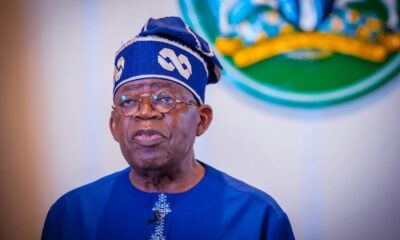
But President Bola Tinubu, on Friday, appealed to Nigerian diaspora medical professionals to attract more Nigerians back from abroad to contribute to the country’s development, adding that there is nowhere like home.
20,966 Nigerian-trained health workers migrated
An analysis of the State of Health of the Nation Report showed that only 60,551 of the country’s 95,456 registered doctors currently hold active practising licences, representing just 63 per cent, with only 51 per cent of licensed doctors actively employed within Nigeria’s health system.
The nursing and midwifery workforce, Nigeria’s largest health profession, has also suffered substantial losses, recording the highest level of migration among all health professions.
Although Nigeria has 267,951 registered nurses and midwives, comprising 73,130 nurses, 21,031 midwives and 173,790 nurses with post-basic qualifications, only 113,123 currently possess active practising licences, representing an effective licensing ratio of 42 per cent.
Of those licensed, 78 per cent remain employed in the country.
According to the report, 658 physiotherapists have migrated, leaving only 852 of the country’s 8,642 registered physiotherapists with active practising licences.
Similarly, 21 occupational therapists have migrated, while just 11 of the 176 registered professionals currently possess active licences.
There are 257 registered occupational therapist assistants, but only 51 currently hold practising licences.
The report showed that 431 optometrists have migrated abroad.
Of the 6,975 registered optometrists, only 2,156 possess active practising licences, while 66 per cent remain employed locally.
Among opticians, only 307 of the 2,976 registered professionals currently hold practising licences, while 18 have migrated.
UK, US, Canada, Saudi Arabia top destinations
Findings by Saturday PUNCH revealed that the United Kingdom remains the leading destination for Nigerian health workers, particularly doctors and nurses, driven by easier professional registration, better remuneration, structured specialist training and persistent workforce shortages within the National Health Service.
Although international recruitment has slowed since 2025, Nigeria remains one of the major source countries for overseas-trained nurses practising in the UK.
A breakdown of data obtained from the UK GMC register indicated that 7,875 Nigerian-trained doctors were licensed to practise in 2020, while 9,976 were licensed in 2022.
In 2023, the number of Nigerian-trained doctors licensed to practise in the UK rose to 12,198, making Nigeria the third-largest source of foreign-trained doctors in the UK, behind India with 38,228 doctors and Pakistan with 27,739.
Figures from the UK’s Nursing and Midwifery Council show that the number of internationally educated nurses and midwives on its register has risen sharply in recent years, driven largely by recruitment from countries such as Nigeria, India, Ghana and the Philippines.
According to the Council, the number of Nigerian nurses and midwives in the UK has risen above 16,000.
Beyond the UK, the US and Canada have become increasingly attractive destinations.
As of 2020, a total of 3,895 Nigerian-trained doctors were licensed to practise medicine in the US.
Australia has also intensified recruitment of overseas-trained doctors and nurses to address shortages in regional and rural health services, while Saudi Arabia and the United Arab Emirates continue to attract Nigerian healthcare professionals with tax-free salaries, subsidised accommodation and other employment benefits.
Why we left Nigeria — Medical workers
Speaking with Saturday PUNCH, some Nigerian-trained doctors who relocated abroad said the decision to leave the country was driven by poor remuneration, unpaid salaries, insecurity, inadequate infrastructure, limited career opportunities and difficult working conditions.
A UK-based Nigerian doctor, Sadiya Gumi, said Nigeria had continued to push health workers away through systemic failures.
Gumi, who is the Chairperson of the Concerned Medics Foundation, noted that unless Nigeria addressed the challenges in its health sector, the exodus of doctors would continue, adding that Nigerians accounted for about 80 per cent of candidates sitting qualifying examinations to practise medicine in the UK.
She described the relocation of Aliu-Ibrahim as a loss of specialised expertise for Nigeria.
Gumi, however, noted that career considerations might not be the only reason for Aliu-Ibrahim’s relocation, explaining that many doctors were motivated by other factors, including their children’s education, security and the desire for a better quality of life.
“She (Aliu-Ibrahim) might have gone there (the US) because of her children’s education. Her reason might not even be anything medical. She might simply believe life will be better for her and her family there and decide to sacrifice her career just to live in a safer environment,” she added.
Despite the continuing exodus, Gumi expressed optimism that the Nigerian medical diaspora could still play a role in rebuilding the country’s healthcare system.
According to her, many Nigerian doctors abroad are willing to contribute through structured knowledge transfer, training and short-term medical missions, even if they do not return permanently.
Also speaking, a Nigerian doctor based in Canada, Pelumi Adetona, said poor welfare, unpaid salaries and limited opportunities for career growth pushed her and her husband out of Nigeria, adding that rebuilding a life abroad makes returning home increasingly difficult.
Adetona, who said both she and her husband were resident doctors before relocating, recalled that her husband was owed five months’ salaries while working at a state-owned medical facility before they relocated to Canada.
She noted that many Nigerian health professionals who had established careers and families abroad were unlikely to return, even if conditions improved at home.
Asked if she would consider returning should the Nigerian health sector improve, she replied, “As of today, my answer would be no. Maybe later I might consider it, but with every effort that has gone into settling down here, I don’t think I would go back.”
On his part, a Nigerian-trained doctor based in the United Kingdom, Ebun Kolawole, said he and his wife, also medical doctors, did not leave Nigeria out of a lack of patriotism.
He noted that the UK health system offered more structured career progression, better remuneration and a work environment where healthcare professionals were adequately supported to deliver quality care.
Kolawole, however, said he would be willing to return to Nigeria if the government demonstrated a genuine commitment to addressing the challenges confronting the health sector.
“I’m willing to return home if I can practise in an environment where I have the tools to do my job, where doctors are valued and paid what they deserve, and where my family can live in safety. It has to be more than promises. There has to be visible, lasting improvement in the healthcare system and the country as a whole,” he said.
Resident doctors face overwhelming workload
The National Secretary of the Nigerian Association of Resident Doctors, Dr Shuaibu Ibrahim, said the exodus had significantly depleted Nigeria’s medical workforce, revealing that the number of resident doctors had fallen from about 20,000 a decade ago to 12,000 across federal, state and private hospitals.
According to him, about 8,000 resident doctors have left Nigeria in recent years, while many more continue to emigrate annually in search of better opportunities.
Citing a Federal Ministry of Health study, Ibrahim said Nigeria currently has only 2.2 doctors for every 10,000 people, warning that the ratio was far below what is needed to sustain an effective healthcare system.
He added that nearly 80 per cent of medical workers in the country were actively considering relocating abroad.
Ibrahim lamented that excessive workloads had also taken a heavy toll on doctors, saying many resident doctors were on call almost every day of the month.
“The situation is very pathetic. Poor remuneration, insecurity and lack of equipment to work with are some of the factors driving out our doctors. Our members are dying because they are on call every day of the month. The excessive workload is killing our members,” he said.
According to him, the highest-paid doctor in Nigeria earns about N1.5m monthly, while a counterpart in countries such as Saudi Arabia could earn between N10m and N15m.
He added that junior doctors, who earn about N300,000 monthly despite bearing the heaviest workload, were the most eager to emigrate immediately after completing their housemanship.
Ibrahim maintained that many doctors would remain in Nigeria if salaries, hospital infrastructure and working conditions improved.
He also raised concerns over the growing insecurity faced by healthcare workers, alleging that doctors were increasingly being assaulted by patients and their relatives in hospitals.
When contacted, the National President of the Nigerian Medical Association, Prof Afekhide Omoti, promised to get back to our correspondent but had yet to do so as of the time of filing this report.
Nowhere like home, Tinubu tells health workers
Meanwhile, President Tinubu on Friday appealed to Nigerian diaspora medical professionals to attract more Nigerians back from abroad.
Tinubu made the appeal when he received members of Nigerian Diaspora Medical Associations, led by the Director-General of the Nigerians in Diaspora Commission, Abike Dabiri-Erewa, at the State House, Abuja.
Drawing on his experience as an accountant who studied and worked in the United States before returning home to build a career, the President said his trajectory, from training with Deloitte in Chicago to eventually committing himself to public service in Nigeria, was the template he was offering them.
Tinubu said, “I’ve been through that journey. I’m home, and I can tell you, there’s nowhere like home. I’ve experienced being in America. I’ve taken the best of America in my chosen profession, accountancy and finance.
“I can’t forget the Standard Oil Building in Chicago and my first week there. But since I came back from Mobil to now, it has been a very good challenge to commit and endure the possibility of turning Nigeria around.
“So many of you have seen the hazards of the other side of the world. You’ve experienced the tribulation and challenges, and you’ve come back home to feel it and seal it.”
He urged those present to make the case to Nigerian medical professionals still abroad.
“My friends who are still there, try to attract them home. But the best way to demonstrate to you is for me to commit myself to my agenda, the Renewed Hope, so that the hope of Nigerians of having a better environment, better education, better development and prosperity can be realised,” he stated.
The President said the work the diaspora doctors were doing by returning to contribute was incalculable in its value.
“Your children will see the foundation of this country as belonging to them, and the future belonging to them is what we are working hard for. Your coming to help is immeasurable,” he added.
He told them that the struggle against poverty was one his administration had accepted as a primary mission and would not walk away from.
“If you look at 250 years of American democracy and the centuries of British governance, we are still very young. We are in our infancy. What must we do? Strong determination and stay focused.”
Mixed reactions trail neurosurgeon’s relocation to US
This is just as the relocation of Dr Aliu-Ibrahim to the United States triggered mixed reactions, with some Nigerians lamenting the continued migration of highly skilled medical professionals and warning of its implications for healthcare delivery in the country.
In a post on X, a user identified as @Women’sDoc warned that Nigeria risked losing the specialists needed to provide critical healthcare services, stressing that the impact of the exodus would become more evident as patients struggled to access life-saving treatment.
“We’ve lost one of the few people capable of providing a service that millions of Nigerians may someday desperately need,” the user wrote.
Also reacting, a doctor, Daniel Popoola, said Aliu-Ibrahim’s relocation reflected the deepening crisis in Nigeria’s healthcare system.
“For a senior consultant to go back and start residency all over again is like someone with a master’s degree returning to Primary Five. Nigeria’s healthcare system is in serious trouble, yet no one seems to care,” he wrote.
Another X user, @oghenemaro_1, criticised the decision, arguing that the woman benefited from Nigeria’s subsidised education before relocating abroad.
“This is very selfish of her. She enjoyed the subsidised education here, then left,” the user wrote.
However, other social media users defended her decision, arguing that doctors should not be blamed for seeking better working conditions, improved remuneration, greater security and career opportunities abroad.
They urged the government to address the factors driving the continued exodus of healthcare professionals. (Punch)
-

 Metro10 hours ago
Child trafficking suspect admits receiving ₦250,000 per child
-
News10 hours ago
Ebola: Uganda seeks Nigerian woman’s travel history from FG
-
Business10 hours ago
Transport, petrol prices soar in S’East amid fuel discount
-
Politics10 hours ago
2027: Tinubu campaign council creates new directorate, reshuffles teams
-
News10 hours ago
Abuja bizman arrested over alleged $120m fraud
-
Business24 hours ago
Power outage hits Google Cloud services, disrupting UK banks
-
Politics10 hours ago
Ebola case: Atiku urges calm, backs contact tracing
-
Business10 hours ago
Senate Summons Olam Nigeria, MD, Eight Other Executives Over Alleged $15Billion Forex Transactions