Opinion
ICPC chairman’s extortion: Ugly face of Nigerian policing

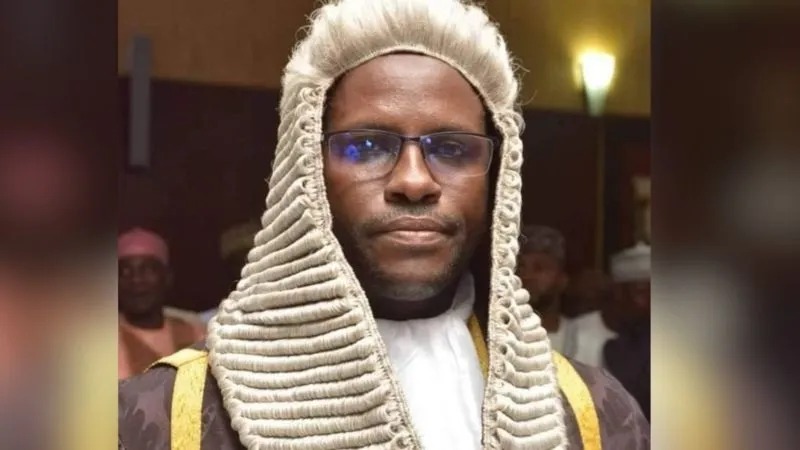
IT took the extortion of the Chairman of the Independent Corrupt Practices and Other Related Offences Commission, Musa Aliyu, for Nigeria to once again confront an ugly truth that ordinary citizens have lived with for decades.
On Monday, the Federal Capital Territory Commissioner of Police, Ahmed Sanusi, announced that four police officers operating an illegal checkpoint in the FCT allegedly stopped Aliyu’s vehicle and compelled him to part with N53,000. They processed the payment through a Point-of-Sale terminal.
Apparently oblivious to their victim’s identity, the officers carried on with the confidence and brazenness that only years of impunity can breed.
This is the ugly face of Nigerian policing.

The incident is remarkable not because it is unusual, but because it happened to someone whose office exists to combat corruption. It is difficult to imagine a more symbolic illustration of how deeply police extortion has become institutionalised in Nigeria.
If the Chairman of the ICPC can be fleeced on the highway, what hope does the ordinary citizen have?
Sanusi, who described the officers as a “gang of thieves,” announced that they had been arrested and promised that they would be “severely punished.”
The arrests are commendable. But Nigerians have heard similar assurances countless times.
Every Inspector-General of Police assumes office promising zero tolerance for corruption and ordering the dismantling of illegal checkpoints.
Yet the checkpoints remain.
Indeed, they have become one of the defining features of policing in Nigeria. They spring up on highways, within cities and, incredibly, sometimes directly opposite police stations.
Motorists understand that many are erected not for crime prevention but for illegal revenue collection.
Pay and proceed. Refuse and prepare for harassment, intimidation, prolonged delay or worse.
For some Nigerians, the encounter has proved fatal. Motorists have been beaten, brutalised and even shot dead over arguments that began with demands for bribes.
The evolution of this form of corruption is particularly disturbing. Police officers now carry PoS machines with astonishing convenience, making extortion as seamless as legitimate commercial transactions.
Technology has become an instrument of roadside corruption.
Earlier this year, Nigerians watched with disbelief as a viral video showed two officers extorting a motorist through a PoS machine inside a police station in Asaba, Delta State. Their reported punishment was demotion. This wasn’t enough.
In May 2025, police officers in Edo State were secretly recorded demanding either N5,000 or fuel from a motorist. They were reportedly summoned to Abuja for disciplinary measures.
The public deserves to know what became of that case. Did anyone face prosecution? Were convictions secured?
Or did the officers quietly return to duty after the public outrage subsided?
Nigerians rarely see justice done. They are informed that orderly room trials have taken place behind closed doors. Officers are redeployed, suspended or demoted. Then the matter disappears.
If public officers abuse their authority to extort citizens, criminal prosecution, not administrative relocation, should be the policy response. Extortion is a crime. Armed extortion using state authority is an even graver offence.
At one point in 2020, Nigerian youths could no longer tolerate police extortion and harassment. Their resistance sparked the #EndSARS movement, in which young people rallied against police corruption and poor welfare for officers at the Lekki Tollgate in Lagos.
From the recent incidents, the police appear not to have imbibed any enduring lessons from that tragic moment.
But the extortion of the ICPC Chairman should serve as a wake-up call for the Inspector-General of Police, Tunji Disu.
The four officers involved in this disgraceful episode must be investigated and, if found culpable, prosecuted before the courts. Nigerians deserve to see justice, not merely hear that justice has been done.
But punishing the four officers alone will accomplish little if the system that produced them remains intact.
Nigeria does not merely have a few bad police officers. It has a serious police corruption problem.
That reality demands honesty.
The conversation must move beyond weeding out the “bad eggs.” The system that continually produces them must itself be dismantled and rebuilt.
This inevitably raises uncomfortable questions about recruitment. What kind of people are admitted into the Nigeria Police Force? How rigorous are the background checks? How carefully are candidates screened for integrity, emotional stability and temperament?
These questions matter because policing grants extraordinary powers over fellow citizens. The authority to stop, search, arrest and use force should never be entrusted casually. Countries with professional police services recognise this.
In the United Kingdom, recruitment involves extensive background investigations, psychological assessments, reference checks and continuous professional evaluation.
In Singapore, corruption within the police is treated with exceptional seriousness through strong internal oversight, swift prosecution and competitive remuneration that reduces incentives for graft.
Finland consistently ranks among the countries with the highest levels of public trust in policing because recruitment standards are demanding, training is intensive, accountability mechanisms are credible and professionalism is deeply embedded in police culture.
These countries did not arrive there by accident. They invested in recruitment standards, ethics training, independent oversight, welfare, technology, leadership accountability and certainty of punishment for misconduct.
Nigeria cannot continue expecting different outcomes while preserving the same dysfunctional structures.
There is another uncomfortable issue that cannot be ignored. For years, reports have circulated alleging that extortion proceeds from checkpoints are shared up the chain of command, that junior officers make “returns” to superior officers who tolerate or even encourage the practice.
Whether true or not, the persistence and consistency of these reports point to a crisis of confidence within the institution itself.
No extortion network of this magnitude survives without protection somewhere along the line.
Therefore, reform must begin at the top.
Disu and the police leadership must deploy extensive surveillance, intelligence gathering and covert monitoring of officers on patrol. Random integrity tests, body-worn cameras, dashboard cameras, GPS monitoring of patrol teams, undercover anti-corruption operations, asset tracing and public complaint systems should become routine rather than exceptional.
Officers should know that, at any moment, the next motorist they stop could be an undercover investigator, or another citizen recording events.
Indeed, Nigerians need no reminder of the international embarrassment police corruption has become.
Last year, some officers disgraced themselves and the country by demanding bribes—including payments in dollars, from a European woman travelling across Africa on a motorcycle. Unbeknownst to them, she was secretly documenting the encounter. The footage travelled around the world, exposing the ugly face of Nigerian policing.
That episode generated outrage, as has the extortion of the ICPC Chairman.
The question remains: What has fundamentally changed?
Reform cannot consist only of punishment. It must also address welfare and professionalism.
Many police personnel live in deplorable barracks, wear worn-out uniforms, receive inadequate salaries, endure exhausting work schedules and operate with poor equipment. These conditions do not excuse corruption, but neither should they be ignored.
An officer who is poorly housed, poorly paid, poorly equipped and poorly motivated is hardly being prepared for professional excellence.
The government must therefore treat police reform as a national priority. Better pay, decent accommodation, quality healthcare, continuous training, modern investigative tools and merit-based promotion are essential components of a police service capable of earning public trust.
The image of frightened motorists approaching police checkpoints has become one of the saddest symbols of governance failure in Nigeria.
A police officer should represent safety, not danger.
The extortion of the ICPC Chairman has exposed a reality that ordinary Nigerians have been shouting about for years.
Until Nigerians can approach a police checkpoint with confidence instead of fear, the promise of policing with integrity and professionalism will remain a mirage.
•Punch Newspaper Editorial
-

 Politics22 hours ago
2027: Atiku demands names of firms printing INEC’s ballot papers
-
Business22 hours ago
Refiners back forward crude sales, oppose petrol price cap
-
Business22 hours ago
How 18yrs multiple gas policies sidelined domestic consumers
-
Business22 hours ago
Nigeria’s debt interest soars 124% above revenue
-
Politics22 hours ago
Crude shortfall makes Atiku’s subsidy plan not workable – Presidency
-
 News22 hours ago
World Bank report affirms reform gains — Tinubu
-
News22 hours ago
NDLEA Arrests 83-Year-Old Woman Again, Intercepts Drugs At Nigerian Airports
-
Politics22 hours ago
2027: Tinubu can break Obi’s Southeast hold – Group