Business
Royal Air Maroc defends itself, as Nigeria threatens to suspend flights over customer service

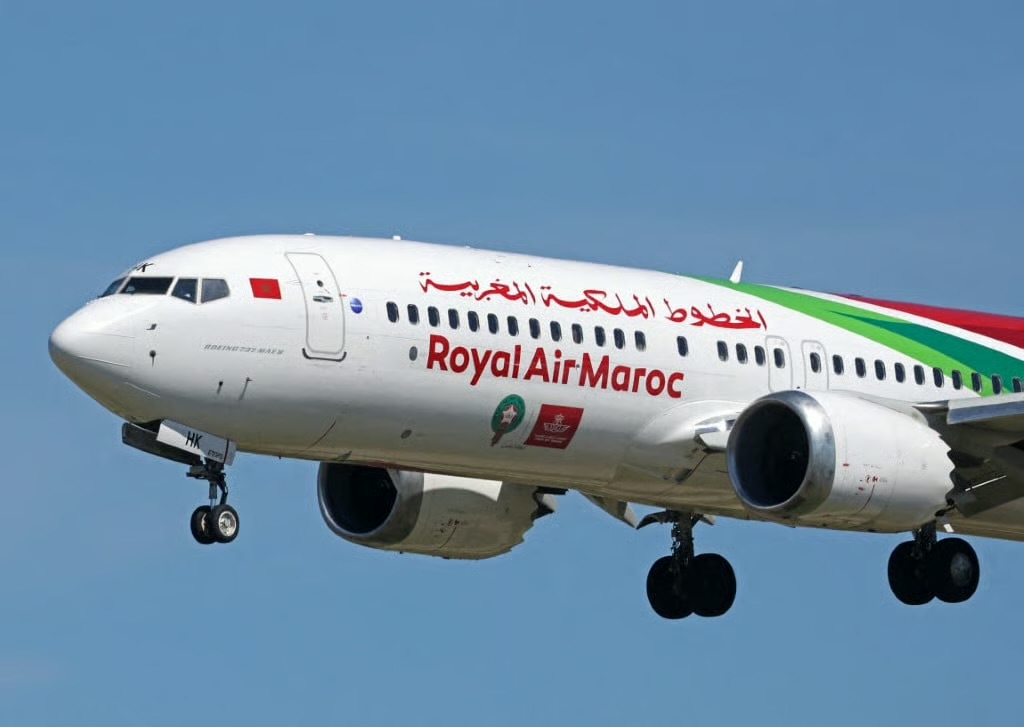
Nigeria’s civil aviation regulator has threatened to stop Royal Air Maroc from operating in the country, escalating a long-running dispute over delayed luggage, compensation and the airline’s treatment of Nigerian passengers.
Michael Achimugu, the Nigeria Civil Aviation Authority’s director of public affairs and consumer protection, said in a message on X on Thursday that his department would recommend suspending the Moroccan flag carrier until it committed to improving its service.
The threat does not yet amount to a formal suspension order. But it marks a sharp escalation by a regulator that has already fined Royal Air Maroc for breaches of consumer-protection rules.

Royal Air Maroc rejected the suggestion that its Nigerian service had deteriorated. An official spokesperson said the airline had expanded its schedule to two daily Lagos flights and one daily Abuja service, representing growth of about 40% in recent years.
The expansion reflected strong passenger demand and the Nigerian government’s support for the airline’s presence, the spokesperson said.
Royal Air Maroc acknowledged that it had experienced baggage problems in the past, but argued that these stemmed partly from the volume of luggage carried on its services. Economy-class passengers are allowed to check in two bags, the airline said, which can occasionally mean excess baggage must be transported on a later flight.
“We are a victim of our own success,” the spokesperson said, saying that RAM was one of the few airlines in Africa to offer two bags in economy.
The airline said it was deploying larger-capacity aircraft on its Nigerian routes to address the problem, with most services now operated by Boeing 737 Max jets. It added that baggage delays affected all carriers and claimed its performance was better than industry standards.
Nigeria’s regulator still wants improvements
The NCAA has offered a sharply different account. It said delayed baggage was often not reported promptly to passengers, emergency assistance was inconsistent and complaints tended to be resolved only after the regulator intervened. Achimugu also said compensation was not always paid.
The dispute follows years of complaints about Royal Air Maroc’s Nigerian operations.
In 2019, passengers disrupted the airline’s operations at Lagos airport after their luggage failed to arrive for almost a week. Some threatened to prevent it from operating until the bags were returned.
Nigeria’s aviation minister, Festus Keyamo, intervened again in September 2024 after an Abuja-bound flight made an emergency landing in Marrakech. Passengers alleged that they were left without adequate accommodation, with women and children sleeping on the terminal floor.
Keyamo described their treatment as “inhuman” and ordered the NCAA to engage the airline. A preliminary investigation found that refreshments had been provided, but that Moroccan visa requirements had prevented passengers from being moved to hotels.
The NCAA subsequently sanctioned Royal Air Maroc under Nigeria’s 2023 aviation regulations. In September 2025, it said the airline had paid the penalty and had received the heaviest sanction imposed on a foreign carrier because of persistent short-landed baggage (baggage that does not arrive with the flight) and its poor response to complaints.
Although the airline’s handling of complaints had improved, baggage problems continued, the authority said.
Prominent Nigerians have also taken complaints public. Singer Timi Dakolo said in July 2025 that a bag checked on a Lagos–Casablanca–Freetown journey had remained missing for three weeks despite repeated calls and emails.
Similar disputes have surfaced elsewhere in West Africa. In 2020, a Liberian court ordered Royal Air Maroc to pay about $350,000 to a lawyer whose luggage had been lost.
Nigeria’s intervention nevertheless appears to be the strongest regulatory threat the airline has faced in an African market. The immediate question is whether the NCAA follows through – or whether the prospect of losing access to Africa’s largest aviation market forces both sides back to the negotiating table.
(The Africa Report)
-

 News11 hours ago
Ebola: Don’t panic – FG tells Nigerians
-
News10 hours ago
Gas leak: Ogun schools shut, over 100 pupils hospitalised
-
News10 hours ago
Italy rejects 2,220 Nigerians seeking asylum
-
News10 hours ago
State Police: Ekiti, Kebbi endorse bill, tally hits 15
-
 Politics11 hours ago
Imam Removed After Campaigning For Tinubu At Bauchi Mosque
-
Sports11 hours ago
Como Humiliates Manchester United 4-1, Osimhen Scores In Galatasaray UCL Win
-
Business10 hours ago
Guinness Nigeria profit jumps 53% to N40.69bn
-
Business10 hours ago
Nigerian billionaire Aliko Dangote eyes Egypt oil refining in $15 billion plan