Sports
Spain to pay 30% of its World Cup prize money to US

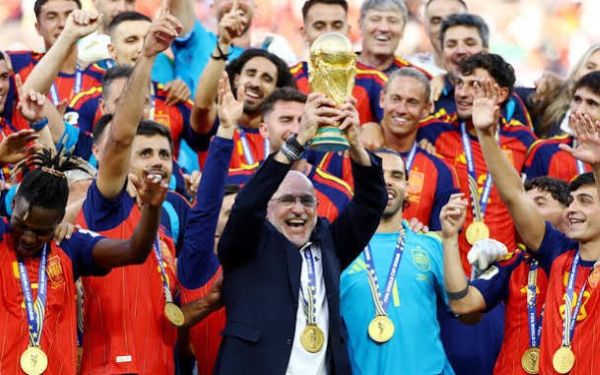
Spain will pay tax on part of its record 2026 FIFA World Cup prize money to the United States after winning the tournament, although widespread social media claims that the champions will be left with only $6.25 million have been described as false.
Spain earned a record $50 million for lifting the World Cup trophy, but because the United States co-hosted the tournament and the final was played at the New York New Jersey Stadium, income generated on American soil falls under US source-based taxation laws.
Under US tax rules, prize money and income earned in the country by non-resident foreign athletes are subject to a mandatory 30 percent federal withholding tax.
That means the Internal Revenue Service (IRS) could withhold up to $15 million from the portion of Spain’s World Cup earnings within its jurisdiction.

Individual players, coaches and staff members also face additional state-level “jock taxes” because the final was played in New Jersey, with those taxes calculated based on where they worked during the tournament.
Unlike previous World Cup hosts such as South Africa, Brazil, Russia and Qatar, which granted broad tax exemptions to FIFA and participating teams, the United States did not provide blanket tax exemptions for the 2026 tournament.
However, claims circulating on social media that Spain could lose as much as $43.75 million in taxes and return home with only $6.25 million have been debunked.
The widely shared figures are mathematically incorrect, as a 30 per cent federal withholding on a $50 million prize amounts to $15 million, while additional state taxes do not push the overall tax burden anywhere close to 87.5 per cent.
The reports also ignore the Double Taxation Treaty between the United States and Spain, which allows Spanish players to claim foreign tax credits to reduce the likelihood of being taxed twice on the same income.
The Royal Spanish Football Federation is also better protected than many online reports suggest, as tax obligations primarily affect bonuses distributed to players and staff rather than leaving the federation with only a fraction of its prize money.
Spain’s tax exposure is also influenced by where its matches were played during the tournament. Having played seven of its eight matches in the United States, a significant portion of its World Cup earnings falls under U.S. tax jurisdiction.
The U.S. tax policy has drawn criticism from lawmakers, with Representatives Tim Burchett and Jonathan Jackson describing the move as a “rip-off” and warning that it sends the wrong message to a country seeking to host more major international sporting events.
While Spain will surrender part of its World Cup earnings under U.S. tax laws, the claim that the champions will leave with only $6.25 million from their $50 million prize has no factual basis.
-

 Politics24 hours ago
Tinubu Withdraws APC Campaign Team List Amid Controversy Over 2027 Council
-
Metro21 hours ago
In one year, the UK Medical Tribunal sanctioned 16 Nigerian doctors for fraud, rape, theft, others
-
Metro24 hours ago
US man who used ChatGPT to plan bank robbery jailed 121 months
-
Politics23 hours ago
2027: ADC’s Dino Melaye Heads to Court over Adedeji’s Role in Tinubu’s Campaign
-
Business23 hours ago
Otedola Meets Yari in Monaco Amid Concerns Over SEC’s Silence in N40bn Bond Default
-
Opinion21 hours ago
Osun election, the rise of civic action, and 2027
-
News24 hours ago
We’ve been in existence for 16 years – New ‘Fake Agency’ Boss
-
News20 hours ago
Gunmen kill two security operatives, seize rifles in Plateau