Business
Nigeria Still Relies On Foreign Printers For Most Banknotes, CBN Report Shows

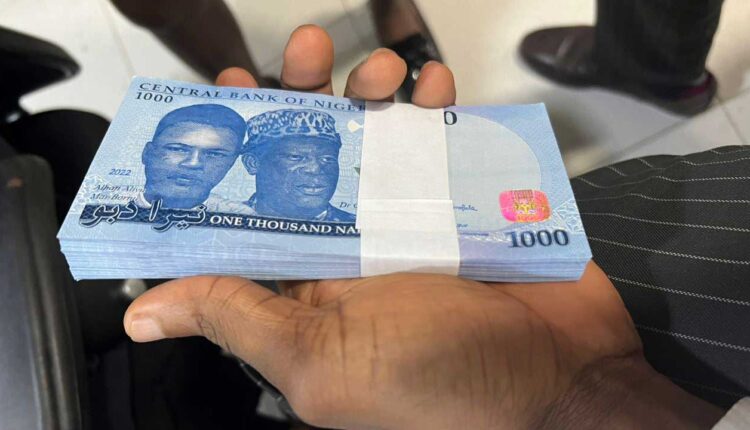
The report showed that overseas high-security printers were awarded 65 per cent of the country’s approved banknote production programme for the year, while the Nigerian Security Printing and Minting Plc (NSPM) received just 35 per cent of the allocation, highlighting the country’s continued reliance on foreign firms for one of its most strategic national assets.
According to the CBN, it approved the production of 5.71 billion pieces of legal tender across various denominations in 2025, representing a 20.5 per cent increase from the 4.74 billion pieces approved in 2024 as demand for currency continued to rise.
Of the total approved volume, the NSPM was allocated 2.0 billion pieces, representing 35 per cent of the production programme, while foreign high-security printers were assigned the remaining 65 per cent.

The report further disclosed that as of December 31, 2025, the local mint had delivered 1.24 billion banknotes, equivalent to 62 per cent of its allocation, with 760.76 million pieces yet to be supplied. Foreign printers, meanwhile, completed deliveries covering the ₦1,000, ₦500 and ₦200 denominations, while deliveries under a supplementary contract for an additional 1.5 billion pieces awarded in November 2025 were still ongoing at year end.
The latest disclosure raises fresh questions about Nigeria’s continued dependence on overseas firms for currency production despite the existence of the Nigerian Security Printing and Minting Plc, a government-owned company established to produce secure documents and banknotes locally.
The report, however, did not explain the basis for allocating a larger share of production to foreign printers or indicate whether the decision was driven by production capacity, technology, cost considerations or delivery timelines.
Beyond increasing currency production, the apex bank said it continued to strengthen cash management operations through nationwide public sensitisation campaigns on proper handling of the naira, periodic mystery shopping exercises to monitor banks’ compliance with currency management guidelines, and enhanced collaboration with industry stakeholders to improve cash processing and cash-in-transit operations. The Bank also expanded its currency processing infrastructure and approved the disposal of demonetised coins as part of efforts to improve operational efficiency.
The disclosure is likely to renew discussions around Nigeria’s local content ambitions and whether greater investment in domestic currency printing capacity could reduce reliance on foreign suppliers while conserving foreign exchange, particularly as the country pursues broader industrialisation and import substitution policies.
-

 News21 hours ago
Ebola: Don’t panic – FG tells Nigerians
-
News21 hours ago
Gas leak: Ogun schools shut, over 100 pupils hospitalised
-
News21 hours ago
Italy rejects 2,220 Nigerians seeking asylum
-
News21 hours ago
State Police: Ekiti, Kebbi endorse bill, tally hits 15
-
 Politics21 hours ago
Imam Removed After Campaigning For Tinubu At Bauchi Mosque
-
Sports21 hours ago
Como Humiliates Manchester United 4-1, Osimhen Scores In Galatasaray UCL Win
-
Business21 hours ago
Guinness Nigeria profit jumps 53% to N40.69bn
-
Business21 hours ago
Nigerian billionaire Aliko Dangote eyes Egypt oil refining in $15 billion plan