News
Malaria, Diabetes Drugs Out Of Reach

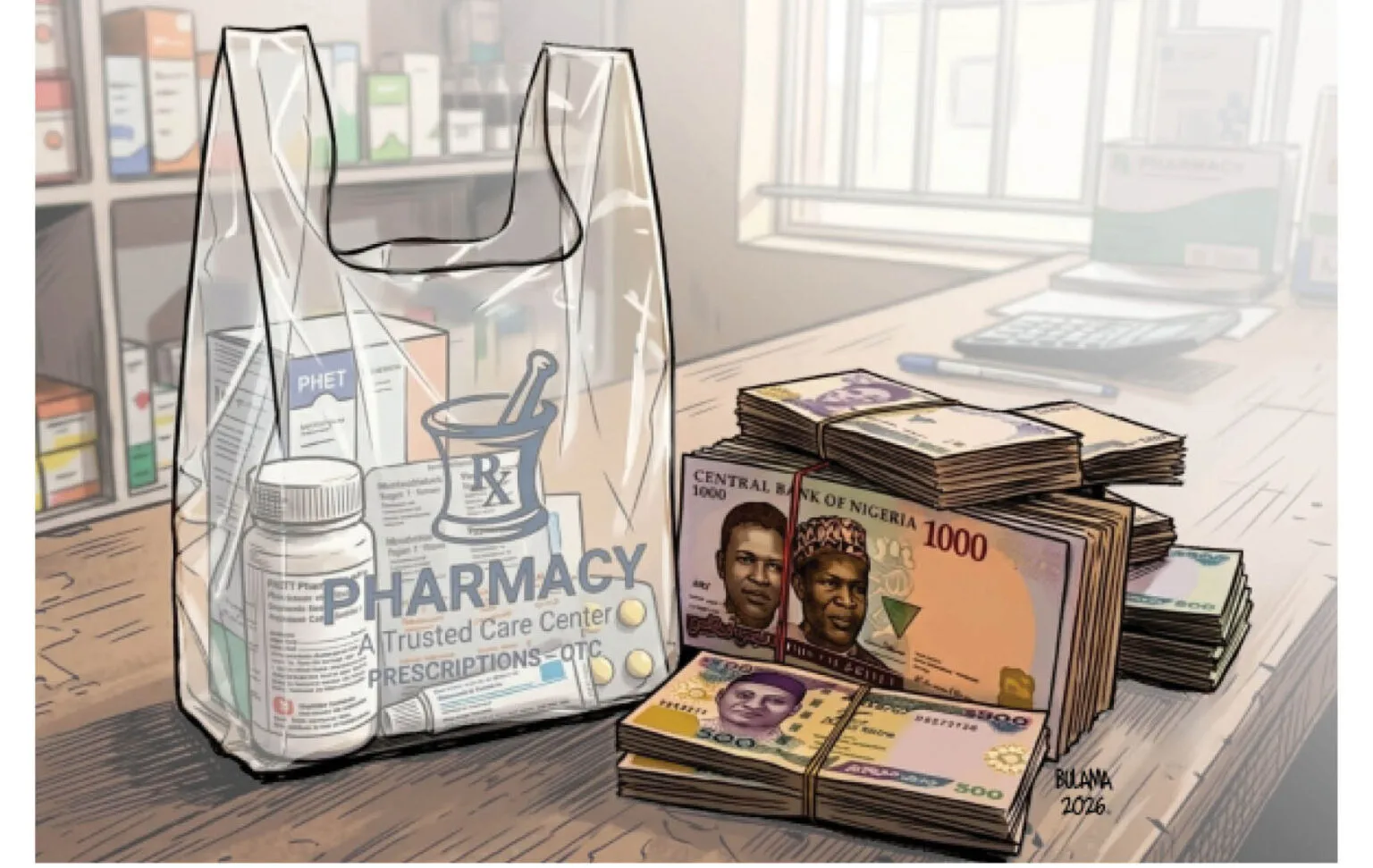
For 60-year-old Elahi Onu, every new month begins with the same question: “Will there be enough money for my diabetes medication?”
For more than a decade, the Benue resident has lived with diabetes, carefully observing dietary restrictions and taking her medications as prescribed. But in recent months, the illness itself has become less frightening than the rising cost of managing her ailment and staying alive.
Every month, her children spend N25,000 or more on her medication alone.
One of the drugs she relies on, Triviamet, now costs N13,000 for a pack of 35 tablets.

“If I have to go for routine medical checks, they spend even more. I wish the government would reduce the cost of these medicines or provide subsidies to ease the burden on diabetic patients,” she told Weekend Trust.
Across Nigeria, thousands of patients battling diabetes, hypertension, kidney disease, stroke, malaria, typhoid and other illnesses face similar dilemmas.
As inflation, foreign exchange volatility and the country’s dependence on imported medicines continue to drive prices higher, many patients now skip doses, buy incomplete prescriptions, switch to cheaper or local medications, or abandon treatment.
Health experts warn that these decisions, though driven by poverty, are costing lives.
The situation got worse following recent reduction in United States foreign assistance under President Donald Trump’s administration, a development that has disrupted funding for several health programmes across developing countries, including Nigeria.
Although donor-funded programmes primarily supported diseases such as HIV, tuberculosis and malaria, public health experts say the funding cuts have placed additional pressure on Nigeria’s already fragile health care system, forcing governments to shoulder greater costs while patients increasingly pay out-of-pocket for medicines and services.
For many households, illness has become not only a health challenge but an economic catastrophe.
‘Our challenge’
Emmanuel Johnson, who lives in Kubwa, Abuja, said controlling his asthma had become increasingly expensive.
He told Weekend Trust that he spends about N8,000 to N10,000 monthly on inhalers and allergy medications, but the situation is different now.
“Now, I spend between N18,000 and N25,000 monthly. The inhaler I bought at N4,500 now sells between N9,000 and N11,000, depending on the pharmacy,” he said.
According to Johnson, he now tries to make his inhaler last longer by delaying replacement whenever money is tight.
A civil servant, Abdullahi Kabiru, who receives treatment for peptic ulcer disease, said the cost of his medicines had almost doubled.
“I spent N6,000 monthly on ulcer medication, but now, I spend between N12,000 and N15,000,” he said.
According to him, the anti-ulcer drugs and antacids he uses have recorded steady price increases over the past year.
“There are days I buy only the most important medicines and wait until salary comes before buying the rest,” he noted.
For Hassana Yusuf, whose teenage son has epilepsy, keeping up with treatment has become a financial burden.
She said: “We used to spend N7,000 to N9,000 monthly on his anti-seizure medicines. It now takes N15,000 to N18,000 monthly,” adding that skipping medication is not an option because it increases the risk of seizures.
“Sometimes we borrow money because we cannot afford to skip his drugs,” he noted.
A retired teacher, John Okeke, also said the cost of glaucoma eye drops had risen sharply.
“The eye drops I used to buy at N1,000 now cost between N2,500 and N4,000, depending on the brand.”
He said monthly treatment that previously cost N8,000 now exceeds N16,000 after adding clinic visits and other medications.
“I am afraid of losing my sight, but the cost keeps rising,” he said.
Ruth Michael, who lives with sickle cell disease, said preventing crises had become increasingly difficult because of rising drug prices.
“I used to spend N10,000 to N15,000 monthly on folic acid, pain medicines and other prescribed drugs, now, I spend N22,000 to N30,000; and that’s without any hospital admission,” she said.
According to her, when a crisis occurs, the family spends more on laboratory tests, injections and hospital care.
“If I have a severe crisis, the bill can easily exceed N80,000 to N100,000, something we never imagined a few years ago,” she said.
These examples add new ailments and give clear “before-versus-now” spending figures while complementing the rest of your nationwide report.

‘We skip some medications’
In Makurdi, Onyeje Abutu, who cares for her elderly mother after a fractured thigh bone, says managing her situation has plunged the family into financial distress.
The family was presented with a treatment bill of about N3.6 million at the Federal Medical Centre when her mother was taken there.
Unable to raise the money, they sought help from a traditional bone setter, where they paid N360,000—more than double the N160,000 the same treatment reportedly cost in the past.
“We couldn’t afford the hospital bill,” she said.
Even after settling for a cheaper alternative, the struggle continued.
“It hasn’t been easy buying antibiotics and other drugs because they have become too expensive. There are medicines we simply have to skip,” she added, noting that expenses don’t end with medications alone.
Due to her mother’s inability to use the toilet unaided, the family depends on urinary catheters and adult diapers.
“The catheter we bought at N350 last year now costs N1,100. A nurse who used to charge N500 to insert it now collects N2,000. The lubricating gel now costs N1,500, so we use petroleum jelly because we can’t afford it,” she also said.
She further laments that even ordinary painkillers are not cheap.
“Paracetamol now costs N300 from N200,” she said.
Abutu herself battles hypertension.
“My blood pressure medicine, Moderative, sold at N250 last year now costs N400 for a card of 10 tablets, while Atenolol has increased from N800 to N1,050,” she added.
Choosing which illness to treat
For Peter Vande, managing multiple medical conditions has become an impossible balancing routine. He notes that he often postpones filling prescriptions from one clinic so that he can afford medicines prescribed by another.
“I have tried as much as possible not to abandon treatment, but I have been tempted several times,” he said.
According to him, each pharmacy visit now costs between N20,000 and N40,000, money that would ordinarily feed his family. He said, “As someone who has been a patient for a while, the increasing cost of medicine has drained my resources. Such money could have gone into food or other household needs.”
Attah Ede shares the same frustration: “The increasing cost of medicines is severely affecting my household stability. Families like mine are now forced to choose between buying essential drugs and meeting basic needs like food, school fees and transportation.”
He admitted that many patients deliberately reduce dosages or buy a portion of their prescribed medicines to stretch limited income.
“My health challenge became worse because I stopped treatment,” he said.
In Bauchi, a widow, Maimuna Sani, believes that poverty has worsened her illness. Diagnosed with hypertension six years ago, she spent 10 days at the Bauchi Specialist Hospital before being discharged with prescriptions and follow-up appointments. Life, however, took a dramatic turn when her husband died.
“My husband died and left me with five children. I couldn’t continue going to the hospital because I didn’t have the money,” she said.
Unable to consistently buy her medications, she began skipping doses before completely abandoning treatment.
The consequences were devastating. “The hypertension later affected my heart because I was skipping drugs and buying alternatives,” she said.
Today, she survives on occasional assistance from neighbours and the imam of a nearby mosque.
“Sometimes I beg the imam for money to buy medicine because I can’t afford to go to the hospital,” she noted.
Another resident in Bauchi, Rabiu Abdullahi, who frequently battles malaria and typhoid during the rainy season, said medication prices had nearly doubled.
“Last year, I bought malaria drugs like Lokmal at N800. It is now about N1,800. Amatem that sold at N1,200 now costs N2,000.”
He said antibiotics used in treating typhoid also increased sharply.
“Amoxicillin that sold at N400 now costs between N800 and N1,000,” he said.
Selling household items to survive
In Kano, the rising cost of medication is forcing patients to opt for desperate measures. Across the state, families say they now cut food budgets, delay treatment and sell household assets simply to buy medicines. Maryam Musa, a pregnant woman, recently sold her electric fan just to buy malaria medication.
“I had no option. The health centre had nothing in stock and I couldn’t risk my life or my baby’s,” she told Weekend Trust.
Another resident, Khadija Auwal, said she often left health facilities carrying only prescriptions because essential medicines are most times unavailable.
‘When I go to buy them outside, the prices are too high. Sometimes I just use herbs because I can’t afford the full dose,” she said.
A survey of pharmacies showed that Coartem now sells between N3,600 and N10,700, while Fansidar, commonly used by pregnant women, has increased from N200 to N500 to as much as N1,200.
Insulin, a major medication mostly used by diabetics, has also risen beyond the reach of many patients.
Over 3,000 tuberculosis patients are also reportedly affected by drug shortages in Kano.
Across the country, patients living with chronic diseases say treatment costs have risen beyond their means.
For many hypertensive patients, monthly medicines that previously cost between N5,000 and N8,000 now consume N12,000 to N20,000 or more, depending on the combination of drugs prescribed.
Diabetic patients say insulin and oral medications that once cost around N15,000 to N20,000 monthly now require N35,000 to N60,000, excluding laboratory investigations and specialist consultations.
Perhaps patients with chronic kidney diseases face the heaviest burden. A dialysis session that previously averaged N35,000 to N50,000 in many centres now costs between N60,000 and N80,000 where government subsidies are unavailable, with patients requiring two or three sessions weekly in addition to medicines running into tens of thousands of naira monthly.
Rehabilitation now a burden – Stroke survivors
Besides blood pressure medications and blood thinners, many require physiotherapy, which costs between N8,000 and N15,000 per session, a situation that has forced some families to discontinue rehabilitation prematurely.
Doctors say treating uncomplicated malaria, which often cost about N2,000 to N3,000 a few years ago, can now exceed N8,000 to N15,000 when consultation, laboratory tests and medicines are included.
Similarly, managing typhoid fever now frequently costs between N15,000 and N30,000, depending on investigation and antibiotics prescribed
Pharmacists raise the alarm
In separate interviews with Weekend Trust, pharmacists said what they witnessed daily was increasingly heartbreaking.
A pharmacist, Onyebuchi Williams, said many patients now left pharmacies without buying their complete prescribed medicines.
“People are delaying or discontinuing treatment for hypertension, diabetes, malaria and other illnesses because they simply can’t afford the drugs. This often leads to complications, relapses and avoidable hospital admissions,” he said.
He warned that many desperate patients were turning to cheaper alternatives, increasing the risk of purchasing counterfeit medicines or worsening their conditions.
According to him, Nigeria’s dependence on imported medicines remains a major driver of rising prices.
“Most medicines sold in Nigeria are either imported or produced using imported active pharmaceutical ingredients. Once the exchange rate rises, production and importation costs increase immediately and patients ultimately bear the burden,” he added.
Another pharmacist, Aisha Abubakar, said the economic hardship in the country was forcing many vulnerable patients to violate treatment plans.
She said, “Patients skip doses, buy fewer tablets or abandon medicines completely. We are seeing uncontrolled blood pressure, poorly managed diabetes, complications, coma and preventable deaths.”
She added that inflation, high transportation costs, rising fuel prices and naira depreciation affected every category of medicine.
Similarly, Yusuf Abdul, a pharmacist, said the country’s dependence on imported pharmaceutical inputs had continued to expose Nigerians to exchange rate shocks.
“We still import a significant proportion of our medicines and pharmaceutical raw materials. Until Nigeria strengthens local manufacturing, medicine prices will remain vulnerable to fluctuations in foreign exchange,” Abdul said.
Ezeh Collins, a pharmacist, also said affordability of medicines had become one of the greatest threats to public health.
“When patients cannot afford prescribed medicines, treatment outcomes worsen. We begin to see more complications from hypertension, diabetes, kidney disease and infectious diseases that should ordinarily be well controlled,” Collins said.
He urged various governments to expand health insurance, support local pharmaceutical manufacturing and remove barriers affecting medicine production.
Doctors warn of growing health crisis
A physician at the Federal Medical Centre, Azare, who requested anonymity because she was not authorised to speak, described the rising cost of medicines as a major public health emergency.
“Many patients can’t afford prescribed drugs. Medication is prescribed but patients simply cannot buy them,” she said.
According to her, patients now skip doses, reduce prescribed quantities or discontinue treatment entirely, resulting in worsening chronic diseases, preventable deaths and increasing hospital admissions.
She warned that incomplete use of antibiotics would accelerate antimicrobial resistance.
“When patients cannot complete antibiotic treatment, resistant bacteria emerge. Diseases that were once easy to treat become far more difficult,” she explained.
She also expressed concern about growing self-medication.
“Many people now buy cheaper medicines from unqualified vendors or rely on herbal remedies. Some unknowingly purchase counterfeit or substandard medicines, leading to treatment failure,” she added.
Health experts believe that the crisis in Nigeria’s medicine affordability cannot be solved through temporary interventions alone. They advocate greater investment in local pharmaceutical manufacturing, stronger implementation of the National Health Insurance Authority, improved access to affordable essential medicines and sustained government funding for health programmes, especially as international donor support continues to decline.
For patients like Elahi Onu, however, policy debates matter little when compared to the reality of surviving another month.
According to her, each time she swallows her daily diabetes medication she worries less about the disease than whether her children would still be able to afford the next pack.
For millions of Nigerians, that anxiety has become as constant as the illnesses they are struggling to keep under control.
US aid cut could deepen Nigeria’s health care crisis – Experts
Health policy experts have warned that the proposed reduction in United States foreign assistance to Nigeria could have far-reaching consequences beyond donor-funded programmes, saying it may increase pressure on households, weaken disease control efforts and force the government to make difficult funding decisions.
The concerns follow the passage of a fiscal year spending bill by the US House of Representatives, proposing cuts in foreign assistance to Nigeria over allegations of targeted violence against Christians and other vulnerable communities.
Although the bill must still complete the legislative process before becoming law, experts say any significant reduction in US health support would come at a time when Nigeria is already battling rising medicine prices, inflation and growing pressure on its health system.
Speaking with Weekend Trust, Grace Jegede, a public health physician based in Abuja, said while the proposed cuts were rooted in foreign policy considerations, ordinary Nigerians are likely to suffer the greatest consequences if funding is eventually reduced.
According to her, donor funding has over the years helped Nigeria sustain several critical public health interventions, particularly in disease surveillance, laboratory systems, health worker training and procurement of medical commodities.
“The reality is that development partners do not simply fund medicines, they also strengthen systems that make health care work. If that support declines abruptly without adequate domestic replacement, the pressure shifts directly to patients and families.
“The government will have to decide whether to increase health spending or allow households to absorb the additional costs. Given the current economic situation, many Nigerians simply cannot shoulder any further financial burden,” she said.
She added that the development should serve as a wake-up call for Nigeria to reduce dependence on external assistance.
“Every country has sovereign interests that shape its foreign aid decisions. Nigeria must, therefore, accelerate domestic resource mobilisation instead of assuming that donor support will always be available,” she noted.
A community health practitioner, Dr Aliyu Isah, also notes that a greater risk lies in the gradual weakening of public health programmes.
He explained that many donor-supported interventions operate quietly in the background, making their importance less visible until funding begins to disappear.
“People often think foreign assistance is only about HIV or malaria drugs, but the support extends to surveillance systems, laboratory capacity, outbreak response, monitoring and evaluation, data management and technical assistance.
“If these components begin to weaken, Nigeria may become slower in detecting disease outbreaks or responding to public health emergencies. Those consequences may not be obvious immediately, but they become evident over time,” Isah said.
He said the proposed cuts should encourage governments at all levels to prioritise preventive health care rather than focus almost exclusively on treatment.
“Investing in prevention is far cheaper than managing large outbreaks. Strong primary health care, routine immunisation and disease surveillance require sustained financing,” he added.
For Dr Abdulmojeed Sani, a pharmacist, the proposal underscores the urgent need for Nigeria to become more self-reliant in health care financing and pharmaceutical manufacturing.
According to Sani, dependence on imported medicines and donor-funded programmes leaves the country vulnerable whenever global political or economic priorities change.
He said, “Every nation protects its own interests first. That is why Nigeria must deliberately invest in local pharmaceutical manufacturing, research and development.
“We cannot continue importing majority of our medicines and expect affordable health care. Building local capacity is no longer optional, it is now a national security issue.”
He also said increased investment in Nigerian pharmaceutical companies would not only improve medicine availability but also helps to stabilise prices.
“If we produce more medicines locally, create incentives for manufacturers and strengthen research institutions, we reduce our exposure to foreign exchange shocks and external funding uncertainties,” he said.
Godwin Ekuwke, a medical practitioner at the Kubwa General Hospital, said the proposed funding cut highlighted the importance of building a more sustainable health financing system.
He noted that while donor support played a significant role over the years, no country should rely indefinitely on external funding for essential health services.
“External assistance has always been intended to complement, not replace domestic investment. Nigeria must now strengthen mechanisms that ensure predictable financing for health care regardless of changes in international politics.
“Expanding health insurance coverage, improving efficiency in public spending and ensuring greater accountability in the use of health funds are some of the reforms that are needed,” he added.
Ekuwke also urged policymakers to view the current development as an opportunity rather than merely a setback.
“This is a chance to rethink how health care is financed in Nigeria. If we strengthen domestic financing now, the health sector would become more resilient and less vulnerable to future external shocks,” he noted.
A Chemist, Blessing Okata, notes that she is in an agreement with some pharmaceutical companies to restock her medicine shelves these days for lack of purchasing power.
“Before now, with N250,000, I could restock up with common malaria drugs and paracetamol. But now, even with N400,000 or N500,000, I’m still unable to properly equip so I have arrangements with some pharmaceutical companies that gives me their products and I make payment after sales.
Senate expresses concern
Meanwhile, the Senate Committee on Finance has expressed concern over the rising cost of medicines in Nigeria, urging the National Agency for Food and Drug Administration and Control (NAFDAC) to recommend practical measures that will make drugs more affordable for Nigerians.
The chairman of the committee, Senator Sani Musa, Niger East, at an investigative hearing on the remittance of internally generated and operating surplus into the Consolidated Revenue Fund (CRF), covering the 2023 to 2025 fiscal years, said the high cost of pharmaceuticals had become a major concern, stressing that the government may need to review fiscal policies affecting local drug manufacturers.
The committee also noted that the reconciliation meeting became necessary following discrepancies between figures submitted by NAFDAC and the Fiscal Responsibility Commission (FRC) regarding operating surplus deductions.
Presenting the agency’s financial records, NAFDAC disclosed that it generated N18.73 billion in 2023, N29.85 billion in 2024 and N39.6 billion in 2025, reflecting consistent growth in internally generated revenue.
The Director-General of NAFDAC, Prof Mojisola Adeyeye, told the committee that the agency had remitted about N3.9 billion as operating surplus between 2007 and 2023 before financial constraints affected its operations. (Daily trust)
-

 Politics8 hours ago
Presidency denies withholding ₦250bn NLNG dividends from states
-
News8 hours ago
5 Security Operatives Killed As B/Haram Attacks Adamawa Communities
-
News9 hours ago
FG disagrees with World Bank over H1 124% debt servicing/revenue ratio
-
Politics8 hours ago
2027: APC unveils online portal for support groups
-
Metro8 hours ago
Kidnapped Catholic Priest, three others rescued in Benue
-
News7 hours ago
Nnamdi Kanu’s Family Accuses UK Of Failing To Protect Its Citizen, Demands Action To Secure His Freedom
-
Politics8 hours ago
AbdulRazaq commends Wike’s inclusion in Presidential Campaign Council
-
Politics8 hours ago
Buhari Saw Tinubu As ‘Bad News’, Resisted His Presidency – Baba-Ahmed