Business
FCMB commits ₦20bn to finance Nigeria’s healthcare businesses

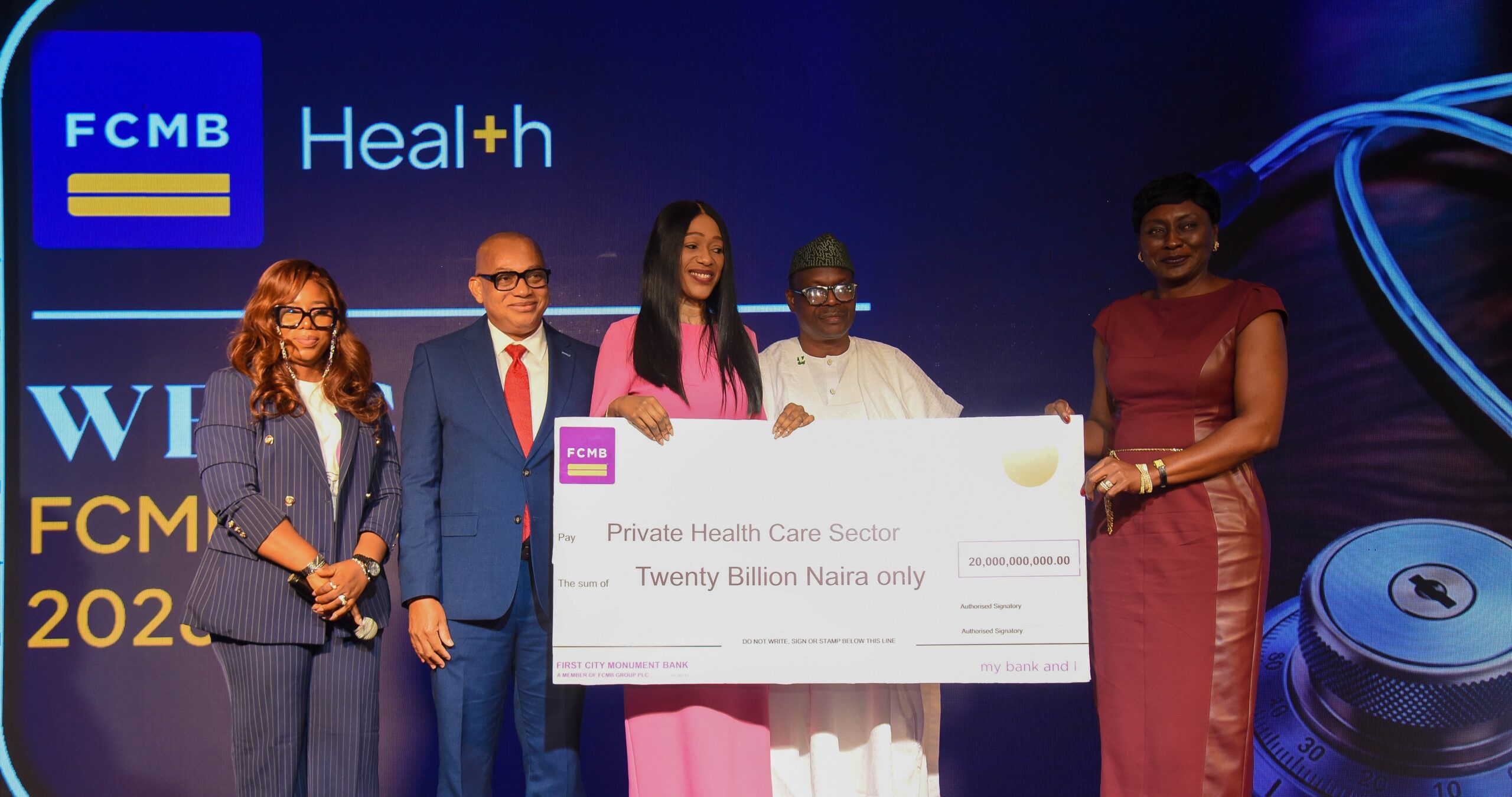
To bridge a critical funding gap, First City Monument Bank (FCMB) has committed ₦20 billion to finance private healthcare businesses in Nigeria, targeting a critical sector in need of affordable, long-term capital.
The 20 billion Healthcare Fund, announced at FCMB’s inaugural healthcare summit in Lagos, will target businesses including hospitals and clinics, diagnostic centres, pharmaceutical companies, pharmacies, maternity homes and other healthcare enterprises.
The financing will support expansion, medical equipment purchases, infrastructure, working capital and technology investments, according to FCMB.
The initiative comes as Nigeria seeks to expand healthcare capacity and boost local production of medicines and medical devices. The government is targeting local production of 70% of medicines and medical devices by 2030 under its Presidential Initiative for Unlocking the Healthcare Value Chain.

“Healthcare is a social imperative and an economic priority,” FCMB Managing Director and Chief Executive Officer, Yemisi Edun, said in remarks delivered by Executive Director, Corporate Services and Service Management, Felicia Obozuwa at the summit. “Building a strong healthcare system requires capital that is patient, affordable and long-term.”
The bank said the fund will form part of a broader healthcare financing offering that combines lending with advisory support and partnerships intended to help businesses strengthen operations and attract capital.
Access to finance remains a major constraint for private healthcare operators, according to Njide Ndili, president of the Healthcare Federation of Nigeria.
Ndili cited experience from HFN’s partnership with the PharmAccess Medical Credit Fund, which she said showed that small and medium-sized healthcare businesses can achieve strong repayment performance when financing is combined with technical support, capacity building, and quality standards.
HFN will work with FCMB to develop a framework for pre-qualifying healthcare facilities and helping businesses become investment-ready, according to information presented at the summit. The federation has more than 400 member organisations and 4,000 professionals.
The initiative also addresses a broader challenge for lenders: ensuring that healthcare businesses have the governance, financial reporting, management capacity and growth plans needed to deploy capital effectively.
Nigeria’s government has increased public funding for healthcare in recent years. More than ₦339 billion has been disbursed through the Basic Healthcare Provision Fund over the past 12 years, including ₦235 billion in the last three years under the Health Sector Renewal Investment Initiative, Minister of State for Health and Social Welfare Iziaq Salako said at the summit.
A further ₦32.9 billion has recently been disbursed to support more than 8,300 primary healthcare centres, with plans to expand coverage to about 13,000 facilities nationwide, Salako said.
He called for greater mobilisation of private and public capital and urged healthcare operators to strengthen corporate governance, improve financial reporting and use blended-finance structures to fund growth.
The summit also examined investment opportunities in primary healthcare, diagnostics, local pharmaceutical manufacturing, medical equipment, digital health and healthcare infrastructure.
FCMB said its healthcare financing proposition is designed to support businesses across the value chain as they expand capacity and improve service delivery.
-

 Politics15 hours ago
Tinubu using foreign reserves to create misleading impression of economic growth – Makinde
-
Politics15 hours ago
ADC mocks APC over ‘rented crowds, empty seats’ at Kaduna rally
-
Politics15 hours ago
2027: It’s Our Turn To Repay Tinubu – Shettima Tells Northerners
-
Politics15 hours ago
2027: Forget About Social Media News, Nigerians Love Tinubu – Information Minister
-
Metro15 hours ago
How AI-generated photo cost kidnap victim N4m ransom – Freed Benue graduate
-
Politics15 hours ago
Ebola: Parties reject campaign suspension
-
Politics21 hours ago
2027: Obi stingy, unfit for presidency – Wike
-
Metro14 hours ago
Self-driving car hits, kills man on US freeway