Business
How a 22-year-old Ghanaian-American turned thesis into a $100m investment opportunity platform

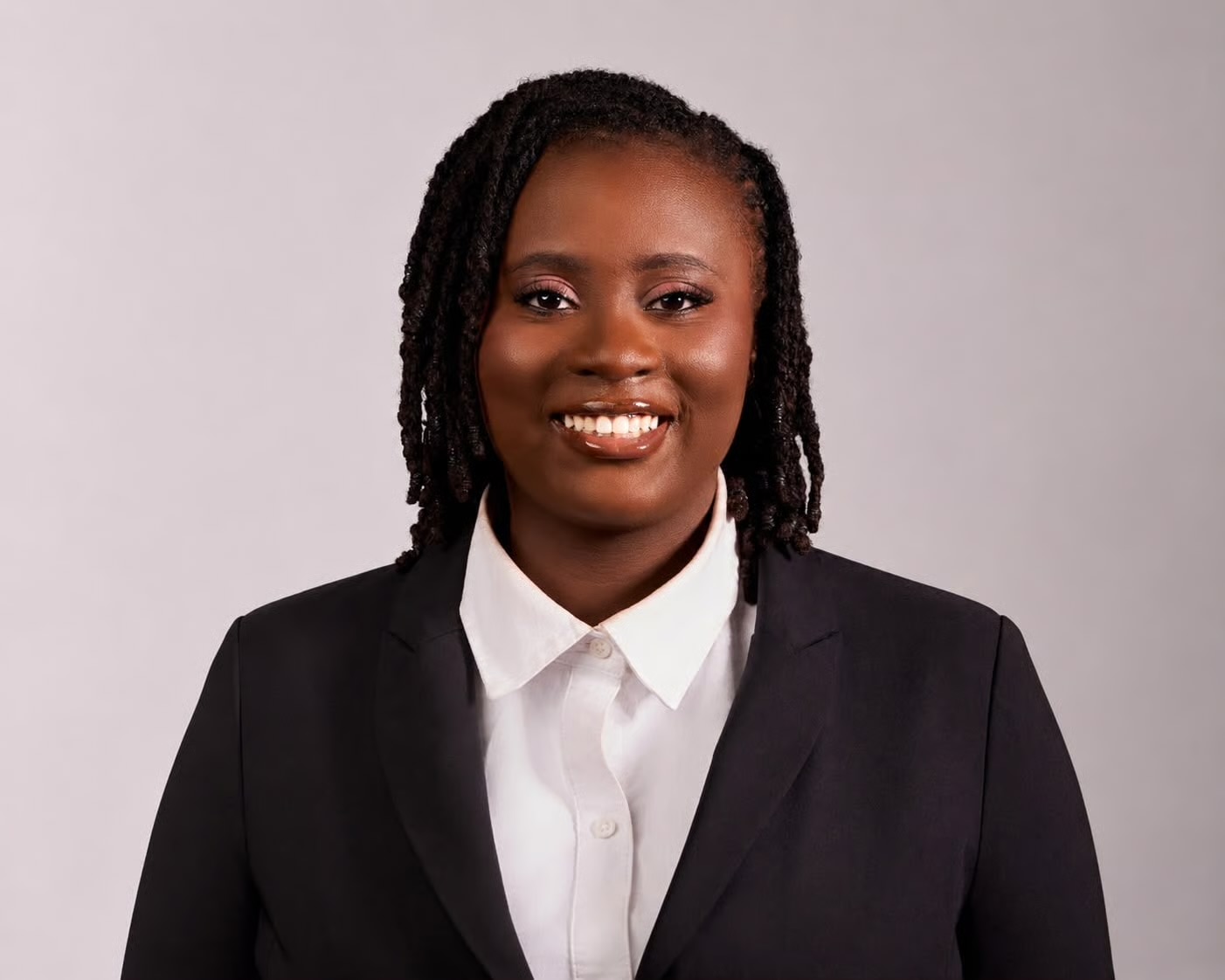
When Nana Barwuah travelled to Ghana earlier this year to interview bankers, entrepreneurs and regulators, she thought she was gathering material for her senior thesis at Princeton University. Instead, she found the foundations for a non-profit idea.
The 22-year-old had travelled across Ghana to examine how tighter banking regulations introduced after the banking sector clean-up had affected lending to small and medium-sized enterprises. Her research focused on bank credit, but as interviews unfolded, she found herself drawn to a different question altogether.
“If these businesses can’t really get the loans that they need because of regulatory restrictions,” she says she recalls thinking. “What about equity investment?”
That question eventually became Afrovest, an investment platform that connects African businesses seeking growth capital with investors seeking opportunities on the continent.

Only months after launch, the platform has brought together companies seeking more than $100m in aggregate funding and attracted investors managing more than $1bn in assets.
For Barwuah, however, those figures are not the real measure of success.
“What I really care about is the messaging,” she says. “Changing how investors look at Africa, closing deals and creating jobs.”
Beyond the banking problem
As her research progressed, Barwuah realised that the financing challenge facing African businesses went well beyond banks refusing to lend. Entrepreneurs repeatedly told her they were struggling to raise capital, even when their businesses were growing.
Investors, meanwhile, said they were struggling to find companies that met their criteria. The conversations pointed to the same problem from opposite directions.
Ghana, she says, illustrated that gap clearly. “About 92% of Ghana’s businesses are informal,” she says. “Businesses don’t have the proper audited financial statements to get loans, and banks aren’t willing to lend to them.”
The more conversations she had, the more convinced she became that the issue was not simply a shortage of money.
Capital and ambitious businesses existed. What seemed to be missing was an efficient way of connecting the two.
“I started talking to investors and different businesses to make sure there was actually a need,” she says. “I realised we had to build something that worked for investors, but especially for businesses.”
Building a business around the gap
That realisation became the starting point for Afrovest. Rather than operating as an online marketplace where companies simply advertise for funding, the platform aims to match businesses with investors whose mandates already align with their sector, geography and funding requirements.
Before making introductions, Afrovest also conducts preliminary due diligence to reduce some of the uncertainty that often discourages investment.
“Our whole thing is we want to close deals,” Barwuah says. “A lot of the time, other summits introduce investors to businesses, which is good, but there’s not a lot of aggressive follow-up and making sure both sides are happy and money is actually transacted.”
She says investors first outline the countries, industries and investment sizes that interest them. Afrovest then identifies businesses that match those criteria and arranges introductions.
The platform remains in its early stages. More than 100 companies from across Africa responded to its first open call, with 15 ultimately selected. Together, they represent over $100m in fundraising ambitions, although Barwuah emphasises that investment discussions are still ongoing and that investment transactions typically take months to complete.
Launching the non-profit, however, was only part of the challenge. Convincing experienced investors and founders to trust a recent university graduate was another.
Understanding both sides of the table
Barwuah believes much of that credibility came from experiences she gained before graduating.
Alongside her studies at Princeton, she did her internship at Macquarie Group, where she gained exposure to infrastructure private equity and observed how institutional investors evaluate risk, structure transactions and deploy capital. She then joined the Federal Reserve Board as a strategy and financial analysis intern in Washington, DC.
Those experiences gave her a view of investment from the other side of the table. She saw first-hand how global firms scrutinised opportunities, the questions they asked before committing capital and the standards businesses were expected to meet before any deal progressed.
They also changed her view of Africa. Rather than concluding that the continent lacked investment capital, Barwuah came away convinced that one of Africa’s biggest challenges was making investment opportunities easier for international investors to understand and evaluate.
“If we can bring this kind of investor matchmaking to scale across the continent,” she says, “we could have businesses exiting for billions of dollars in the future.”
Her time in the US revealed something else. Many international investors, she says, have not ruled out Africa altogether. They simply feel unfamiliar with markets they have never operated in before.
“A lot of the hesitation comes down to the exit,” she says. “Investors want to know how and when they’ll get their capital back, and in unfamiliar markets, that path isn’t always clear.”
That perception, she believes, can sometimes be as significant a barrier as the availability of capital itself. (The Africa Report)
-

 Metro22 hours ago
Man threatens to release Kano governor’s nude videos, photographs
-
Sports22 hours ago
Harry Kane crowned 2026 Ballon d’Or winner
-
World News22 hours ago
Trump hits back at Obama over Saddam ‘Cheesecake Factory’ jab
-
News22 hours ago
OPHK troops destroy ISWAP enclaves in Lake Chad, kill 16 terrorists
-
Business22 hours ago
Microsoft offers voluntary exit packages to 60,000 staff
-
Politics22 hours ago
‘He was trained in sanitation’ — Shettima says Atiku can’t govern modern economy
-
Politics22 hours ago
FACT CHECK: How Tinubu’s Image On Bread Was Edited To Depict Obi
-
Politics21 hours ago
INEC uploads voters’ register online after outcry