Business
Nigeria’s oil boom threatened by 50-year-old problem, says NURPC’s Eyesan

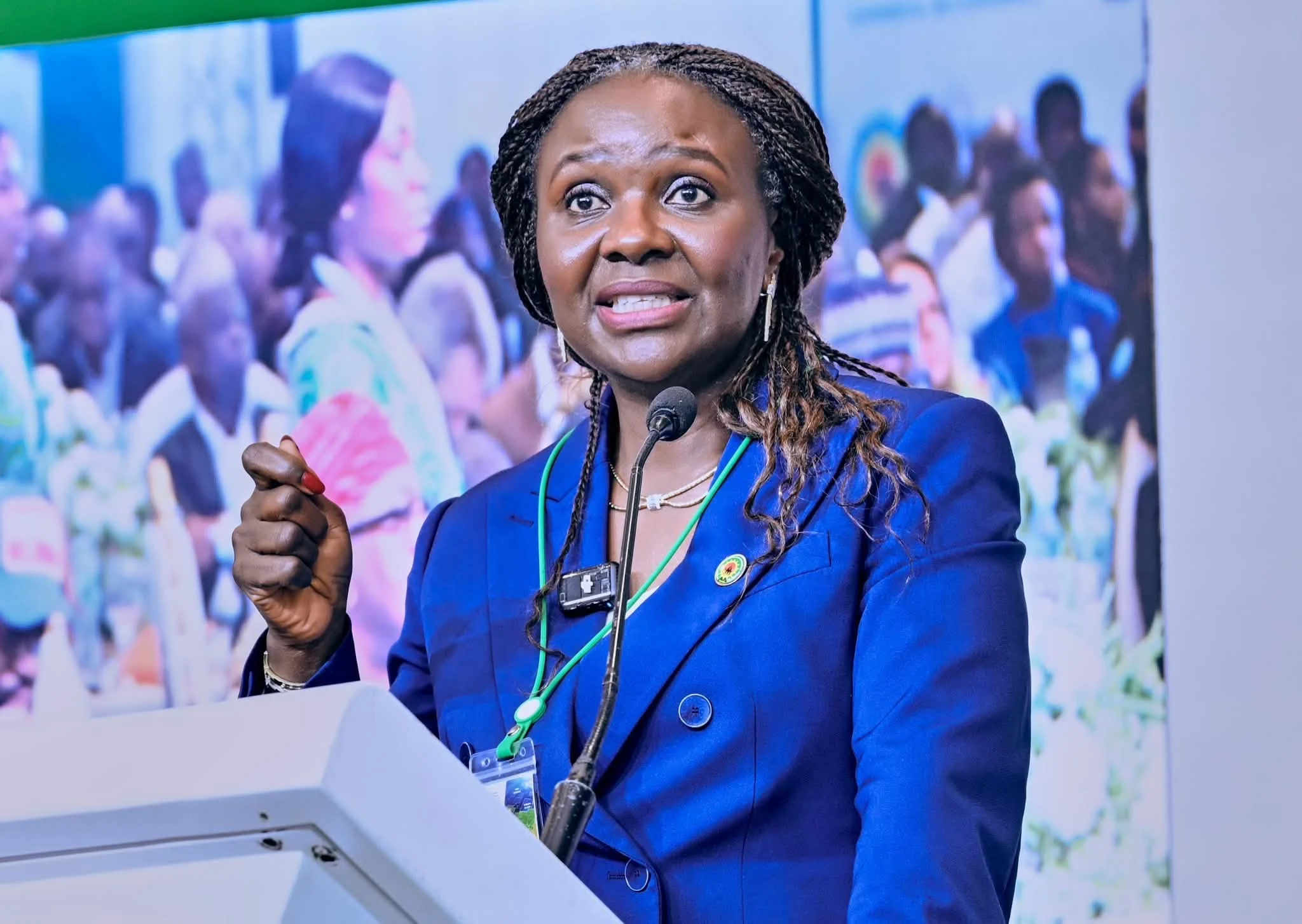
Ask Oritsemeyiwa Eyesan what most threatens Nigeria’s latest attempt to revive oil production and she does not begin with theft, militants or community unrest in the Niger Delta. Instead, soft-spoken but steely, she talks of asset integrity.
Nigeria could reopen thousands of wells only to find that the ageing network connecting them to export terminals cannot carry the additional oil. If that happens, Eyesan tells The Africa Report, “all that effort will be in vain”.
Some of the infrastructure is more than 50 years old. Much of it has endured a decade or more of deferred maintenance. And the physical condition of the industry now sits at the centre of President Bola Tinubu’s ambition to raise output to 2m barrels a day and eventually 3m barrels.
Eyesan’s case is that Nigeria has finally begun to address the institutional failures behind its long decline. The risk is that the political and regulatory machinery may now be moving faster than the infrastructure beneath it.

How Nigeria lost its barrels
Nigeria’s oil troubles are often framed as a security story. Crude theft, sabotage and militant attacks repeatedly shut pipelines and forced operators to halt production.
Eyesan offers a broader diagnosis. In her account, insecurity was one part of the decline, but the more corrosive problem was the prolonged failure to fund the industry.
It’s a cocktail of everything. Technical cash calls first. Insecurity. Then we had asset integrity issues as well
For years, much of Nigeria’s production came from joint ventures between international oil companies and the state-owned NNPC. The government repeatedly failed to meet its share of spending. Arrears to the oil majors eventually exceeded $10bn, according to Eyesan.
Operators cut drilling and maintenance rather than continue carrying the state’s obligations. Wells were shut and infrastructure deteriorated.
“It’s a cocktail of everything,” Eyesan said. “Technical cash calls first. Insecurity. Then we had asset integrity issues as well.”
Nigeria’s production system was being starved of capital even when militants were quiet.
At the same time, international companies were retreating from onshore assets burdened by spills, litigation and community disputes. Divestments then took years to approve, leaving fields caught between sellers unwilling to invest and buyers unable to take control.
NUPRC’s current strategy is designed as a response to each part of that breakdown.
Why Abuja thinks this time is different
The Petroleum Industry Act of 2021 was meant to clarify a legal and fiscal regime that had been debated for almost two decades. It reorganised regulatory responsibilities, revised fiscal terms and recast NNPC as a commercial company rather than an arm of government dependent on annual budget decisions.
Eyesan argues that this has removed one of the industry’s most persistent constraints. NNPC is now expected to raise capital and fund investments on commercial terms.
She also casts NUPRC as an enabler rather than a collector of short-term government revenue.
“My role is to ensure that the industry generates more than sufficient revenue for the government through taxes and royalties,” she said, pointing also to the wider economic gains from increased domestic activity.
It is a more investment-led conception of regulation, reflecting Abuja’s desire to monetise its reserves before international demand and capital narrow.
The government has already adjusted parts of the PIA through executive measures intended to improve fiscal competitiveness and speed approvals. Eyesan describes the law as a compromise rather than a finished settlement.
“At the time we enacted the PIA, it was the best we could get,” she said. Implementation had since exposed gaps, while changes in the global market required Nigeria to revisit some fiscal and operational terms.
The completion of major International Oil Companies (IOC) divestments has added another source of potential growth.
NUPRC expects Seplat and Renaissance, which took over mature assets from ExxonMobil and Shell, respectively, to invest more aggressively than companies managing an exit.
The test is whether the new owners can finance the drilling, repairs and environmental liabilities attached to ageing fields.
NUPRC also argues that the security environment has improved. Government agencies, operators and pipeline-surveillance contractors are working through a more co-ordinated structure.
Host-community development trusts created under the PIA have begun funding local projects. “There’s more motivation to ensuring that the operators operate,” Eyesan said, because communities now have a clearer stake in uninterrupted production.
But pollution, local rivalries and disputes over who qualifies as a host community remain potential sources of conflict.
Eyesan’s wider argument is that security is no longer the binding constraint it was several years ago.
The route to 3m barrels
NUPRC’s route to higher production combines restored wells, brownfield investment, marginal fields and a small number of larger deepwater projects.
The first element is the recovery of shut-in production. Under its ‘Project 1 Million Barrels’ initiative, the regulator is working with operators to identify wells closed because of underinvestment, technical failures, insecurity or a lack of evacuation capacity.
Some need repairs or fresh drilling. Many can return only when surrounding pipelines and processing facilities are working.
Brownfield optimisation offers a second source of growth. New operators can drill infill wells, replace failing equipment and recover more from existing reservoirs. Eyesan believes these measures can deliver additional barrels within 12 to 24 months.
Recent licensing rounds are intended to bring smaller fields into production. Some marginal-field operators have begun testing wells. Eyesan says several assets could produce 50,000 barrels a day or more.
Nigeria has awarded marginal fields before without seeing sustained production, often because operators lacked finance or technical capacity.
The deepwater dividend
The largest increments are still likely to come from the international companies operating offshore.
A recently sanctioned deepwater infill project is expected to add about 40,000 barrels a day. NUPRC also expects progress on the Zabazaba–Etan development, part of the former OPL 245 acreage, following the settlement of a long-running dispute.
Eyesan says Eni and Shell intend to take a final investment decision before the end of 2026. The project could initially produce more than 100,000 barrels a day.
Other deepwater investments are under review. “This is our greatest opportunity,” Eyesan said, referring to the pipeline of offshore final investment decisions being considered by the commission.
The external climate has also improved: European energy-security concerns and a less restrictive US approach have reopened political space for oil investment.
Eyesan also argues that much of Nigeria’s gas is produced alongside oil, so restricting oil development can also constrain gas supply.
The strategy is broad enough to appear plausible. Its weakness is that nearly every part of it depends on the same ageing evacuation system.
The infrastructure constraint
A functioning well is not necessarily a producing asset.
If the connecting pipeline leaks, a flow station fails or a terminal is unavailable, the oil remains stranded. A single damaged pipeline can affect several fields and operators.
NUPRC is classifying infrastructure according to whether it requires immediate, medium-term or long-term intervention. Operators are carrying out sectional pipeline replacements and phased platform upgrades.
But the commission has not disclosed the likely cost, the number of critical assets involved or a timetable for completing the most urgent work.
Financing common infrastructure may prove especially difficult. Companies have an incentive to repair facilities tied directly to their own fields. Pipelines and terminals shared by several operators raise harder questions over ownership, tariffs and responsibility.
Environmental liabilities add another complication. NUPRC says outgoing IOCs must meet decommissioning and abandonment obligations before divesting, but implementation of the new funding framework is only beginning.
There is also a tension between quick repairs and long-term resilience. Sectional replacements may restore production in the short term, but parts of the network may ultimately require reconstruction.
Eyesan says repairs must proceed alongside the reopening of wells. Restoring production first and fixing the evacuation system later would merely move the bottleneck from below ground to the pipelines above it.
Asset integrity is therefore where Nigeria’s regulatory reforms, environmental liabilities and investment ambitions meet.
The credibility test
Nigeria’s production target also runs into the Organization of the Petroleum Exporting Countries (OPEC). Its current crude allocation is 1.5m barrels a day. Eyesan says quotas are not static and that Nigeria is providing the data needed to support a future review.
“With the right data and the right representation, I believe OPEC will be open to reviewing anybody’s quota,” she said.
But OPEC will likely assess sustainable capacity rather than reserves or announced projects. A brief surge followed by another pipeline failure will not make the case.
The latest recovery effort is more coherent than many predecessors. The legal framework is clearer, divestments have been completed and international companies are again considering offshore investments.
Yet Nigeria has often had enough oil beneath the ground. Its problem has been getting the barrels reliably to market. (The Africa Report)
-

 News14 hours ago
Court Orders Wike’s Son Jordan to Produce American Passport in $2.1m Abuja Land Suit
-
News14 hours ago
NEMA deploys rescue teams as floods ravage states
-
Politics13 hours ago
Pantami wins PDP repeat governorship primary in Gombe
-
News12 hours ago
After 68 Days Vacation, Lawmakers Embark On Another Recess
-
Metro14 hours ago
Lagos teen detained over slippers freed after four years
-
News14 hours ago
Mixed reactions as FG demarcates First Niger Bridge
-
Sports14 hours ago
AFCON Qualifier: Guinea-Bissau Humble Super Eagles 3-0
-
Politics12 hours ago
2027: Which running mate brings the most votes – Shettima, Amaechi or Kwankwaso?