News
How Tinubu’s Subsidy Removal Saved ₦53tn — Adedeji

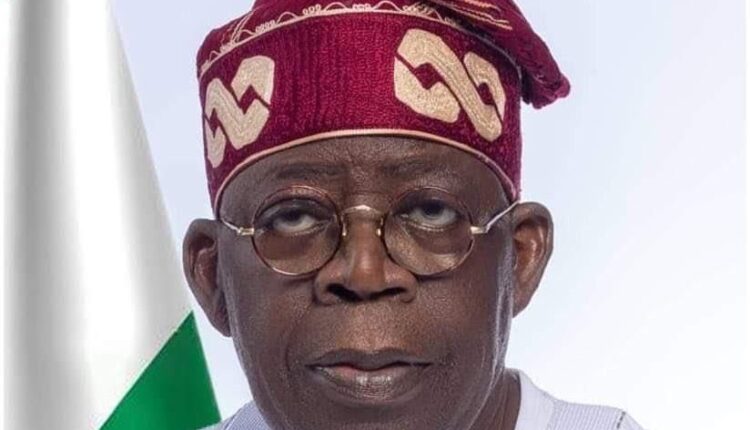
Chairman of the Nigeria Revenue Service (NRS), Zacch Adedeji, has said President Bola Tinubu’s removal of the petrol subsidy prevented Nigeria’s subsidy bill from ballooning to about ₦53 trillion, amid global oil market volatility and mounting geopolitical pressures.
Speaking in an interview with Channels Television on Sunday, Adedeji defended the Tinubu administration’s economic reforms, arguing that retaining the subsidy would have placed an unsustainable burden on government finances.
“The subsidy today would have been ₦53 trillion if Mr President had not removed it, given what is happening in Iran, given what is happening globally,” Adedeji said.
He further explained that maintaining the subsidy could have put immense pressure on the naira, potentially pushing the exchange rate to ₦3,500 per dollar. “With the ripple effects of that, the exchange rate today would have been around ₦3,500 if that had not been done,” he added.

President Tinubu announced the removal of the petrol subsidy on May 29, 2023, shortly after assuming office. This move ended a decades-long arrangement in which the government absorbed part of the cost of petrol to keep pump prices below market levels. The subsidy had become increasingly costly, especially as higher global crude prices, increased import costs, and currency depreciation raised the amount required to maintain regulated prices.
Following the subsidy removal, petrol prices rose sharply, leading to higher transportation costs and increased cost-of-living pressures for households and businesses. The government, however, maintained that the subsidy was no longer fiscally sustainable and that funds previously used to support petrol consumption could be redirected towards infrastructure, social programmes, and other development priorities.
Adedeji argued that the subsidy was fundamentally unsustainable, as the government was effectively using borrowed funds to sell petrol below cost. “Subsidy is not an income. It is like you are using your borrowing money to buy a product and that product is 10 naira, and you are selling it at 3 naira,” he said.
He rejected calls for the government to have created a financial buffer before removing the subsidy, stating that such an approach would not have addressed the core fiscal challenge. According to him, the scale of the potential subsidy burden under current global conditions underscores the necessity of the reform.
Describing subsidy removal as one of the most important economic decisions of the Tinubu administration, Adedeji hailed the move as “the best thing to have happened to this nation,” and labelled the subsidy as “evil” that had plagued Nigeria for decades.
He defended President Tinubu against critics of the reform, saying the President prioritised long-term economic sustainability over short-term political considerations. “What the President deserves now is support and commendation for being a statesman and not a politician,” Adedeji said.
He challenged prospective presidential candidates who criticise the administration’s reforms to articulate alternative approaches, asking, “Anybody who says he is coming, just ask them, ‘What will you do differently?’ It is not just saying buffer. Buffer as what?”
Addressing concerns about poverty and perceptions of government officials living in luxury, Adedeji insisted that President Tinubu’s personal lifestyle does not reflect such claims. “Mr President goes from home to office on foot, not even driving except when he is going to the airport. I don’t know where you see the convoy,” he said.
On poverty reduction, Adedeji said the responsibility rests largely with state governments, while the revenue authorities aim to expand the tax base as economic activity and prosperity increase. “We are not here to tax poverty; we are here to tax prosperity,” he said.
Adedeji’s comments come amid ongoing debate over the impact of Tinubu’s reforms, particularly subsidy removal and foreign exchange regime changes. While the government argues these have reduced fiscal pressures, critics point to the significant short-term rise in petrol prices, transportation costs, and household expenditure.
For Adedeji, however, the potential ₦53 trillion subsidy burden and possible naira depreciation to ₦3,500 per dollar illustrate the scale of the crisis Nigeria could have faced had the subsidy remained.
-

 Politics21 hours ago
Tinubu using foreign reserves to create misleading impression of economic growth – Makinde
-
Politics21 hours ago
ADC mocks APC over ‘rented crowds, empty seats’ at Kaduna rally
-
Politics21 hours ago
2027: It’s Our Turn To Repay Tinubu – Shettima Tells Northerners
-
Politics21 hours ago
2027: Forget About Social Media News, Nigerians Love Tinubu – Information Minister
-
Metro21 hours ago
How AI-generated photo cost kidnap victim N4m ransom – Freed Benue graduate
-
Politics21 hours ago
Ebola: Parties reject campaign suspension
-
Politics21 hours ago
2027: Pantami, Adebutu, Gwarzo’s fates uncertain
-
Metro20 hours ago
Self-driving car hits, kills man on US freeway