Business
Why we rejected NUPRC’s 15.5m barrels of crude – Dangote Refinery

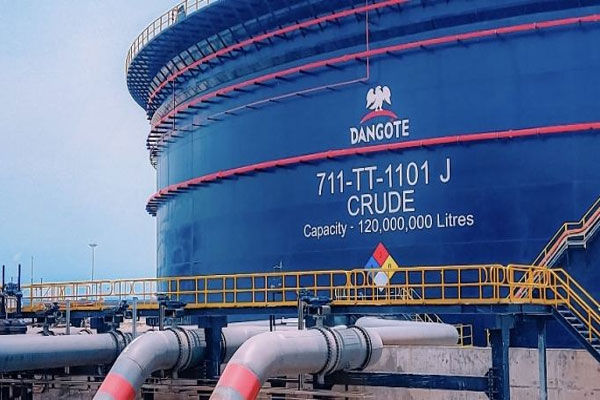
Dangote Petroleum Refinery and Petrochemicals has clarified its position following recent reports referencing data released by the Nigerian Upstream Petroleum Regulatory Commission (NUPRC), which suggested that the refinery rejected 15.5 million barrels of crude oil offered by local producers in the second quarter of 2026.
The company emphasised that it remains fully committed to sourcing Nigerian crude oil and supporting the objectives of the Domestic Crude Supply Obligation (DCSO) framework.
However, Dangote Refinery stressed that crude oil must be available in adequate volumes and offered on commercially competitive terms.
It said this is to ensure the sustainability of domestic refining and the supply of affordable petroleum products to Nigerians.

Commenting on the issue, the Group Vice President, Oil and Gas and Fertiliser, Dangote Industries Limited, Devakumar Edwin, said the central issue is not the volume of crude nominally offered under the DCSO arrangement, but the quantity that is genuinely available for purchase under commercially viable conditions.
According to Edwin, the refinery has consistently raised concerns about inadequate availability of domestic crude and, more recently, has encountered situations where crude is offered at prices that are significantly above prevailing market benchmarks.
He said: “Our position is straightforward.
“We are ready and willing to purchase Nigerian crude oil, provided it is available in sufficient volumes and at competitive market prices.
“Like every refinery, we must procure crude that supports sustainable operations and value creation.
“This is essential to maintaining the economics of domestic refining and enabling us to deliver petroleum products to Nigerians at affordable and competitive prices.”
Edwin explained that since the commencement of the DCSO framework, the refinery has faced significant challenges in securing crude supplies directly from domestic producers.
As a result, a substantial portion of the crude allocated under the arrangement has had to be sourced through International Oil Companies (IOCs) and third parties rather than directly from Nigerian upstream producers.
According to him, this process often introduces additional premiums and transaction costs that can drive crude prices above internationally recognised benchmarks published by agencies such as Platts and Argus.
In many cases, it said, this has made domestically sourced crude less competitive than alternative supplies available on the international market.
Edwin added: “When additional layers of intermediaries introduce premiums, the cost of crude acquisition increases significantly, affecting the overall economics of domestic refining.
“Ultimately, higher crude costs translate into higher costs of refined petroleum products for the local market.”
-

 Business19 hours ago
FG targets ₦750tn capital market, seeks NNPC, NLNG listing
-
Business20 hours ago
I’d rather go to prison than lose my phone – Dangote
-
 News20 hours ago
Tinubu Extends Tenures Of Immigration, Prison CGs
-
Business20 hours ago
Deutsche Bank adds Nigeria to frontier FX monitor, predicts naira appreciation
-
Sports20 hours ago
Ronaldo Banned For 30 Days, Fined €255 For Leaving Portugal Team Camp
-
Politics19 hours ago
2027: Support group vows to challenge false claims against Tinubu
-
Politics20 hours ago
You’re Campaigning For Your Future – Tinubu Tells City Boys
-
News16 hours ago
Where is NLNG dividend?