Politics
2027: Bishops clash tests Tinubu’s Muslim-Muslim ticket

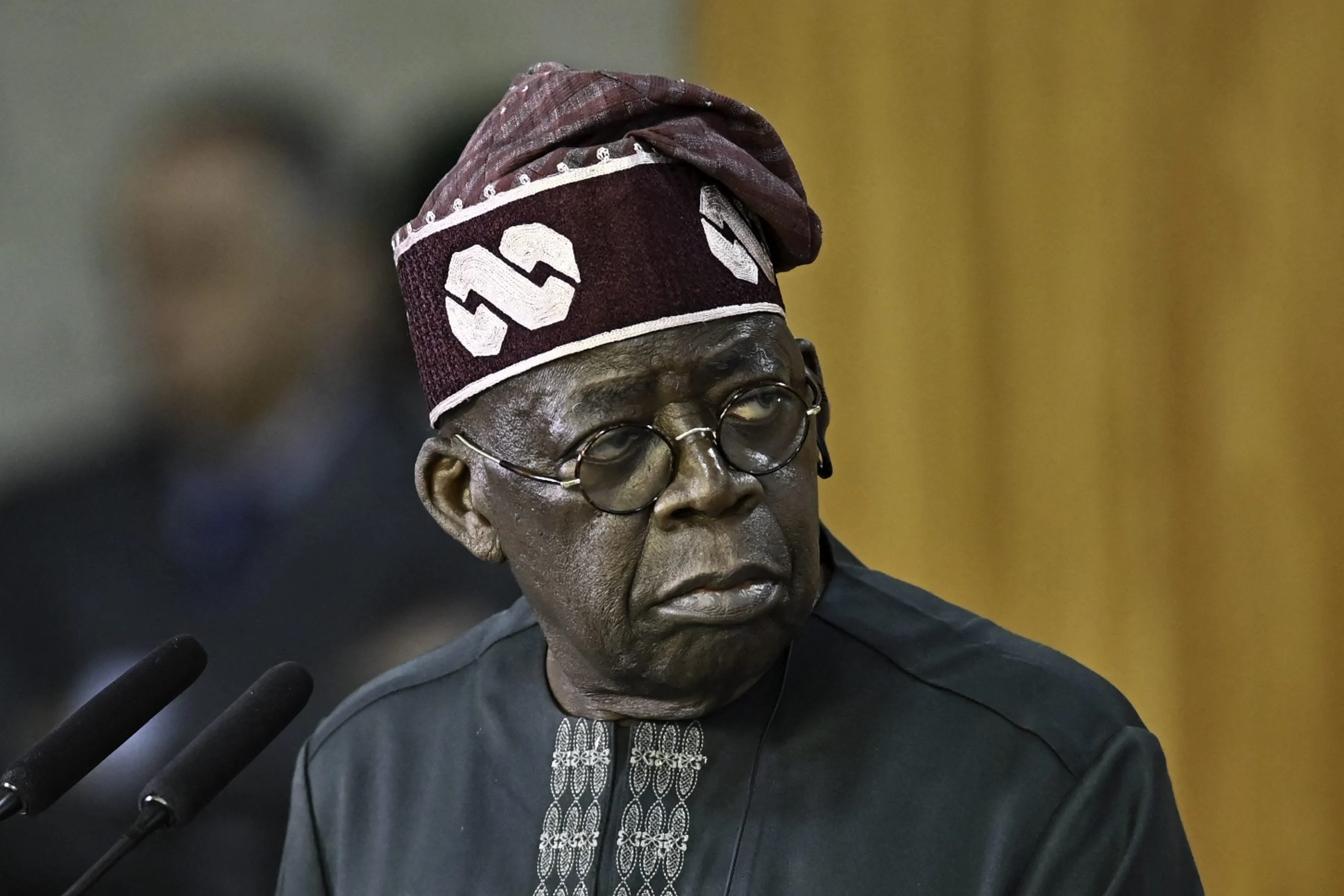
A bill in the National Assembly banning preaching in buses and a recent clash between the presidency and the Catholic Bishops’ Conference of Nigeria (CBCN) have thrust religion into political conversations ahead of Nigeria’s 2027 presidential election.
Together, the controversies risk reopening religious fault lines and complicating President Bola Tinubu’s 2027 reelection strategy with the same contentious Muslim-Muslim ticket he used in 2023.
The opposition has quickly seized on the row, while the Christian Association of Nigeria (CAN) and the Pentecostal Fellowship of Nigeria (PFN) are warning Tinubu against assenting to the bus-preaching law passed last month by the Senate.
The situation leaves a government seeking reelection in a delicate position, public affairs analyst Anthony Kila tells The Africa Report.

“The timing is odd,” he says about the bus-preaching law, adding that Tinubu’s decision to retain the Muslim-Muslim ticket remains risky.
Courtesy call turns political firestorm
A visit by a delegation of Catholic bishops to Tinubu at the Presidential Villa last week has triggered an unintended political firestorm. During the encounter, Tinubu and the bishops offered conflicting assessments of the economy and security: the bishops painted a bleak picture, while the president insisted he had pulled the country “out of a dark tunnel”.
He also pushed back against the perception that the Independent National Electoral Commission (INEC)was under executive influence and denied suppressing the opposition, quipping that “all is fair in politics”.
Things escalated after Cardinal John Onaiyekan, a member of the delegation, during a television interview, criticised Tinubu’s posture as aloof and condemned his “all is fair in politics” remark as desperation to win next year’s election at all costs.
The presidency was quick and angry in its response, labelling the cardinal partisan and accusing him of abusing his privilege.
“It was inappropriate for the bishop to emerge almost immediately on national television to provide his own version of what was essentially a private conversation with the president,” a presidential spokesman says.
“Reciprocity should have dictated that the confidentiality and dignity of that engagement be preserved.”
‘More political than spiritual’
Another presidential spokesman, Daniel Bwala, said Onaiyekan was “more political than spiritual”, arguing that he spoke for only Catholics and not Nigerian Christians in general.
Presidential adviser Sunday Dare urged “critics –clerical or political – to abandon the comfortable pulpits of cynicism” and instead support the government’s efforts at national reconstruction.
The presidency met its match in the Catholic laity, who rallied behind the cardinal, and the Northern Christian Association (NCA), which condemned the disrespect shown to one of the country’s most senior clerics.
“Our cardinal is our respected leader, and the bishops who visited the president spoke about humanity, Christians and all Nigerians, not only Catholics,” Reverend John Hayab, NCA chairman, said. “It was shameful and a disservice to Tinubu for his spokesperson to disrespect our cardinal.”
The controversy has since gained public traction, with the preponderance of opinion tilting in the bishops’ favour. The presidency’s approach met disapproval even within the ruling All Progressives Congress (APC).
Senator Orji Uzor Kalu, an APC stalwart, defended the bishops’ assessment as correct.
“Even if we politicians are lying to him (Tinubu) and say things are good everywhere, the Catholic bishops can never say that,” he said, urging the president to reflect on the clerics’ message and “come out with a beautiful thing that will make Nigerians happy.”
Political score
For the opposition, the clash presented useful political ammunition. African Democratic Congress (ADC) vice-presidential candidate Rotimi Amaechisaid attacking Onaiyekan amounted to disrespecting Nigeria’s estimated 35 million Catholics.
“When you insult a cardinal, you are insulting about 35 million Catholics,” he said. “You look at me in my faith and say I don’t mean anything. My Church means nothing. My God means nothing to you.”
Nigeria Democratic Congress presidential candidate Peter Obi dug in, saying the bishops summarised the daily experience of millions of Nigerians.
“Insecurity has worsened, poverty is deepening, inflation is crippling families, businesses are struggling, and hope is fading,” he said.
Media analyst Azu Osumili says the presidency has drawn itself into an unnecessary controversy that could prove politically costly as the election nears.
Amaechi and Obi are both prominent Catholics. Osumili says taking on the Catholic hierarchy could trigger protest votes in favour of the opposition.
“Four or five months before the election, the president should not engage the Catholic Church. It would cause him more problems,” he says. “I don’t think Tinubu would want to clash with a religious organisation, least of all the Catholic Church with 35 million members. They can decide an election.”
The contentious bill
The risk may have been heightened by the controversial bill in the National Assembly criminalising preaching in commercial buses. The law is embedded in the Federal Road Safety Corps (Amendment) Bill, 2026, passed last month by the Senate. It prescribes a ₦50,000 fine for violators.
Although still being considered by the House of Representatives, the bill has generated a massive storm among Christian leaders. Lawmakers’ explanation that the clause has always existed in the old law has done little to calm frayed nerves.
“Banning religious preaching without proof that it poses a direct threat to public safety could create the impression of an unnecessary restriction on religious freedom,” Bishop Barnabas Akinsanya, South West CAN chairman, said.
PFN president Bishop Wale Oke vowed that 65 million followers would defy the law and challenged the government to prepare enough prisons to jail them.
“We won’t listen to you; you are not God. You are there for a tenure, and God will wipe all of you out,” he said in a broadcast to Pentecostals. “Those who are promoting that law, God will cut them off. We will lay curses upon you and your family unless you repent.”
Founder of Winners’ Chapel, Nigeria’s second-largest church, Bishop David Oyedepo rejected the law as a misplaced priority.
“And now, you mustn’t preach in a bus – is that an issue?” Oyedepo said during a service in his 50,000-capacity church. “The end has come to all destructive agents in Nigeria. Whether in power or out of power, judgment has finally come!”
Seeing the anger, lawmakers are making a tactical retreat. On Wednesday, Senate spokesman Yemi Adaramodu said neither he nor Senate leader Opeyemi Bamidele sponsored the bill.
“I did not raise my hand, nor did the Senate leader,” he told The PUNCH in Abuja. “The two of us didn’t propose any motion.”
He said the law had not been finalised and urged the public to remain calm.
Kila says pursuing such a religiously sensitive cause ahead of an election is politically unwise.
“It is surprising that this is the issue legislators are concerned with, given all the challenges confronting the country,” he says. “It is ill-timed. It is a misplaced priority.”
Can the crisis be contained?
Realising the political sensitivity of the dispute, some of Tinubu’s allies have begun trying to defuse the tensions.
Former presidential aide Reno Omokri said Tinubu remains the Catholic community’s best friend, pointing to the president’s attendance at Pope Leo XIV’s inauguration last year as evidence of his goodwill towards Catholics.
“That act by the president was to demonstrate to the Roman Catholic community in Nigeria that they have no better friend than Tinubu,” Omokri wrote.
Meanwhile, Secretary to the Government of the Federation George Akume said the administration was deepening its engagement with the Catholic bishops.
The APC also downplays the potential risk posed by the controversies to Tinubu’s Muslim-Muslim ticket. Its national chairman’s media office says the last three years have shown Nigerians that the Muslim-Muslim ticket is merely a political strategy rather than a religious project.
“As far as the Muslim-Muslim ticket is concerned, it is no longer an issue,” says Abimbola Tooki, speaking for APC chairman Nentawe Yilwatda. “This is what we have had in the last three and a half years. Has Nigeria become an Islamic country because of it? Have Christians been marginalised? Everybody can see that the combination is far from what people thought in 2023.”
However, Hayab says concerns remain about the Muslim-Muslim ticket, but the Christian community is no longer keen on dwelling on it.
“We do not want to reopen that debate because Nigerians have already discussed it extensively,” he tells The Africa Report. “But choosing not to continue debating an issue does not mean it has ceased to exist.”
He says the experiment has only provided an argument for a Christian-Christian ticket in the future.
Even so, Tinubu’s administration faces the challenge of preventing the opposition from turning the twin controversies into electoral gains. Failure to do so risks turning the Muslim-Muslim ticket from a political asset into a liability. (The africa Report)
-

 Business19 hours ago
OPay seeks DSS, police probe over shutdown rumour
-
 Business20 hours ago
BREAKING: Uber shuts down operations in Nigeria
-
Business20 hours ago
NNPC profit drops 48% to N279bn as July revenue falls
-
Politics20 hours ago
2027: I’ll be Atiku, Obi’s first casualty if Tinubu loses — Wike
-
Business20 hours ago
FG’s reforms restore investor confidence, put Nigeria on recovery path – Dangote
-
Sports20 hours ago
Premier League breaks transfer record for second straight summer
-
Metro20 hours ago
Awujale stool: Court sends Fusengbuwa suit to administrative judge for reassignment
-
Politics22 hours ago
Wike accuses Imo, Kwara govs of waging war against him