News
$25bn Nigeria-Morocco Gas Pipeline Dream Drags

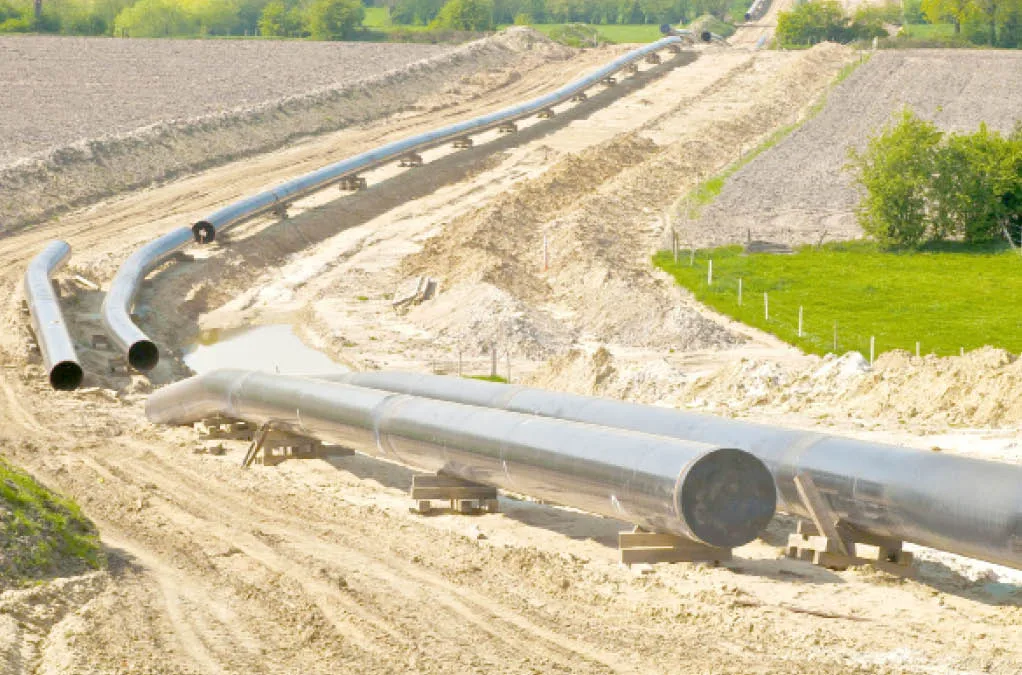
The much-touted multi-billion-dollar Nigeria-Morocco Gas Pipeline is yet to take off owing to the alleged ‘lukewarm’ attitude of Nigerian authorities, Daily Trust learnt from credible sources.
The project is expected to cost more than $25 billion (nearly N34 trillion).
Even before the proper commencement of the project, the name has been changed to African-Atlantic Gas Pipeline (AAGP), with experts saying the initiative would most likely be bogged down by bureaucratic roadblocks.
Recall that last month, the Economic Community of West African States (ECOWAS) endorsed the AAGP, which replaced the initial Nigeria-Morocco Gas Pipeline, after member states signed the Intergovernmental Agreement (IGA), advancing the execution of the cross-border gas infrastructure.

The latest agreement was signed during the 69th Ordinary Session of the Authority of Heads of State and Government of ECOWAS in Lungi, Sierra Leone, held on July 19, 2026.
Nigeria’s delegation was led by Vice President Kashim Shettima, who represented President Bola Tinubu.
The Minister of State for Petroleum Resources (Gas), Ekperikpe Ekpo, described the signing as a significant milestone for regional energy cooperation.
But this only came 10 years after a series of diplomatic brainstormings between Nigeria and Morocco on how to lead the project through bilateral means.
Sources said it would have been much easier for Nigeria and Morocco to lay a solid foundation for the project and thereafter seek the buy-in of other African countries.
They said while the recent endorsement of the project by ECOWAS could carry weight “on face value”, it will nonetheless complicate the matter, considering the various interests around the project and about who gets what at the end of the day.
“I am not forecasting a doomsday, but the truth is that a lot of things endorsed by ECOWAS as a body in the past have not worked for decades,” an energy expert from Adamawa State, who had worked in the industry for long before he retired, said.
“A very simple example is the single currency policy (ECO) for the region, which has not seen the light of day.
“Nigeria and Morocco ought to lead the project and seek the support of other countries in terms of access to the right of way when it comes to laying the pipes.
“The Moroccan King is a highly committed person, especially in respect to this project, and he believes it is for the mutual benefit of Nigeria and his country,” he said.
Recall that in December 2016, King Mohammed VI made a working visit to Nigeria and held talks with then-President Muhammadu Buhari at the Presidential Villa in Abuja.
Buhari subsequently travelled to Morocco in 2018 at the invitation of the king. The two leaders held a bilateral meeting in Rabat and witnessed the signing of several agreements, including the Nigeria-Morocco gas pipeline and other economic cooperation agreements.
In January 2024, Morocco’s monarch equally extended an invitation to President Tinubu after having a telephone conversation with the Nigerian leader.
A statement from the royal palace said the two leaders discussed the development of bilateral relations over the past few years.
But, till date, President Tinubu has not visited Morocco to fast-track the process, and for over a week, efforts by our correspondents to get a tangible response from the Presidency have not yielded results.
Calls, texts and WhatsApp messages sent to two spokesmen of the president, Bayo Onanuga and Daniel Bwala, have not been responded to up till press time.
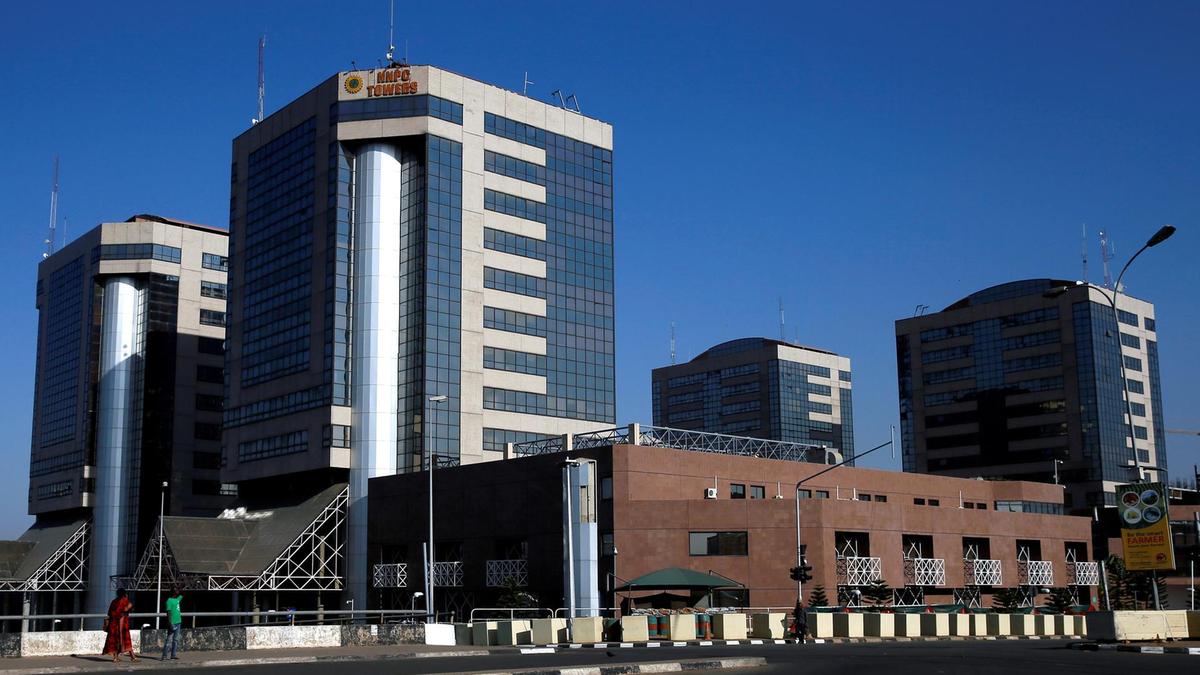
But officials of the Nigerian National Petroleum Company Limited (NNPCL) said the project is still being worked on and Nigeria is fully committed to it.
However, some sources informed Daily Trust that “self-serving” government officials in Nigeria were frustrating the process.
“The whole thing is moving at a snail’s pace because rather than looking at the bigger picture for the benefit of Nigeria, some people around President Tinubu are looking at what will get to their pockets,” one of the sources said.
“This is why even the proposed visit to Morocco by President Tinubu remains in the pipeline,” the source added.
Available records show that the project is estimated to cost between $25 billion and $27 billion.
Documents reviewed by our reporters showed that rather than relying purely on national treasury budgets, the funding framework relies on four primary sources.
One is the Public-Private Partnership (PPP), which relies on attracting institutional investors, global energy firms and commercial banks to fund the bulk of capital expenditure, as well as the Project Company Execution. The project is structured under an independent commercial company—the AAGP Project Company, based in Casablanca—which will issue debt and equity instruments to international private capital markets.
The second is the sponsoring of state and national oil companies’ (NOCs) equity contributions. Initial equity and project development funding are shared between Nigeria’s NNPC Ltd. and Morocco’s ONHYM. Besides, under subsequent MoUs signed with ECOWAS and host nations such as Senegal, Côte d’Ivoire and Mauritania, participating host states and their respective national oil companies hold equity options to co-invest alongside the core sponsors.
Thirdly, multilateral financial institutions were brought in early to fund pre-construction phases—engineering, survey and feasibility studies—and act as anchor financiers to de-risk the project for private capital. They include the Islamic Development Bank (IsDB), OPEC Fund for International Development (OFID) and the African Development Bank (AfDB).
Finally, there is commercial offtake backing. Gas Sales Agreements (GSAs)—long-term supply contracts with European gas buyers and West African power utilities—are designed to provide the guaranteed cash flow required to back bankable international project loans.
In the original plan, Morocco is set to host over 1,600 kilometres of the project, which spans approximately 6,900 kilometres, combining onshore and offshore segments.
The pipelines are engineered for a throughput of 30 billion cubic metres (bcm) of natural gas per year. Up to 15 bcm is allocated to meet domestic and industrial energy demands across West Africa, while the remaining half is targeted for export to Europe via Morocco.
It is designed to transport up to 30 billion cubic metres of natural gas yearly from Nigeria through 13 West African countries to Morocco.
The countries include Benin, Togo, Ghana, Côte d’Ivoire, Liberia, Sierra Leone, Guinea, Guinea-Bissau, The Gambia, Senegal and Mauritania, with interconnections into landlocked Sahel states.
Over time, there have been several projected timelines and target dates as the project evolved since the signing of the initial agreement in December 2016.
In 2017, the NNPC and Morocco’s Office National des Hydrocarbures et des Mines (ONHYM) began the feasibility work.
Nigeria and Morocco signed a further agreement, and the Nigerian government said the feasibility study was expected to be concluded by July 2018.
According to energycircle.org, the feasibility study was subsequently completed in 2019, after which the project moved into Front-End Engineering Design (FEED).
Between 2021 and 2022, the project reportedly entered more detailed engineering and financing studies. By 2022, the expectation was that the Final Investment Decision (FID) could be reached in 2023, but this was not achieved, meedprojects.com said.
The timeline subsequently shifted, with later project information pointing to 2024 and then 2025 as possible FID dates.
A 2025 project database gave December 2029 as a projected completion date for one phase/package, but its later 2026 update moved the completion date for that profile to June 2031.
Evidently, the project has repeatedly missed or shifted its intermediate deadlines, especially the Final Investment Decision (FID).
What petroleum minister said on the project
The Minister of State for Petroleum Resources (Gas), Ekperikpe Ekpo, who was in the entourage of Vice President Kashim Shettima during the ECOWAS meeting, said the agreement reflected the commitment of ECOWAS member states to strengthening regional energy security, deepening economic integration and expanding the utilisation of natural gas across the region.
“For Nigeria, this is particularly important because we hold approximately 215.19 trillion cubic feet of proven natural gas reserves, the largest in Africa, and we see gas as a central pillar of our economic transformation, industrialisation and energy security strategy,” he said.
While highlighting the project’s impact on sub-regional integration, Sédiko Douka, ECOWAS’ Commissioner for Infrastructure, Energy and Digitalisation, stated that the pipeline will “help strengthen the region’s electricity production and generation capacity, stimulate industrial and agricultural development, and contribute to the energy transition by using a cleaner source of energy.”
Julius Maada Bio, the President of Sierra Leone, while speaking on behalf of host nations, noted: “We have already signed the West Africa Morocco gas pipeline. Don’t be surprised when the gas comes your way.”
On her part, Amina Benkhadra, General Director of Morocco’s ONHYM, who had consistently advocated for the pipeline as a vehicle for South-South cooperation, called it “a strategic project for regional integration, economic development and energy security across the Atlantic corridor.”
The funding model
Despite the apparent political backing and regional momentum, the Nigeria-Morocco Gas Pipeline (NMGP/AAGP) faces a complex set of structural, financial and geopolitical challenges. Experts say securing between $25 billion and $27 billion in capital is a major hurdle. They contend that long-term fossil fuel projects face tighter international lending criteria due to global energy transition mandates, making it critical to structure bankable Public-Private Partnerships (PPPs) and secure sovereign guarantees across multiple nations.
Besides, security concerns have been raised. Spanning nearly 7,000 km across 13 sovereign nations, protecting infrastructure against vandalism, theft or localised conflicts requires deep joint intelligence and defence coordination.
Similarly, Algeria’s proposed Trans-Saharan Gas Pipeline (TSGP) has introduced complex geopolitical dynamics in North Africa, according to economic experts.
In an open letter to President Bola Ahmed Tinubu, Dan D. Kunle, a financial expert with over 35 years’ experience in Project and Business Investment Services, Corporate Restructuring & Management, Acquisitions & Mergers, Procurement and Logistics Management, queried the source of the gas.
“Government officials regularly tell Nigerians that the country has more than 200 trillion cubic feet of proven natural gas reserves. That sounds reassuring, but gas reserves underground are not the same as gas developed, processed and available for commercial use,” he said.
“Gas does not jump by itself from a reservoir into a power station or industrial plant. The fields must be developed, wells must be drilled, gas-gathering facilities must be constructed, processing plants and compressor stations must be installed, connecting pipelines must be built, producers must be paid, customers must be identified, and long-term contracts must be signed,” he said.
He posited that while Nigeria has large gas reserves, the country continues to experience serious constraints in developing and delivering sufficient gas to its own economy.
“Our electricity sector still suffers from inadequate and unreliable gas supply. Power stations are frequently unable to operate at their installed capacity. Industries complain about unreliable energy, while major gas-based projects have suffered years of delay.
“Fertiliser, petrochemical, steel, aluminium, methanol, glass and manufacturing industries all require reliable and affordable gas and electricity. We have not yet properly supplied ourselves, yet we are already discussing how to move enormous quantities of gas through numerous countries to Morocco and possibly Europe,” he said.
Kunle also questioned the rationale behind the project, saying the Trans-Saharan Gas Pipeline (TSGP) holds better prospects for the country.
Findings revealed that the TSGP project was conceived to carry Nigerian gas through Niger and Algeria, from where it could connect with existing infrastructure serving European markets.
The TSGP was first proposed in the 1970s and later revived in the early 2000s. It was championed by the national oil companies and political leaders of Nigeria, Algeria and Niger—notably under the NEPAD initiative by former presidents Olusegun Obasanjo (Nigeria) and Abdelaziz Bouteflika (Algeria). It is designed to carry gas 4,128 km from Warri, Nigeria, through Niger to Hassi R’Mel in Algeria for European export.
We’re committed to all the projects – NNPCL
However, while speaking with Daily Trust, the Chief Corporate Communications Officer of the Nigerian National Petroleum Company Limited (NNPC Limited), Andy Odeh, said it is not true that the federal government is dumping the Trans-Saharan Gas Pipeline (TSGP) in favour of the African-Atlantic Gas Pipeline (AAGP).
He said this framing creates a false choice, as the two projects are not mutually exclusive.
“The TSGP, which would run through Niger and Algeria to Europe, faces distinct challenges; however, these are being actively addressed. Security concerns, regional instability in the Sahel, and complex geopolitical dynamics involving Algeria and Morocco make the route challenging in the current environment.
“Nevertheless, the TSGP continues to progress professionally. At the last TSGP Steering Committee meeting held on 3 June 2026, stakeholders agreed on five concrete resolutions to advance the project, including the required CAPEX optimisation. The next Steering Committee meeting has been scheduled for Q4 2026 in Abuja.”
He added that, by contrast, the AAGP follows the Atlantic coast through 13 West African countries, leveraging the established ECOWAS cooperation framework and the demonstrated success of the West African Gas Pipeline (WAGP).
“The WAGP has transported over 613 million MMBtu of natural gas, with Nigeria contributing more than 68% of total supply to neighbouring countries. This proven model of regional energy integration provides a strong foundation for the AAGP to build upon and expand.
“The AAGP also has a broader strategic purpose: establishing a development corridor that links West Africa, the Sahel, Morocco and Europe. It will connect gas-producing countries with major demand centres while serving landlocked Sahel nations, advancing regional integration and shared prosperity beyond gas exports,” he said.
On whether the delay in completing the project will lead to Europe moving on to other sources of renewables, he said this view presents gas and renewables as mutually exclusive, which does not reflect the realities of the global energy transition.
“Europe’s energy security challenges, especially following recent geopolitical disruptions, have reinforced the need for reliable and dispatchable energy sources. Natural gas is not being replaced by renewables; it is increasingly recognised as a critical complement to intermittent renewable power,” he said.
Expected gains
For Nigeria—home to Africa’s largest natural gas reserves (over 200 trillion cubic feet)—the AAGP serves as a cornerstone initiative to unlock its “Decade of Gas” strategy.
Supporters of the project said it delivers four major strategic, economic and industrial benefits to Nigeria, helping to commercialise unused resources. Nigeria holds vast offshore and deepwater gas reserves that remain “stranded”—underutilised or undeveloped due to a lack of processing and transport infrastructure. By connecting Nigerian fields directly to high-demand markets across West Africa and North Africa, experts say the move will guarantee long-term offtake agreements and, by implication, boost foreign exchange earnings for NNPCL and the Nigerian treasury.
(Daily trust)
-

 News10 hours ago
N267bn in education funds lie idle as 70% of Nigerian children can’t read
-
Metro10 hours ago
Hardship: Jigawa almajiri pupils lament decline in free food
-
Politics19 hours ago
Tinubu asked me to claim Adelabu as my ministerial choice, I refused — Makinde
-
Politics10 hours ago
Tinubu’s re-election crucial to Nigeria’s prosperity – Hamzat
-
News10 hours ago
Obasanjo urges increase in 13% derivation for oil-producing states
-
Politics19 hours ago
Coastal highway: Atiku challenges Tinubu over alleged $20bn loan plan
-
News10 hours ago
Child soldier: US threatens to cut military aid to Nigeria
-
Politics19 hours ago
Ebonyi indigenes threaten to sue Umahi over zoning, anti-Obi remarks