Business
Food Prices Rise As Inflation Slows

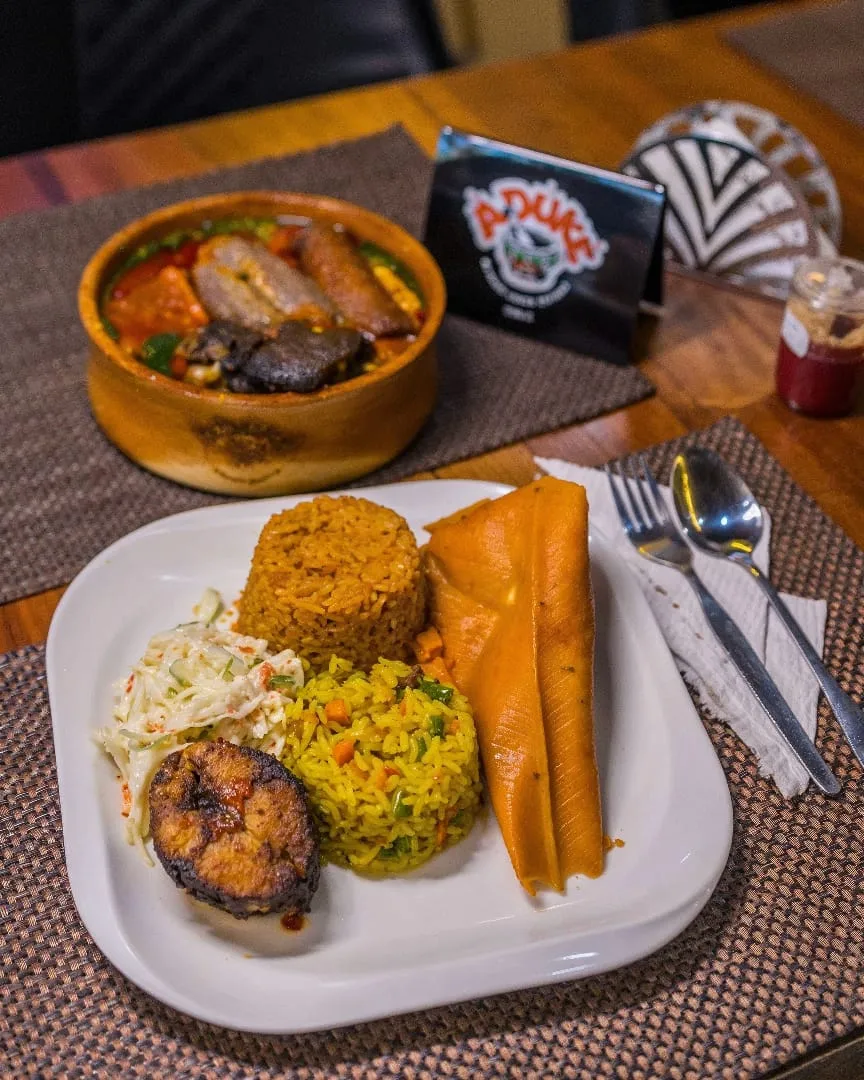
Nigeria’s food inflation rose in July despite a series of interventions by the federal government to boost domestic production, reduce input costs and ease pressure on consumers.
This has sparked fresh concerns about the effectiveness of measures designed to make food more affordable, Daily Trust reports.
The National Bureau of Statistics (NBS), in its July 2026 Consumer Price Index report, said food inflation stood at 20.31 per cent year-on-year, compared with 26.20 per cent recorded in July 2025.
More troubling for consumers was the month-on-month movement. Food inflation climbed to 5.56 per cent in July, from 3.75 per cent in June, representing an increase of 1.82 percentage points.

The latest development implies that while the annual rate remains considerably lower than the level recorded a year earlier, food prices continued to rise sharply within the month.
On a month-on-month basis, NBS said food inflation was highest in “Adamawa (17.02%), Lagos (13.48%) and Borno (13.26%), Jigawa (-3.68%), Kebbi (-3.67%), and Bauchi (-1.85%) recorded decline”.
This reflects the difficulty many households face in translating the government’s policy measures into cheaper meals.
The NBS attributed the monthly increase to rising average prices of several widely consumed food commodities, including crayfish, fresh pepper, onions, carrots, rice, water yam, tomatoes, garri, plantain, beef, eggs, guinea corn, ginger and flour.
The statistics provide a mixed picture of the country’s inflation situation. Headline inflation declined to 15.43 per cent in July from 15.91 per cent in June, representing a 0.48 percentage-point decrease.
On a month-on-month basis, headline inflation also eased to 1.57 per cent from 1.66 per cent in June.
The NBS said this meant that the average price level increased at a slower rate in July than in the preceding month.
However, food inflation, which has a direct bearing on household welfare, moved in the opposite direction.
For millions of Nigerians, particularly low-income households that devote a large share of their earnings to food, the distinction between annual and monthly inflation rates offers little comfort when prices in local markets continue to rise.

Households feel the squeeze
Across the country, consumers said the official statistics did little to capture the daily reality in markets and homes.
A resident of Lagos, David Atoni, said despite being in the harvesting season, prices of goods are still on the high side.
“If prices of foods are this high during harvesting season, then Nigeria is heading into harsher economic reality,” he said.
Another Lagos resident, Mrs. Funmi Alaba, who lives in Ojodu-Berger said she went to the market yesterday to buy some groceries but she could not really get much because of the high cost.
In Maiduguri, despite crops being brought in from the farms, many families in the state report that they can barely afford basic daily meals, noting that the economic realities on the ground remain grim and unforgiving.
A survey of markets across the state reveals a confusing and erratic pricing trend where a few items have recorded slight drops, while others have surged, leaving consumers bewildered.
Muhammad Abubakar, a resident of the Bulunkutu area, expressed deep frustration over the persistent inflation.
“Some prices have dropped slightly, but others have stubbornly risen. For instance, a bag of foreign rice, which was previously sold for N60,000, is now going for N67,000.”
Another resident of Damboa road, Aisha Tanimu, pointed out a similar disparity in the grains market, noting that the prices of staples like beans and maize have experienced a drastic drop, local rice prices have fluctuated sharply, squeezing family finances further.
“The price of local rice has increased from N120,000 to N130,000 but beans and maize prices have dropped drastically” she said.
Amina Yusuf, a consumer in Maiduguri, lamented the rising cost of cooking condiments. “A bottle of Thailand vegetable oil has jumped from N1,700 to N2,000, making it very difficult for average consumers to afford,” she said.
Also, Malam Shehu Lawan said that the situation is even more dire for perishable goods like tomatoes, Onions and peppers.
“It is not easy. We aren’t getting friendly prices these days. Buying vegetables like tomatoes, onions, and pepper has become a major problem for households in Maiduguri.
“Fresh pepper, tomatoes, and onions are too costly nowadays. Many people have had to abandon them entirely and switch to cheaper tomato paste,” he said.
Residents noted that the high cost of food is further compounded by a broader economic squeeze, particularly skyrocketing transportation costs and a severe housing crisis in the state capital.
“People are struggling just to feed themselves, but half of their daily earnings are now being swallowed by transportation costs,” Lawan added.
In Adamawa State, residents, who spoke on the development, described food inflation as increasingly unbearable and called for stronger intervention from the Federal and state governments as well as individuals and organisations with the capacity to support vulnerable households.
A resident of Gwadabawa Ward in Yola North Local Government Area, Abubakar Usman, popularly known as Abu Fari, said the increase in food prices had reached levels he had never experienced.
Usman said the price of rice had risen considerably within a short period, noting that a measure he used to buy for about N1,600 was now selling for approximately N2,100.
He appealed to the government to take urgent steps to bring relief to consumers, particularly families whose incomes have not increased at the same pace as food prices.
For Hajiya Mairo Suleiman, a resident of Jalingo Street in Jimeta, Yola, the situation is even more difficult for single mothers who have to provide for their families largely on their own.
Suleiman said she had tried to reduce the cost of feeding her household by purchasing food directly from local markets and farmers in nearby communities.
But even this strategy, she said, had failed to provide significant relief because farmers themselves were grappling with increased production costs.
She attributed part of the increase to the rising prices of agricultural inputs, including farming equipment and insecticides.
According to her, a measure of beans that previously sold for between N800 and N1,200 now costs about N2,000 or more, depending on where it is purchased.
She said maize and millet had also become more expensive and urged the authorities to provide greater support to farmers so that the benefits could eventually reach consumers.
Another resident, Danlami Itahari Dauda, described the situation as increasingly difficult even for middle-class households.
Dauda blamed what he described as the absence of effective measures to regulate prices, arguing that the government needed to address the structural causes of rising food costs rather than relying only on short-term interventions.
Speaking on the issue, Yahaya Obadare, a resident of Ilorin, said rising prices of food items were becoming increasingly noticeable, even where the increases appeared marginal.
He recalled his wife’s experience over the weekend when she discovered that an item she wanted to buy had increased by N150 compared to the previous price.
Obadare said while the difference might appear insignificant when considered against the price of a single item, such increases could have a noticeable impact when several food items were involved.
He noted that consumers were now having to pay closer attention to prices, as the cost of some items could change within a short period.
He added that the cumulative effect of these seemingly small increases was putting additional pressure on household budgets, particularly for families trying to maintain their regular food purchases.
“Sometimes, the increase is between N50 and N100, depending on the item, but at the end of the day, you discover that it has taken a toll on your finances”, he added.

Expert blames insecurity
An economist, Dr Marcel Okeke, says the government’s efforts will have limited impact unless the security crisis affecting farming communities is tackled more decisively.
Okeke, who spoke to Daily Trust, said identified insecurity as one of the major factors behind rising food prices, arguing that farmers cannot produce enough food when they are unable to safely access their farms.
He said insecurity had displaced farmers across several parts of the country and disrupted agricultural production.
Even where farmers are able to cultivate their land, he argued, the challenge does not end at harvest because poor roads and insecurity can make it difficult and expensive to move produce from farms to urban markets.
According to him, these disruptions add to the cost of food at every stage of the supply chain.
Okeke was also sceptical about the immediate inflationary impact of some of the government’s agricultural programmes.
He noted that initiatives involving tractor procurement, mechanisation and farmer training require considerable time before they can significantly increase production.
The economist maintained that increasing the number of tractors or training agricultural workers would not immediately translate into cheaper food because farmers must first be able to operate safely, cultivate larger areas and move their produce efficiently to markets.
He said the level of insecurity in farming communities had become a fundamental constraint.
“When you talk to farmers, the level of insecurity in every part of this country has displaced them and if they farm, what about movement of the products when the roads are bad? So, those are the serious constraints,” he said.
Okeke also questioned whether the official inflation data fully reflects the experience of ordinary Nigerians.
He argued that the most direct way to understand inflation was to observe what consumers were actually paying in markets.
He also called the National Bureau of Statistics’ integrity to question due to the method used to collect data, saying that the data is contrary to the experience of many Nigerians.
“There is no other way of measuring inflation than going to the market to buy things. Yes, buy those items. If you want to define the consumer price index, we are talking about a basket of items. So which item or which items have their prices come down? If you go to the market, whether they are food or not, which ones have their prices come down? No matter what they are telling us, this doesn’t seem to reflect reality.”
FG’s interventions
The federal government had, in recent months, rolled out a combination of short-, medium- and long-term measures intended to stabilise food prices, increase local production and strengthen Nigeria’s food system.
Among the measures were reductions in import tariffs on selected agricultural inputs and commodities, support for farmers, increased access to farm inputs, mechanisation initiatives and assistance to agro-processors.
The government has also sought to encourage businesses to invest in backward integration, linking agricultural production more closely with processing and industrial activity.
Speaking during a Ministerial Policy Dialogue at the Nigeria Public Relations Week in April this year, the Minister of Agriculture and Food Security, Senator Abubakar Kyari, had said the government’s strategy was focused on correcting market distortions while simultaneously strengthening domestic production.
Kyari, who was represented at the event by the Executive Secretary of the National Agricultural Development Fund, Mohammed Ibrahim, said food prices had reached extremely high levels in the previous year but maintained that some government policies, particularly reductions in import tariffs, had helped to stabilise the situation.
He said the government was also supporting farmers and agro-processors through input programmes and other measures designed to strengthen production.
“We have focused on farm input support programmes and agro-processing. We are providing subsidised inputs to processors with backward integration models. Strengthening both the farm and the factory is critical to ensuring agricultural policies succeed,” he said.
The government has also linked its food security strategy to broader fiscal and tax reforms affecting agricultural value chains.
Kyari said food security could no longer be viewed solely through the lens of agricultural production, arguing that communication, policy coordination and public engagement were also essential to building confidence and ensuring that government interventions achieved their intended impact.
He acknowledged, however, that farmers continued to face high input costs.
“Food prices are beginning to abate, although challenges remain, particularly around the high cost of inputs. Farmers are still feeling the pressure,” he said. (Daily trust)
-

 Business6 hours ago
Dangote exports 87% of aviation fuel output as Nigeria records zero imports
-
Business6 hours ago
Nigeria’s $100 oil strengthens the case for freezing Gazelle crude
-
News22 hours ago
Landlords Pay Rent As Insecurity Triggers Housing Crisis In Kaduna
-
News6 hours ago
Ondo Crash: Residents Fear Disease Outbreak As Body Parts Float
-
Politics7 hours ago
S’ Court ruling: INEC gives Oct. 24 deadline for parties to submit omitted candidates
-
Entertainment6 hours ago
Ex-gang leader sentenced to minimum 40 years for Tupac murder
-
Politics6 hours ago
Opposition dares Tinubu, says Wike, Soludo inclusion won’t save APC
-
News6 hours ago
Attacks: Catholic Church shuts schools, hospitals in Benue community