Business
Doctors urge FG to subsidise insulin as prices surge to ₦25,000

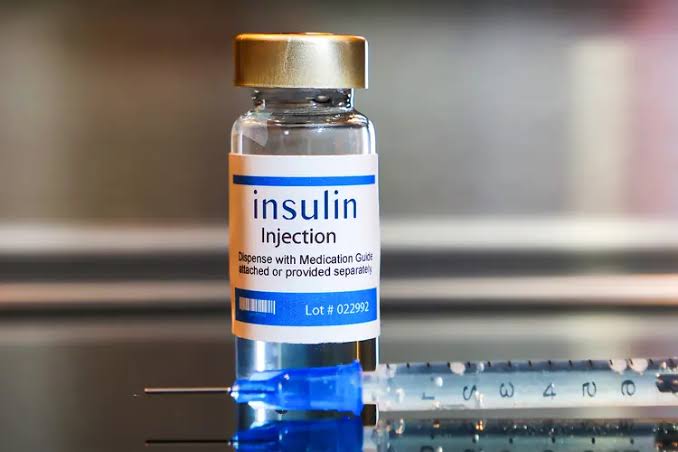
Endocrinologists have called on the Federal Government to subsidise insulin and introduce a dedicated policy to improve access to the life-saving medication for Nigerians living with Type 1 diabetes.
The doctors said the rising cost of insulin was placing a significant financial burden on young people living with the condition.
They warned that inability to access the medication could have fatal consequences.
The call was made on Wednesday during the sixth Annual Ogun State Youth Diabetes Camp organised by the Talabi Diabetes Centre in Abeokuta.


The Camp Coordinator of the Talabi Diabetes Centre, Dr Olubiyi Adeshina, explained that Type 1 diabetes occurs when the body’s immune system destroys the insulin-producing cells of the pancreas, leaving affected persons dependent on insulin for survival.
Adeshina warned that prolonged failure to take insulin could result in dangerously high blood sugar, coma and death.
He said, “All the days of their lives, at least three times a day, they will need to inject that insulin or else the blood sugar goes excessively high.”
Adeshina said the cost of insulin had increased significantly, noting that a vial which previously cost about N5,000 now sells for approximately N25,000.
He added that some patients required about two vials monthly, translating to about N50,000 spent on insulin alone every month, excluding other expenses such as blood glucose monitoring.
“It’s a tough battle. How are we going to get insulin to these young people so that they can survive into adulthood?” he asked.
Adeshina identified excessive urination, excessive thirst, weight loss, blurred vision and wounds that fail to heal as some of the symptoms of diabetes.
He explained that while Type 1 diabetes is an autoimmune condition that cannot currently be prevented through lifestyle changes, Type 2 diabetes is strongly associated with unhealthy diets, physical inactivity and excessive weight gain.

Also speaking, the Acting Director of the centre, Dr Ayotunde Ale, appealed to President Bola Tinubu to develop a dedicated policy for people living with Type 1 diabetes, particularly children and young adults.
Ale said, “Insulin is very, very expensive. Now, with inflation and everything ongoing in society, a packet, a month’s supply, now costs about N25,000 against N5,000 that we used to purchase insulin.”
She urged the government to subsidise insulin and establish a policy framework that would enable people living with Type 1 diabetes to access the medication more easily.
She also appealed to the National Assembly to address the challenges confronting people living with the condition, noting that the cost of treatment could affect their quality of life.
Beyond the financial burden, Ale identified stigma and misconceptions as other challenges facing young people living with Type 1 diabetes.
She urged parents and members of the public to seek medical attention for children displaying symptoms of diabetes rather than attributing unexplained deaths to traditional beliefs.
“My message is that all those children we call ogbanje, we call different types of, they die in their youth, and you don’t know the cause. Don’t call them ogbanje. Please, come for testing. Let’s do screening for all these children,” she said.
She also called for increased involvement of non-governmental organisations and other stakeholders in supporting people living with diabetes.
She added, “Talabi Diabetes Centre is the only non-governmental organisation, non-profit organisation and the only primary diabetic care centre that we have in the country now.

“We want more NGOs and organisations so that we can reach out to other people. The more, the merrier. The work will be more intensive, will go further, and we’ll be able to reach other people that we have not been able to reach now.”
The beneficiaries were also trained on safe insulin administration, blood sugar monitoring, appropriate nutrition and physical exercise.
One of the participants, Onwuegbuzie Onyekachukwu Sharon, described the camp as an important platform for young people living with Type 1 diabetes to learn how to manage the condition and interact with others facing similar challenges.
“This camp is a very nice place if you want to enjoy yourself and know more about people that have this condition. It gives you more knowledge about living with Type 1 diabetes, what you’re supposed to do and how you’re supposed to manage it,” she said.
Another beneficiary, Ekun David, said living with the condition had been emotionally and physically challenging but that the support from the Centre had helped him cope.
“It has been a lot because I went through a lot of emotional and physical things. But with God and Talabi Diabetes Centre, they have helped us. They have given us courage to help ourselves more, encourage ourselves and treat our insulin well,” David said.
Diabetes is a chronic medical condition in which the body either does not produce enough insulin or cannot use the insulin it produces effectively.
This causes too much glucose (sugar) to build up in the blood. (Punch)
-

 Business22 hours ago
Africa’s biggest bank targets stake in OPay ahead of IPO – Report
-
Business16 hours ago
NAFEM turnover rises to $1.41bn as FX activity rebounds
-
News1 hour ago
BREAKING: Davido was target of Osun convoy attack – Police
-
News16 hours ago
36 states’ budgets jump 47% to N40tn, capital spending falls
-
News8 hours ago
Lagos, Ogun declare Thursday public holiday to celebrate Isese festival
-
Sports16 hours ago
Williams sisters lose on doubles return
-
News1 hour ago
FG moves to decriminalise attempted suicide in Nigeria
-
News16 hours ago
With over 14,000 workers, n’assembly is world’s busiest parliament, says Clerk