News
FACT CHECK: No Evidence Nigeria Has World’s Busiest Parliament

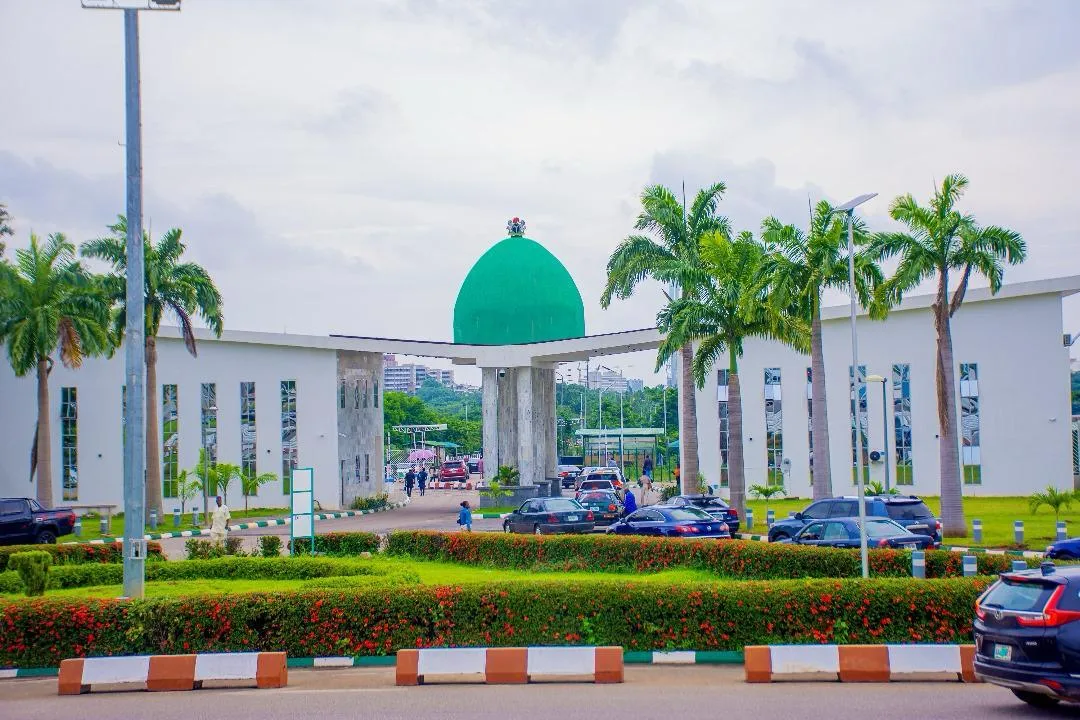
The claim by the Clerk to the National Assembly (CNA), Kamoru Ogunlana, that Nigeria’s National Assembly is the “busiest parliament in the world” is not supported by available authoritative records or comparable global data.
Ogunlana made the claim on Tuesday while speaking at the final phase of a capacity-building programme for legislative aides in the 10th National Assembly.
According to him, the National Assembly has more than 14,000 personnel, excluding the 469 federal lawmakers and their visitors, making the administration of the Nigerian parliament particularly demanding.
“No parliament in the world is as busy as the National Assembly, which has over 14,000 personnel aside from the federal legislators and their visitors,” Ogunlana said.

He also cited the volume of legislative work handled by the two chambers, saying the Senate and House of Representatives had passed a combined 3,500 bills in the last three years. He put the Senate’s figure at 1,500 bills and the House of Representatives at 2,000.
The figures indicate a sizeable workforce and substantial legislative activity. However, they do not establish that Nigeria’s National Assembly is busier than every other parliament in the world.
What does ‘busiest parliament’ mean?
A major problem with the claim is the absence of a clear, universally accepted measure for determining which parliament is the world’s busiest.
Being “busy” could refer to several indicators, including the number of legislators, parliamentary staff, visitors, bills introduced or passed, committee meetings, plenary sittings, working hours, legislative proceedings, or the volume of administrative activity.
Ogunlana’s claim appears to combine at least three factors — the National Assembly’s workforce, the number of lawmakers and the number of visitors — while also pointing to its legislative output.
But no methodology was provided to show how these indicators were measured against those of other parliaments globally.
More importantly, there is no available official world record establishing Nigeria’s National Assembly as the world’s busiest parliament.
Therefore, the fact that the National Assembly has more than 14,000 personnel does not, by itself, prove that it is the busiest parliament in the world.
What Guinness World Records says
Available Guinness World Records records demonstrate that some characteristics of parliaments and parliamentary buildings can be measured and recognised as world records.
For instance, Guinness World Records identifies China’s National People’s Congress (NPC) as the world’s largest parliament (legislative body), with 2,987 members.
The NPC meets annually in Beijing’s Great Hall of the People. Guinness World Records identifies it as the world’s largest parliament despite noting that its powers differ from those of parliaments in Western democracies.
This record, however, is for the size of the legislative body, not for how busy it is. There is an established world record for the largest parliament, but the existence of such a record does not mean there is a corresponding official record for the “busiest parliament.”
Parliamentary buildings also have recognised records
There are also Guinness World Records entries relating to parliamentary buildings.
The Palace of the Parliament in Bucharest, Romania, is listed by Guinness World Records as the world’s heaviest building. Guinness says the structure contains about 700,000 tonnes of steel and bronze, one million cubic metres of marble, 3,500 tonnes of crystal glass and 900,000 cubic metres of wood. Construction began in 1984.
Again, this demonstrates that specific attributes of parliamentary buildings can be independently measured and recognised as world records.
But there is no equivalent Guinness World Records title establishing the busiest parliament in the world.
Also, THE Guinness World Records stated that “the longest English Parliament was the `Pensioners’ Parliament of Charles II, which lasted from 8 May 1661 to 24 January 1679, a period of 17 years 8 months and 16 days. The longest United Kingdom Parliament was that of George V, Edward VIII and George VI, lasting from 26 November 1935 to 15 June 1945, a span of 9 years 6 months and 20 days.”
The earliest known legislative assembly, or ukkim, was a bicameral one in Erech, Iraq, c.2800BC. The oldest recorded legislative body is the Icelandic “Althing” founded in AD 930. The earliest known use of the term `parliament’ is in an official royal document, in the meaning of a summons to the King’s (Henry III’s) Council, dating from December 19, 1241.
But none of this shows a record of the busiest parliament in the world.
Do the 14,000 workers prove the claim? No.
Ogunlana’s figure of more than 14,000 personnel is significant. The figure excludes the 469 federal lawmakers and visitors to the National Assembly complex. Multiple reports of his remarks confirmed that he relied on the size of the workforce, lawmakers, visitors, and legislative workload to describe the National Assembly as the busiest in the world.
However, a workforce figure only establishes the number of personnel working within or around the institution. It does not provide a ranking against every parliament globally.
For example, to establish the claim scientifically, comparable figures would be required for parliaments across countries, using the same definition of parliamentary staff and the same period.
The same problem applies to the 3,500 bills cited by Ogunlana.
Even if the figure is accepted, it does not demonstrate that Nigeria passed more legislation than every other parliament in the world, because the claim was not accompanied by comparable international data showing the legislative output of other parliaments over the same period.
What can be established?
There is evidence that Nigeria’s National Assembly has a large workforce and handles substantial legislative activity.
The Clerk said the institution has more than 14,000 personnel, excluding lawmakers and visitors. He also said both chambers passed 3,500 bills during the first three years of the 10th National Assembly.
Those figures may support an assessment that the National Assembly is busy or has a substantial administrative and legislative workload.
They do not, however, support the stronger comparative statement that no parliament anywhere in the world is as busy as Nigeria’s National Assembly.
That is a global superlative, and proving it requires a defined measurement and reliable comparative data covering other national parliaments.
No such evidence or recognised world record was identified.
Verdict
Not supported
The Clerk to the National Assembly’s claim that Nigeria has the “busiest parliament in the world” is not supported by an established Guinness World Records title or other authoritative global ranking.The is therefore not supported by the available evidence.
-

 Metro24 hours ago
Nigerian man, Adebayo arrested in Canada after exposing self to three victims
-
News7 hours ago
Experts caution as IMF offers fresh advice on subsidy
-
Politics7 hours ago
2027: Nigerians Won’t Renew A Mandate Of Hardship – Atiku Tells Tinubu
-
Politics7 hours ago
Stop Eyeing A Position That Is Not Available – Akpabio Warns APC Govs
-
Sports7 hours ago
CAF Hands NFF, Other Member Federations $175,000 Boost In Annual Subvention
-
Sports24 hours ago
30 Years After Atlanta ’96, I Still Haven’t Received Olympic Gold Medal – Jo Bonfrere
-
News7 hours ago
Many soldiers feared killed as terrorists attack military post in Borno
-
Politics6 hours ago
2027: We know how to stop Tinubu from getting second term - Momodu