Politics
Atiku unveils new Subsidy Model


Former Vice President Atiku Abubakar has unveiled details of his proposed petroleum subsidy reform, declaring that if elected, he would replace Nigeria’s old import-subsidy regime with a targeted, capped, transparently budgeted and independently audited production subsidy designed to lower energy costs while accelerating domestic refining.
Atiku, in a statement by his Senior Special Assistant on Public Communication, Phrank Shaibu, said the Atiku Economic Recovery Plan (AERP) 2027 recognises that the choice before Nigeria is not simply between subsidy and no subsidy, but between an opaque intervention that breeds waste and a disciplined economic instrument that delivers measurable benefits to citizens.
“My proposal is not to resurrect the old subsidy regime. We will move subsidy from importation to production, from middlemen to Nigerian refineries, and from unverifiable claims to verifiable barrels.
“The principle is simple: the subsidy will follow the barrel.”

Under the AERP, qualifying public and private Nigerian refineries would receive domestic crude at a preferential price, subject to strict production, efficiency, transparency and domestic-supply conditions.
Atiku acknowledged that supplying crude below its market-equivalent value represents a real opportunity cost to the Federation and said his plan would account for that cost openly rather than pretend it does not exist.
“The cost will be known. The ceiling will be known. The beneficiaries will be known. And, most importantly, the benefit delivered to Nigerians will be measurable.
“We will determine what Nigeria can afford before we subsidise. We will not subsidise first and discover the bill afterwards.”
No Cheap Crude without Cheaper Products
Atiku said the AERP would specifically prevent refinery owners from pocketing the benefit of preferential crude without passing it to consumers.
“No refinery would receive subsidised crude without a corresponding, independently verified quantity of petroleum products being supplied to the Nigerian market under a transparent pricing formula reflecting the benefit of the preferential crude price.
“Crude allocation, refinery intake, production yields, inventories and domestic deliveries would be reconciled, ensuring that every subsidised barrel can be followed from allocation through refining to the Nigerian consumer.
“No phantom cargoes. No fictitious imports. No unverifiable under-recoveries. No retrospective claims.
“If you receive subsidised Nigerian crude, you must refine it in Nigeria, supply the agreed products to Nigerians and pass the benefit to Nigerians. Otherwise, you do not qualify.”
No Favouritism, No Diversion
Atiku said eligibility would be open and rules-based for all qualifying public and private refineries, thereby preventing the programme from becoming a vehicle for enriching any particular refinery or politically connected operator.
Allocation would be based on independently verified capacity, efficiency, domestic supply and compliance rather than political discretion.
The programme would also contain strict safeguards against arbitrage. Subsidised crude and products benefiting from the intervention could not simply be diverted to more profitable foreign markets while Nigerian consumers bear the fiscal cost.
“Any operator that diverts subsidised crude or products, manipulates production records, violates domestic-supply obligations or fails to pass the prescribed benefit to consumers would lose eligibility, refund the subsidy benefit and face applicable regulatory and legal sanctions.
“Nigeria will not subsidise anybody’s private profit. Public support must produce a measurable public benefit.”
A Subsidy designed to disappear
Atiku stressed that the AERP intervention would carry statutory sunset and periodic review provisions.
As domestic refining capacity expands, utilisation improves, competition increases and production costs decline, support per barrel would progressively reduce according to predetermined benchmarks.
“Our objective is not permanent subsidy. It is to use temporary and disciplined support to build a refining industry strong enough eventually not to need subsidy.
“We will measure the fiscal cost against refinery output, domestic prices, jobs, investment and benefits delivered to consumers. If the policy is not delivering value greater than its cost, it must be adjusted or terminated.”
Atiku said this approach would reduce petrol and diesel costs and transmit the benefits throughout the economy.
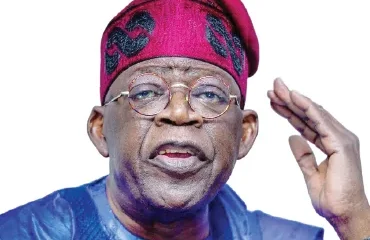
He said the transparency built into his proposal stands in stark contrast to President Tinubu’s handling of subsidy removal.
“President Tinubu stood at Eagle Square on May 29, 2023 and declared that ‘subsidy is gone.’ Nigerians were immediately handed the bill.
“Petrol prices exploded, transportation costs multiplied, food prices soared and households were told that their suffering was the necessary price of reform.
“But after Nigerians paid that price, the government’s own accounts created questions that President Tinubu has still not satisfactorily answered.”
Atiku cited NNPCL’s audited financial statements recording approximately ₦4.84 trillion in Energy Security Expenses in 2023 and ₦7.13 trillion in 2024, saying Nigerians deserve a precise explanation of the economic substance of those expenses and the extent to which they incorporate under-recoveries, pricing differentials or other costs associated with petroleum supply.
“We are not interested in playing games with accounting terminology.”
“If government continued absorbing differences between the economic cost of petroleum products and what was recovered from the market, then Nigerians are entitled to ask how that differs economically from the subsidy they were told had disappeared.
“You cannot abolish subsidy at Eagle Square and allow subsidy-like costs to resurface in government accounts without explaining the contradiction,” he said.
(Daily trust)
-

 Business22 hours ago
How 18yrs multiple gas policies sidelined domestic consumers
-
Politics23 hours ago
2027: Atiku demands names of firms printing INEC’s ballot papers
-
Business23 hours ago
Refiners back forward crude sales, oppose petrol price cap
-
Politics23 hours ago
Crude shortfall makes Atiku’s subsidy plan not workable – Presidency
-
Business23 hours ago
Nigeria’s debt interest soars 124% above revenue
-
 News23 hours ago
World Bank report affirms reform gains — Tinubu
-
News22 hours ago
NDLEA Arrests 83-Year-Old Woman Again, Intercepts Drugs At Nigerian Airports
-
Politics23 hours ago
2027: Tinubu can break Obi’s Southeast hold – Group