
Opinion
Beyond Osun: The coming political realignment in the south-west

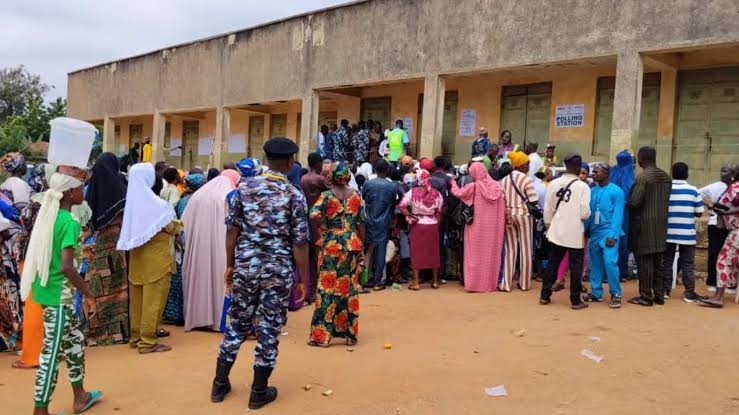
The outcome of the just-concluded gubernatorial election in Osun was hardly a surprise to those who had been paying close attention to the political undercurrents in the state. The result was decisive, and the message from the electorate could hardly have been clearer.
There is a special code I abide by: never kick a man when he is down. Nothing more needs to be said about the APC’s outing. The people have spoken, and their verdict deserves to be respected.
There is no doubt that Ademola Adeleke is a colourful governor who connects remarkably well with the populace. His victory, however, should not be attributed merely to personality or popularity. It is also the product of grit, hard work and, importantly, the rejection of the APC by a significant section of the people of Osun State.
For years, the party’s leadership has been uninspiring and paternalistic, with insufficient regard for internal democracy. It has, in my view, gradually institutionalised a form of progressive politics in which nepotism and personal interests have often taken precedence over ideology, merit and genuine commitment to the people.

The lesson from Osun should therefore not be lost on the political class.
The election may prove to be more than a change of government in one state. It may be the beginning of a reconfiguration of politics in the South-West. Yoruba politics has historically been dynamic, fiercely contested and deeply rooted in the political consciousness of the people. No political party should therefore assume that electoral loyalty is permanent or that its hold on a state is guaranteed.
The people of the South-West are also not averse to political change. Indeed, the region has always welcomed Nigerians from different parts of the country and remains one of the most politically cosmopolitan parts of Nigeria. Lagos, in particular, is a place where people from virtually every ethnic group have found a home, built businesses and contributed to the development of the state.
The question, therefore, is why political change should be regarded as impossible in Lagos.
I look forward to the day when Lagosians will have a genuine opportunity to choose freely between competing political visions without the assumption that one political structure has an inherited entitlement to govern indefinitely.
The 2023 elections already provided an important indication that the political landscape in Lagos is not immutable. The presidential election demonstrated that Lagos voters were capable of breaking from an established political pattern when they chose to do so. Had the gubernatorial election been conducted under the same circumstances and political dynamics, the result might well have been very different.
2027 presents another date with history.
The lesson of Osun is that political dominance, however long established, is never permanent. A government must continue to earn the confidence of the people. A political party must respect its members, nurture internal democracy and present credible leadership. Where it fails to do so, voters have the ultimate power to effect change.
The Osun election may therefore be remembered not simply as a victory for Adeleke or a defeat for the APC, but as a reminder that no political fortress is impregnable when the people decide that the time for change has come.
The south-west is changing. The question is not whether change is possible. The question is when, where and how far it will go.
•Written By Ayodele Kusamotu
-

 Politics11 hours ago
2027: Bulletproof vehicles in demand amid campaign attacks
-
News11 hours ago
NDLEA busts N304bn meth Lab in Enugu, arrests five Mexicans
-
Business11 hours ago
Naira weakens to N1,455/$ as reserves shed $108m
-
Politics11 hours ago
2027: Give Me Imo, Kwara, I’ve Delivered Rivers, FCT – Wike Tells Tinubu
-
News10 hours ago
IGP reverses police decision to declare Obaigbena, Nestoil chair, Sahara Group ED, others wanted
-
News11 hours ago
FG spends N4.17tn on capital projects, MDAs get zero funding
-
Politics10 hours ago
124 Electoral Violence Cases, 22 Deaths Recorded In 4 Months – Report
-
News10 hours ago
Kogi LGAs repaid N2.1bn loan for Yahaya Bello’s children fees – EFCC witness tells court