Business
Africa’s biggest IPOs: 5 landmark listings ahead of Dangote’s $5bn refinery float

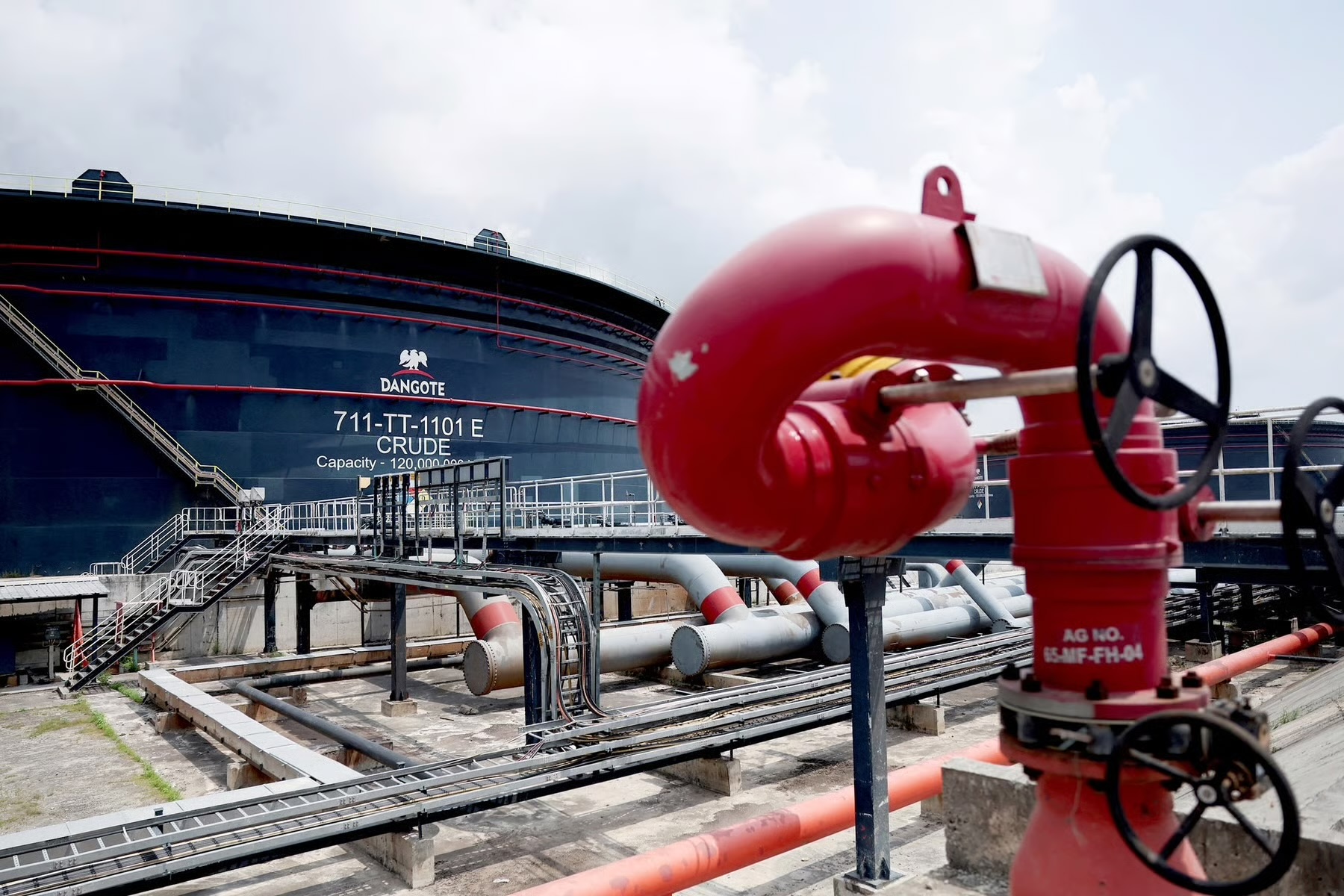
Nigeria’s Dangote Refinery has secured a $1bn underwriting programme for its planned stock market listing, and is poised to become Africa’s largest initial public offering (IPO).
The underwriting comprises a fully funded $600m tranche for the refinery’s completed private placement and a further $400m commitment to support the planned IPO, the deal’s co-financial advisers Marob Strategies and Lilium Capital said this week.
In August, Reuters reported a $5bn target for the Dangote Refinery, according to a source within the company.
Africa’s biggest IPOs have often come through state privatisations and corporate spin-offs, mobilising domestic capital and testing market depth. As another multi-billion-dollar listing looms, here are five deals that helped shape the continent’s bourses.

1. Steinhoff Africa Retail (Pepkor Holdings) – $1.2bn
In September 2017, retail conglomerate Steinhoff International spun off its non-grocery African retail assets by listing Steinhoff Africa Retail (STAR) on South Africa’s Johannesburg Stock Exchange (JSE). The offering raised R15.38bn (approximately $1.2bn) after placing 750 million shares at R20.50 each, making it the largest IPO in Africa in over a decade.
STAR, which housed retail chains such as Pep, Ackermans and Bradlows across thousands of stores, immediately expanded the JSE’s retail market capitalisation. At the debut, STAR’s then-chief executive Ben la Grange described the listing as creating a “diversified, multi-format retail champion of significant size and scale, with its roots in Africa”.
Although the parent company became embroiled in a massive accounting scandal just months after its debut, the African retail operations remained structurally sound and were rebranded as Pepkor Holdings in August 2018 to formally distance the operating business from Steinhoff International’s collapse.
2. Maroc Telecom – $1.07bn
Maroc Telecom’s December 2004 flotation was a privatisation and a landmark for Morocco’s capital markets. The state sold 14.9% of the former monopoly – 131 million shares – through simultaneous offerings in Casablanca and Paris. Priced at the top of the range, at Dh68.25 a share, the sale raised Dh8.94bn, then about $1.07bn.
Demand reached Dh192bn, more than 21 times the offer, with nearly 134,000 investors subscribing. Some 70% of the placement was ‘made in Morocco’, helping turn a thin local exchange into a mass-market event.
Rachid Ouali Alami, former president of Bourse de Valeurs de Casablanca, said the deal had “mobilised dormant savings that had been sitting in the banking system”. Maroc Telecom remains Morocco’s largest-ever initial public offering.
3. Telecom Egypt – $892m
Telecom Egypt followed Maroc with another defining telecoms privatisation. In December 2005, Cairo sold 20% of the state-owned fixed-line monopoly – about 340 million existing shares – through an offer in Egypt and global depositary receipts in London.
The transaction raised E£5.13bn (then $892m) and valued the company at roughly $4.6bn. Institutions paid E£15.56 per share, while retail buyers paid E£14.80. Demand was especially strong among Egyptians: investors sought 1.45 billion of the 154 million shares reserved for the public, leaving retail applicants with only 10.6% of what they requested.
The flotation gave Egypt’s exchange a large, profitable anchor stock, but stopped well short of transferring control: the government retained 80%. It also served as a test of the reform-minded cabinet installed in 2004.
Albert Momdjian of Credit Suisse First Boston called the IPO “a great confirmation of the seriousness of the Egyptian government about privatisation”. The sale was four times oversubscribed, but the promised flood of privatisations has not followed.
4. Safaricom – $833m
In March 2008, just a month after the end of Kenya’s post-election violence, which had triggered massive capital flight, Safaricom launched its IPO under former president Mwai Kibaki, offering 10 billion government shares, representing a 25% stake, at KSh5 each.
The offer, valuing Safaricom at KSh200bn (about $1.55bn), attracted bids totalling KSh236bn ($1.83bn), against the KSh50bn ($387m) target, reflecting more than 500% oversubscription.
Strong demand forced a reduction in allocations, with retail investors receiving about 21% of their applications. Institutional and international investors, whose offers were oversubscribed by more than 700%, received 31% and 15% of their bids, respectively.
Then-finance minister Amos Kimunya said, “we would still not meet the demand” even if the government and Vodafone Group offloaded their entire joint stake in the company.
Safaricom shares debuted on the Nairobi Securities Exchange (NSE) on 9 June 2008, significantly widening retail participation, deepening market activity and setting a new benchmark for subsequent listings. Its share price has appreciated to KSh36.6 per share, with a market capitalisation of KSh1.45trn ($11.2bn).
The deal was the largest IPO in East Africa at the time, dwarfing earlier Kenyan offerings, including Kenya Electricity Generating Company’s KSh7.84bn ($60.6m) IPO in 2006 and Kenya Re’s KSh2.28bn ($17.6m) offer in 2007.
5. Kenya Pipeline Company – $864m
The Kenya Pipeline Company (KPC) IPO marked a revival of Kenya’s capital market after 11 years of listing drought. The offer, the largest IPO in East Africa, opened on 19 January 2026, with the government selling a 65% stake, equivalent to 11.8 billion shares, at KSh9 each.
Unlike Safaricom, the KPC IPO witnessed a tiny 5.7% oversubscription, raising KSh112bn ($863.8m) against a target of KSh106.3bn ($822.8m). The Uganda National Oil Company (UNOC) emerged as an anchor investor, snapping up a 20.15% stake worth $255.4m after the Kenyan government intervened to shore up demand following initially tepid participation.
Kenyans and local institutions, including the National Social Security Fund (NSSF), took up 7.95 billion shares, or 67.3% of the offer, giving them a combined 41% ownership. Oil marketers – who had been allocated up to 15% of the offer – and foreign retail investors largely stayed away, citing the valuation and potential political risks.
Joe Sang, then KPC managing director, said it was logical for oil marketers to steer clear because they were stronger in trading and would “own just the petrol stations, rather than the pipeline”.
KPC began trading on the NSE on 10 March at KSh9.18 per share, but it has since slipped 1.09%. The offering came as the government stepped up its privatisation drive, seeking to raise non-debt capital to finance infrastructure and ease fiscal pressure amid constrained borrowing headroom.
Part of the proceeds was channelled into the National Infrastructure Fund (NIF) to support rail, road and power projects.(The Africa Report)
-

 News9 hours ago
Nigerians Already Enjoying Cheaper Transport Fares – Tinubu
-
News4 hours ago
Inside Sunrise’s Mambilla money trail: $1.74m to Dasuki’s son, Agunloye’s ‘medical expenses’ — and a promised cut for Malami
-
Metro3 hours ago
Woman Allegedly Kills Husband Planning To Marry Second Wife In Kano