Opinion
Tony, Husband is Useless and the Woke Generation

Nigeria is not in short supply of news, both the good, the bad and the ugly. Each day comes with its own drama and intrigues. In fact, all you need is an Android phone with a functional data subscription to keep up with daily trends, and voila! Just like that, you’ll not be left behind whenever something sensational or downright ridiculous becomes the talk of the week.
In today’s highly digital world, with about 68.7% of the world’s population (roughly 5.66 to 5.79 billion people) being constantly active on social media, we are all one moment away from becoming internet sensations. And in Nigeria, where 47.8 million active social media users exist (DataReportal), it doesn’t take much for something or someone to “go viral”, as they say. This is why the #EndSARS movement drew global attention six years ago. But nowadays, it almost seems as if issues of national concern hardly receive as much attention as that of a random influencer gyrating on the streets of Lagos or Abuja.
Unfortunately, either due to a lack of ideas or the allure of popularity, it appears as if every young Nigerian now wants to be a content creator or social media influencer. So, in the mad rush to become one, they do all manner of things to trend, even going as far as assassinating the character of a public figure. Some don’t mind being arrested. After all, they would become more popular with more views, likes and comments as their partners in crime make a case for their release under the guise of freedom of speech. The hustle is real.
Recently, one of the wannabe social media influencers accused former UBA Chairman, Tony Elumelu, sorry, Mr. Tony Elumelu’s children of having HIV/AIDS. They also said that TOE has parted ways with his wife on grounds of infidelity. Now, there are claims that event the worst journalist would easily dismiss as concocted rubbish, unless there’s irrefutable proof to show otherwise. But this unfortunate influencer was as far from being a true journalist as he was far from saying the truth. Eventually, he was arrested, and a certain human rights activist has since been calling for his release. After all, Mr. Tony Elumelu himself is also a content creator, he said.

Wonders, they say, shall never end.
And in Nigeria, wonders arrive almost daily through smartphones. This past week, like any other week, was not short of the country’s lorryloads of drama. Some of us might remember that One Week, One Trouble is the title of a 1972 young adult/children’s novel by Anezi Okoro. In the novel, the author described a situation where each passing week brings a new challenge or problem. At this stage, nationally, we have gone past the stage of one week, one trouble. I would like to say that Nigeria’s case is now a matter of “one week, many troubles,” including side-dramas. There is no single day in Nigeria that does not come with its own share of troubles and dramas.
Recently, a young lady and debut author, Chinkemkasimma C. Chukwuma, posted on social media that she had written a book, and that it was set to be released soon. The title of her book is “Husband is Useless,” and within a matter of hours, it quickly became a subject of controversy. The book trended on all social media platforms, getting millions of views and hundreds of thousands of reactions across Facebook, TikTok, X and Instagram. The level of response and discourse that this book title generated was so great that a point, I couldn’t scroll for long on my Facebook without seeing a different opinion or new reaction to the book and its author. I must say that even Chimamanda Ngozi Adichie’s recent book, Dream Count, had not trended like this when it was released last year. In fact, another controversial title, Nearly All the Men In Lagos Are Mad, had barely drawn this much attention when it came out in 2021.
And yet, what made the responses to Husband Is Useless unique, was that a majority of young men took it to be an attack against masculinity and marriage itself. I couldn’t help but chuckle and shake my head at the range of insults and curses thrown at the book’s author, because I knew that a majority of the vile comments came from people who had barely even read the book, but simply decided to judge it by its cover alone.
As I suspected, the use of that particular title was partly a stroke of marketing genius, in order to draw attention to the book. When I read the book’s synopsis, I understood that it was simply a tale about the type of situation where a woman’s life is upended just because she married a terrible husband. There are many such books in the history of Nigerian literature alone, talk less of global literature. In the end, I had to conclude that a lot of young Nigerians lack the sort of literacy developed by voracious reading—in terms of understanding and comprehension—that would have enabled them to appreciate the essence of a book beyond its title alone.
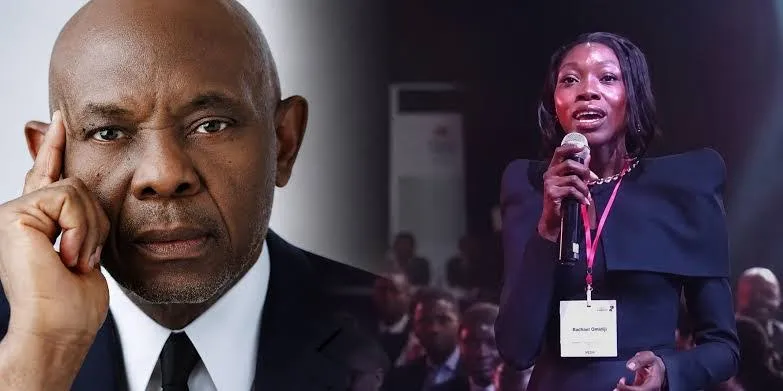
The controversy surrounding the book title had barely simmered down, when yet another drama surfaced. This one had to do with a viral video of a young lady calling former UBA Chairman, Mr. Tony Elumelu, by his first name, as though she was talking to her age-mate or mere colleague. Expectedly, Mr. Tony Elumelu was not comfortable with being called Tony by the young lady. “You won’t call me Tony. I don’t subscribe to that Oyinbo life. Call me Mr. Elumelu or TOE,” he corrected her, while chuckling.
As it is with every matter on social media, the matter escalated so quickly that it even overshadowed the trend of the controversial book title. Opinions were divided over the propriety of the young lady calling TOE by his first name and whether TOE was right to have corrected her. This happened at the UBA’s Graduate Management Accelerated Programme graduation ceremony, organised to celebrate 374 young professionals who successfully completed the bank’s Graduate Management Accelerated Programme.
Those who were against TOE even went so far as to dig up an old video of TOE with a foreign female interviewer calling him “Tony”, and he did not flinch. They used this video to accuse the man of double standards, arguing that if it were abroad, he wouldn’t have called the young lady to order. “This cannot happen in America” is the usual rhetoric whenever anything Nigerians feel is untoward happens in Nigeria.
Meanwhile, in defending TOE for calling the young lady to order, someone posted a video of the late, iconic American poet Maya Angelou correcting a young girl who called her by her first name on a talk show. Just like Mr. Tony Elumelu, Maya Angelou told the young lady to call her Miss Angelou. She further reminded her that she was her auntie, her mother and even her professor.
Those defending the young lady’s conduct did not stop at trying to gaslight TOE by posting the video of his interview; they also attributed her conduct to the banking sector’s code of conduct, where all bankers within the organisation are called by their first names. If this code of conduct is what informed the young lady’s decision to address Mr. Elumelu by his first name, then a case can be made for her slip-up. But to say that abroad, individuals are often free to call their superiors or elders by their first names, is simply misleading. Even in the Wild Wild West, there are spaces where due respect is accorded when it comes to addressing someone formally or informally.
And as much as things are done a certain way abroad, we have our norms down here. Now, you cannot tell a Yoruba child not to prostrate in greeting before an elder in Lagos, simply because in the US, children just say “Hi” to elderly people and move on. In Nigeria and Africa as a whole, respect is a big deal, and it would be going against this reality for any company here to insist that employees should address people on a first-name basis, irrespective of age difference or superiority.
If Mr. Elumelu’s company has had a policy of addressing everyone by their first name, it is a bit strange that leadership at the highest level would seem uncomfortable or disapproving when a young trainee is merely adhering to corporate dictates. To avoid creating an atmosphere of uncertainty, it is necessary for the company to review that particular policy and retrain everyone within the structure, if only to accommodate the reality of operating within Nigeria.
And in the end, whether at home or abroad, courtesy demands that whenever one meets a superior or elderly person, you should first address them with the appropriate titles (Sir, Ma’am, Professor, Mr or Mrs, etc) before waiting for them to grant you permission to address them by their first names or so. Simple etiquette like this might not make sense to the younger “Woke” generation, especially those from Gen Z and Gen Alpha, but in the larger schemes of civilization, tradition and social norms, these are the little things that differentiate us from animals living in environments where anything goes.
In essence, these are the little things that define us as humans, and as Nigerians, these things form the bedrock of our collective identity: to disregard our values in preference of foreign ways, is to initiate a decline where, to borrow from Achebe, things would simply begin to fall apart.
Zayd Ibn Isah can be reached via Lawcadet1@gmail.com
-

 News14 hours ago
UK universities withdraw admission offers to Nigerians over visa crackdown
-
Politics14 hours ago
2027: Protest, relief as INEC releases final candidates’ list
-
News15 hours ago
Benue: Suspected herdsmen kill nine in fresh Ukum attacks
-
News14 hours ago
Why kidnappers target NYSC members — Security experts
-
Politics14 hours ago
2027: Opposition, APC clash over campaign funding
-
World News14 hours ago
US gunman shoots dead 7 relatives, family friend
-
Opinion14 hours ago
Did Obi actually win in 2023?
-
Business14 hours ago
Fitch revises Nigeria’s outlook to positive, affirms ‘B’ rating